
How Custom Golf Shafts Enhance Distance and Accuracy
Written by Patrick Greene|Golf shaft specialist with 15+ years in


If you are shopping for a Fujikura wood shaft, you have probably noticed that the Ventus TR line comes in more than one color, and the color matters. The Ventus TR Blue vs Red question comes up in almost every fitting conversation we have about a driver or fairway wood, because the two shafts share a name and a weight range but are positioned for different ball flights.
This guide is for the golfer who already knows the TR family is on the list and needs to decide between the two. We will cover what each color is designed to do, which tempo and feel preferences tend to point toward one or the other, and how to test them fairly in the same head. We will not repeat the broader comparisons that already have their own posts, and we link to those where they apply.
Both shafts are part of the Ventus TR profile that Fujikura introduced in 2022. The difference lives in the profile each color is built around, and the specification tables on our product pages make it easy to see.
Blue leans toward a lower window with less spin. Red leans toward getting the ball up a little more while keeping spin in check. You can read the full details on the Ventus TR Blue wood shaft page and the Ventus TR Red wood shaft page.

The Blue is the shaft we put in the hands of golfers whose complaint is too much of everything: too much height, too much spin, a ball that balloons into the wind and gives back distance at the end of the flight. If your launch monitor numbers show a high spin number with a driver that already launches comfortably, a low spin profile is a reasonable thing to try.
Typical Blue testers include:
The maker also describes the Blue as pairing VeloCore technology with a Spread Tow carbon fabric aimed at stability through the mid and handle section without sacrificing feel. That is the maker’s description of the design intent, and we treat it as a reason to test the shaft, not a promise about any individual result.
The Red is where we look when the issue is the opposite: the driver launches too low, the ball comes out flat, and carry suffers. Because the maker positions the Red with the softest tip section in the TR lineup and a mid to high launch profile, it is a natural candidate for golfers who need help getting the ball in the air without adding a lot of spin.
Typical Red testers include:
Launch angle and spin only make sense read together, and a monitor session is how you see both.
Launch and spin are only half the decision. Tempo and feel often decide which of two similar shafts a golfer actually prefers once the numbers come back close.
Golfers who change direction forcefully at the top tend to want a shaft that feels stable and does not seem to wander in the downswing. Many of them gravitate toward a firmer-feeling tip, which is why the Blue is a common first test for that swing type. Some quick swingers still launch too low, though, and the Red can make sense for them. We cover this overlap in smooth tempo versus aggressive transition.
A smoother swing tends to give the shaft more time to load and recover. Those golfers often prefer a profile that feels like it participates in the swing, and the softer-tipped Red is worth a test. Tempo describes how you swing, not your ball flight, so a smooth swinger with a high-spinning driver may still want the Blue.
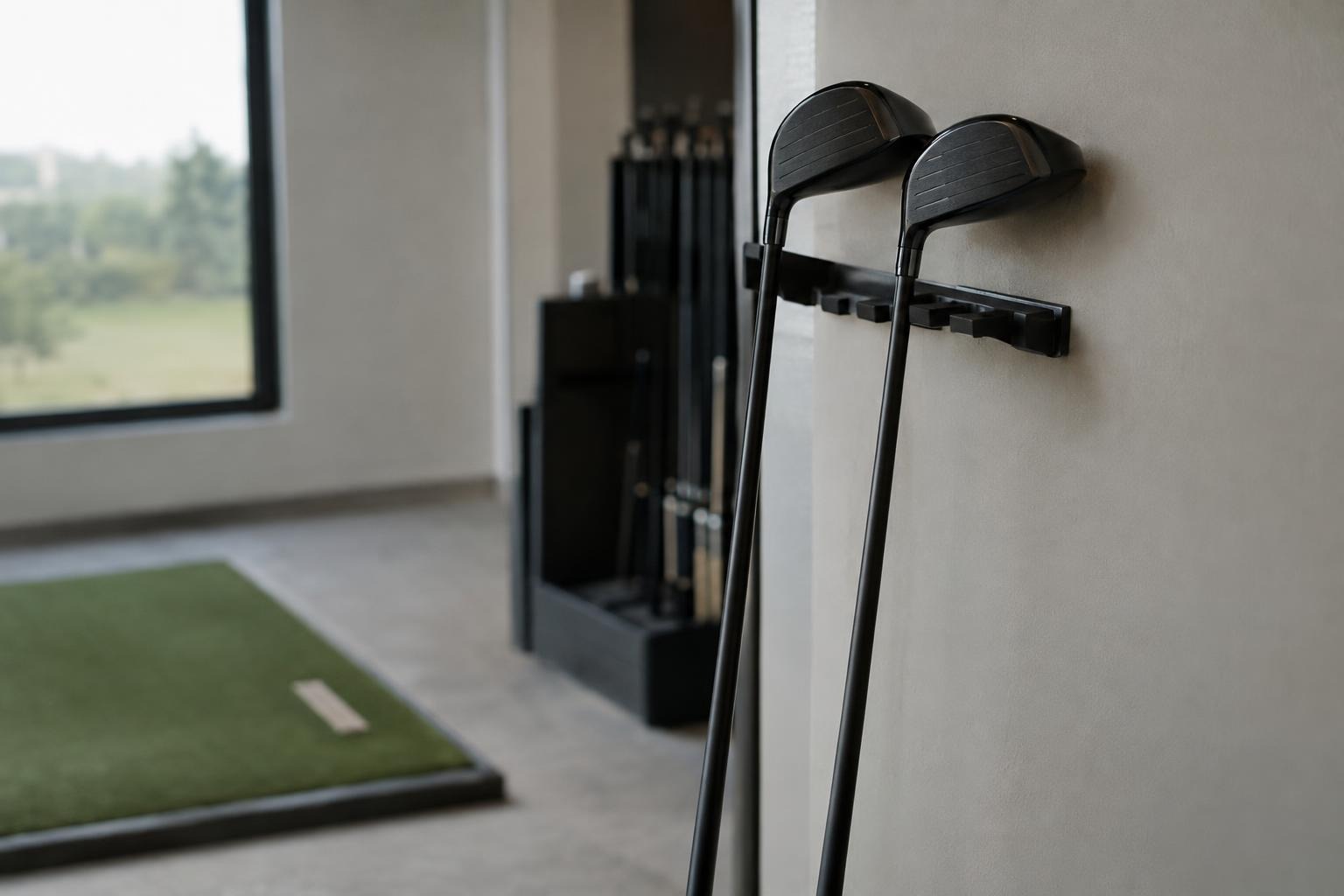
Look at launch angle and spin together, then peak height, descent, and dispersion. A shaft that scatters shots wider is not helping you, even if the best shot of the session came from it. Also notice impact feel: when numbers are close, the shaft you swing with more confidence usually wins.
This is the part most golfers skip, and it is the part that makes the comparison honest. The goal is to change only the shaft.
Whatever you end up building, a swapped shaft still needs to leave the club conforming. The R&A rules of equipment on club conformance are the reference if you play in events.
Picking Blue or Red is only the first decision. Both come in several weight classes, listed on their pages as 5, 6, 7 and 8 families, each with its own flex options. The flex options are not identical between colors, so check the page for the exact combinations offered rather than assuming a size exists in both.
Our shaft selector is a good starting point for narrowing weight and flex before you commit to a test. If you would rather talk it through, we also build to your specifications through our custom shafts service. For fitting by appointment, we serve golfers in Cape Coral, Fort Myers, North Fort Myers, Estero, Bonita Springs, and Naples, and our online store ships nationwide.
The TR line is not the only Ventus option you may run into, so a few pointers will save you time.
The Red is the one positioned for mid to high launch, so it is generally the first test for a golfer who launches low. The Blue is listed as medium launch with low spin. Your own monitor numbers decide it, so test both in the same head.
On paper, the Blue is listed as low spin and the Red as medium spin. How that plays for you depends on your delivery and strike, so treat the listing as a guide for what to test and confirm it with a monitor.
The best way is a fitting session, where both shafts can be hit in the same head. Because our builds are made to order and take up to 10 to 12 business days, testing first is the smarter route than ordering and hoping.
Start with the weight class and flex that suit your speed and tempo, then compare the two colors at that size. Starting with color while the flex is still wrong makes the test unreliable.
Ready to settle the Ventus TR Blue vs Red question for your swing? Call us at 1-800-380-7901 to talk through your numbers, or read our FAQs and then contact us to schedule a fitting or request a custom build.
Also Read: Smooth Tempo vs Aggressive Transition: Shaft Fit Differences
Written by Patrick Greene|Golf shaft specialist with 15+ years in

Written by Patrick Greene|Golf shaft specialist with 15+ years in

Free golf guide · 26 pages
How to Teach Your Wife Golf (And Live to Talk About It)
A funny, practical guide to better golf and fewer arguments: setup, swing, short game, putting and what not to say on the course.
Get the free guide