
How Custom Golf Shafts Enhance Distance and Accuracy
Written by Patrick Greene|Golf shaft specialist with 15+ years in


If you are searching for the best driver shaft for a hook, you probably want a straight answer. Here it is: a hook is mostly a swing and delivery problem, and no shaft will erase it on its own. What a shaft can do is contribute to the miss, or in the right situation, help you manage it. Knowing which is which can save you from buying the wrong shaft and blaming the club for something that lives in the swing.
This is the companion to our post on the best driver shaft for a slice. We will cover what causes a hook, the shaft traits that can make it worse, the traits worth testing, and how to separate a swing issue from an equipment issue without wasting money.
A hook is a shot that starts on or near the target line and curves hard in the direction of the clubface for a right-handed golfer, finishing left. It happens when the clubface is closed relative to the swing path at impact. In other words, the face is pointing well left of where the club is traveling.
That sounds simple, but it hides several different swings. Some golfers hook because they swing hard from the inside and flip their hands over. Others hook because their grip is strong, or their body stalls and the hands take over. A shaft cannot tell the difference, and it cannot change your grip or your path.
The face and path are set by what you do in the last part of the downswing. Grip, wrist action, body rotation, and ball position all matter far more than the shaft. If you hook most clubs in your bag, or you hook your irons too, the shaft is almost certainly not the root cause. A lesson with a qualified instructor is a better first stop than a new shaft.
There are cases where equipment adds to a hook. The shaft is part of a system that includes head, length, weight, and grip. When one part is mismatched to your swing, you may feel it as a ball that turns over more than you want.
Common contributors include:
None of these are guaranteed causes. They are patterns we see often enough to test when a golfer tells us the miss is always left.
A shaft that is too soft for you tends to feel whippy and late. The head seems to arrive after your hands, and the ball may fly high with an unpredictable left miss. We explain the full list in our post on signs your driver shaft is too soft.
If those signs sound like your driver, a stiffer flex is a reasonable thing to try. Be careful with that thought, though. A shaft that is too stiff can make the face lag open, and some golfers then compensate by flipping the hands, which produces a hook. That is why we test both directions before we recommend anything.
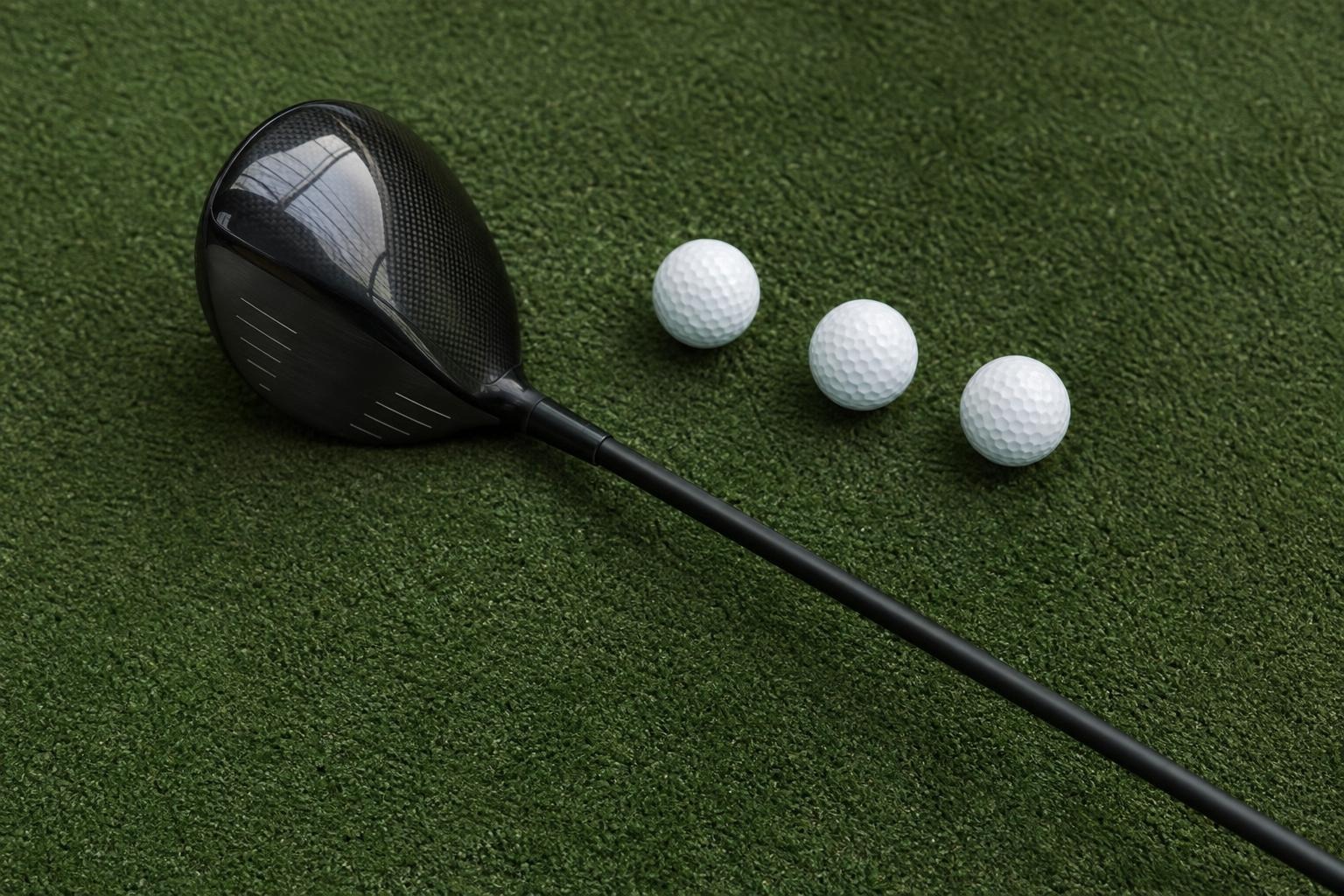
Many golfers who hook play a shaft that is lighter than they can control. A lighter shaft is easier to swing fast, but it can also make timing less forgiving, especially if your tempo is quick. Moving up to a slightly heavier shaft is one of the most common testing ideas for a golfer who hooks, because the extra mass can help you feel where the head is during transition.
Heavier is not better in general. A shaft that is too heavy can cost you speed and make you hang back. The goal is the weight where your swing feels organized, not the heaviest shaft you can swing. We walk through this tradeoff in our post on driver shaft weight.
The tip section is the part of the shaft closest to the head, and it has an outsized influence on how the face behaves at impact. A shaft with a stiffer tip generally resists the head from releasing early. A softer, more active tip lets the head release faster. For a golfer who already closes the face too fast, a stiffer tip profile is a sensible thing to test.
Torque is the shaft’s resistance to twisting. Lower-torque shafts tend to feel firmer and quieter, and higher-torque shafts tend to feel softer and more active. Torque affects feel and dispersion in ways that depend on the golfer, and we explain the relationship in our torque guide.
The following are examples from our catalog that illustrate the traits above. They are starting points for a test, not promises about what they will do for your ball flight.
The Aldila Rogue White is described as the low-launch, low-spin member of the Rogue Infinity family, built for aggressive swings. The maker describes a construction intended to cut torque and add stability. For a fast, aggressive swinger whose miss is left and whose ball flight is also high and spinny, a profile like this is worth a test.
The TENSEI 1K Pro Red is the opposite kind of example. It is described as a higher-launching, mid-spin profile with a super-stiff handle and a softer, more active tip. That is a fine shaft for a golfer who needs help getting the ball up, but a softer tip is rarely where we would start for a golfer whose chief complaint is a hook.

Before you spend on a new shaft, look at the rest of the club. A closed face angle on the head, a shorter-than-ideal or longer-than-ideal length, a grip that is too thin, and a head with a draw bias can all push the ball left.
Counterbalanced builds are another idea some golfers try. Adding weight to the grip end shifts the balance point toward the hands, which can change how the head feels in transition. Treat it as something to test, not a cure. Not everyone likes the feel, and it will not fix a swing path that sends the face left.
The most reliable approach is a launch monitor session with several shafts in the same head. Keep length and loft the same, change only the shaft, and watch more than the best shot. Look at face-to-path numbers if the monitor gives them, the shape and size of your miss, and how consistent the dispersion is. Pay attention to how each shaft feels in transition, not only how it flies.
If a stiffer tip or a bit more weight tightens your pattern, that is useful information. If nothing in the shaft changes the miss, that is useful too. It means the next step is your swing, and we will say so honestly. You can start with our shaft selector, then book a session through our custom shaft service. Custom fitting by appointment is available locally in Cape Coral, Fort Myers, North Fort Myers, Estero, Bonita Springs, and Naples, and the online store ships nationwide.
Not by itself. A hook comes mostly from the face and path at impact. A shaft can add to the problem or help you manage it, but your delivery is the main driver.
Sometimes. If your current shaft is too soft for your tempo, a stiffer option may help. If it is already too stiff, going stiffer can make the problem worse, so we test before we recommend.
A bit more weight can help some golfers control the head, but too much costs speed and can hurt timing. The right weight is the one where your swing feels organized.
Low torque tends to feel firmer and may reduce the twisting you feel, but it is not a guarantee. Treat it as one factor among several.
If you want a second opinion on what your driver is doing, read our FAQs or call 1-800-380-7901 and we will talk through your ball flight. Whatever shaft you try, the finished club must still conform to the R&A equipment rules on club design.
Also Read: Warning Signs of a Defective Shaft
Written by Patrick Greene|Golf shaft specialist with 15+ years in

Written by Patrick Greene|Golf shaft specialist with 15+ years in

Free golf guide · 26 pages
How to Teach Your Wife Golf (And Live to Talk About It)
A funny, practical guide to better golf and fewer arguments: setup, swing, short game, putting and what not to say on the course.
Get the free guide