
How Custom Golf Shafts Enhance Distance and Accuracy
Written by Patrick Greene|Golf shaft specialist with 15+ years in


I get asked about the best driver shaft for a slice more than almost any other fitting question, and I understand why. A slice is frustrating, it steals distance, and it puts you in trouble off the tee round after round. I want to be straight with you from the first sentence: a shaft by itself will not cure a slice. The face angle at impact and your path do most of the work. What the right shaft profile can do is make it easier to square the clubhead, launch the ball on a better window, and stop fighting the club. That is a real advantage, and it is worth getting right.
In this guide I will walk through the shaft characteristics that tend to help a slicer, the ones that usually make it worse, and how I think about the whole picture when someone brings me a driver that keeps leaking right. I am Patrick Greene, and I fit shafts for a living, so I will keep this practical rather than salesy.
A slice is a ball that curves hard from left to right for a right-handed golfer, and it happens because the clubface is open relative to the path at impact. Everything I recommend below is aimed at one goal: helping you return the face closer to square without having to make a perfect, timed manipulation with your hands. When I talk about the best driver shaft for a slice, I am really talking about a profile that reduces how much work your hands have to do at the last moment.
Here is the honest caveat. If your face is wide open because of grip, setup, or an out-to-in path, no shaft will save you. Those are swing and fundamentals issues, and a lesson will move the needle far more than any component swap. What a good shaft does is remove obstacles so that a slightly better move produces a much straighter result.
For additional fitting context before choosing a profile, see Fujikura’s overview of how to determine which shaft is right for a player.
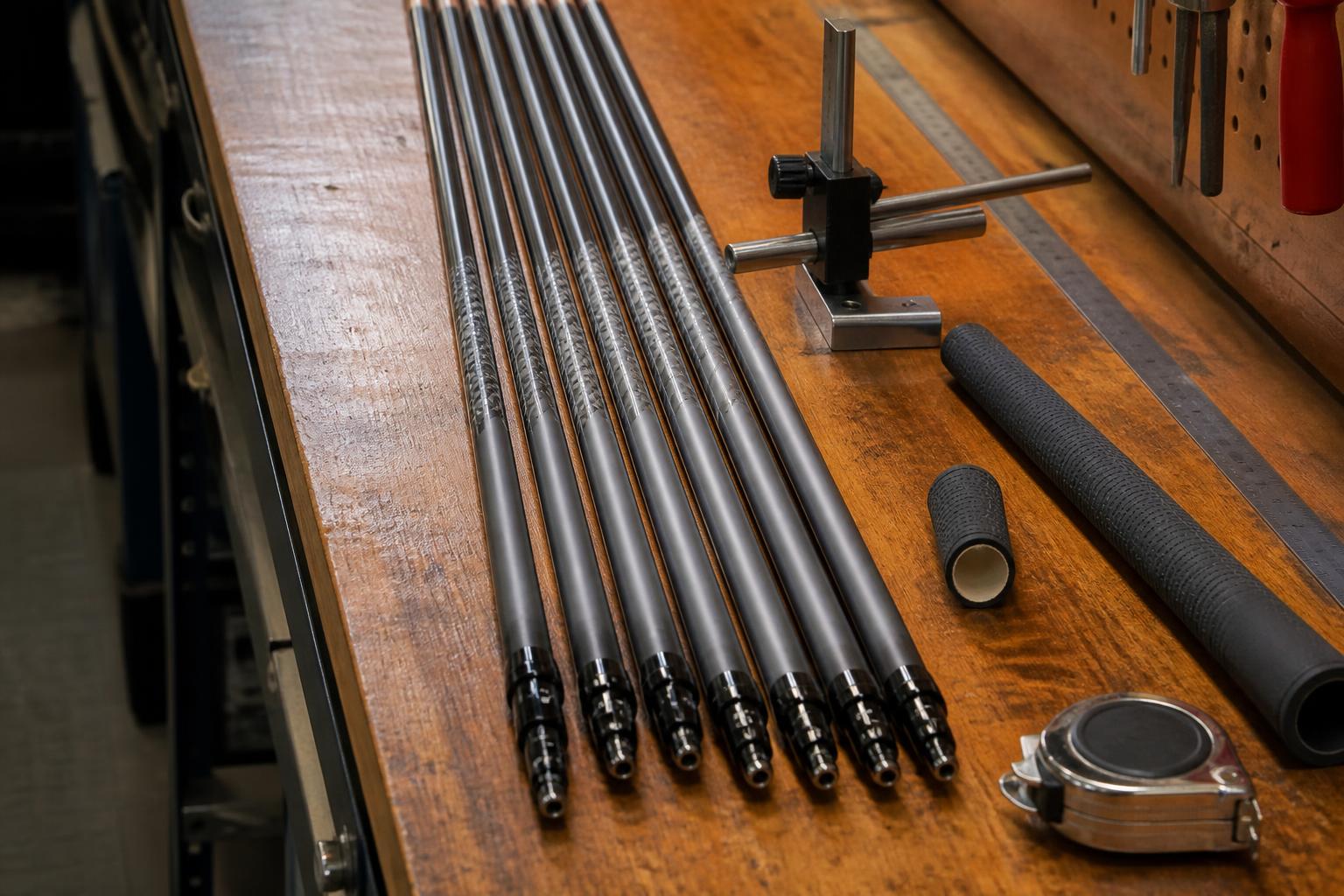
When someone struggles with a slice, I look at four properties together. No single one is a magic fix, but stacked in the right direction they make squaring the face noticeably easier.
The tip is the last few inches near the clubhead. A softer or more active tip allows the head to release and rotate a touch more through impact, which helps close the face. Slicers usually do better with a mid or softer tip profile, not an ultra-stiff, tip-reinforced shaft built to hold the face open for a strong player who fights a hook.
Many slicers deliver a glancing, open-face strike that already sends the ball right and low into the miss. A higher-launching profile helps you carry the ball and keeps it in the air long enough to reach its full curve window instead of knifing right. A little extra spin adds forgiveness here. This is the opposite of the low-launch, low-spin shafts marketed to fast, aggressive swingers.
A lighter shaft can help you increase clubhead speed and, just as importantly, square the face more consistently when your timing is not perfect. If the driver feels heavy and sluggish, the head tends to lag open. Dropping into a lighter shaft often lets the hands work more freely through the ball. It is not a guarantee of speed, but for a lot of slicers it improves release and rhythm.
Torque is how much the shaft resists twisting. A higher-torque shaft feels smoother and lets the head rotate a bit more, which nudges the face toward closed. Low-torque shafts feel stiff and stable and are usually the wrong direction for someone battling an open face. I want to see moderate to higher torque on most anti-slice builds.
It is just as useful to know what to avoid. Over the years I have watched players buy the wrong shaft because it was in a tour player’s bag or because stiffer sounds better. Here is what usually backfires for a slice:
None of this means you should chase the softest, lightest, whippiest shaft on the rack either. Go too far and you trade a slice for a snap hook or lose all control of dispersion. The point is direction and balance, matched to your real numbers, which is exactly why I lean on measured data rather than guesswork.

Reading traits on a page is a starting point. Dialing them in is where a real fitting earns its keep. When a slicer comes to me, here is roughly how it goes:
If you would rather explore options before you come in, our shaft selector is a good way to narrow the field by swing speed and ball flight tendencies. When you are ready for something built around your exact numbers, we handle custom shafts so the tip profile, weight, flex, and torque all point the same direction instead of fighting each other.
A slice rarely lives in the driver alone. If the face is open with the big stick, it is often open with your longer clubs too, just less obvious because they are easier to control. The same logic that helps your driver applies to the top of your bag. If your longer clubs leak right, it is worth reviewing the best hybrid golf shafts with the same anti-slice mindset: enough launch, sensible weight, and a tip that lets the head release. Getting the whole long-club setup pointed in one direction gives you a more repeatable pattern from tee to green.
I will keep saying it because it matters: the best driver shaft for a slice is a helper, not a cure. A well-chosen profile can turn a big slice into a manageable fade, tighten your dispersion, and give you back yards you were losing to sidespin. It will not overwrite an open face caused by grip, setup, or path. Pair the right shaft with a little coaching on those fundamentals and the improvement compounds fast. And be wary of any product that promises to eliminate a slice outright. No shaft can guarantee that, and I would not want you spending money on a promise the physics cannot keep.
Not on its own. A slice comes from an open face relative to your path, and that is driven by grip, setup, and swing path. The right shaft profile, softer tip, higher launch, lighter weight, and moderate to higher torque, makes it easier to square the face, so it can shrink a slice into a workable fade. It is a meaningful help, not a cure.
There is no universal answer, but many slicers are actually playing a flex that is too stiff for their speed, which leaves the face hanging open. A flex you can properly load, often regular or senior for moderate swing speeds, tends to square up better. The only reliable way to know is to test it against your real launch and spin numbers.
Usually not. Low-spin, low-launch shafts are built for fast, aggressive players who fight a hook. Most slicers deliver a glancing, open strike that benefits from a bit more launch and spin to keep the ball airborne and reduce the low, right miss. A little more spin adds forgiveness for that pattern.
It often does. A lighter shaft can free up your release and help you square the face when your timing is not perfect, and it may add a touch of clubhead speed. It is not automatic, though. Go too light and you can lose control of dispersion, so weight should be matched to your tempo in a fitting.
Start by narrowing options with our shaft selector based on your speed and ball flight, then confirm with measured testing. A proper fitting captures launch, spin, and face-to-path so the tip stiffness, weight, flex, and torque all point the same direction. That measured approach beats guessing from a spec sheet every time.
If you are tired of aiming left and hoping, let us build a driver setup around your actual numbers. Start with our shaft selector to see where you land, then reach out to book a fitting and I will help you choose a profile that makes squaring the face far easier. Straighter, longer, and more repeatable off the tee is absolutely within reach, and I would be glad to help you get there.
Also Read: Graphite vs. Steel: Choosing Your Ideal Golf Shaft
Written by Patrick Greene|Golf shaft specialist with 15+ years in

Written by Patrick Greene|Golf shaft specialist with 15+ years in

Free golf guide · 26 pages
How to Teach Your Wife Golf (And Live to Talk About It)
A funny, practical guide to better golf and fewer arguments: setup, swing, short game, putting and what not to say on the course.
Get the free guide