
How Custom Golf Shafts Enhance Distance and Accuracy
Written by Patrick Greene|Golf shaft specialist with 15+ years in

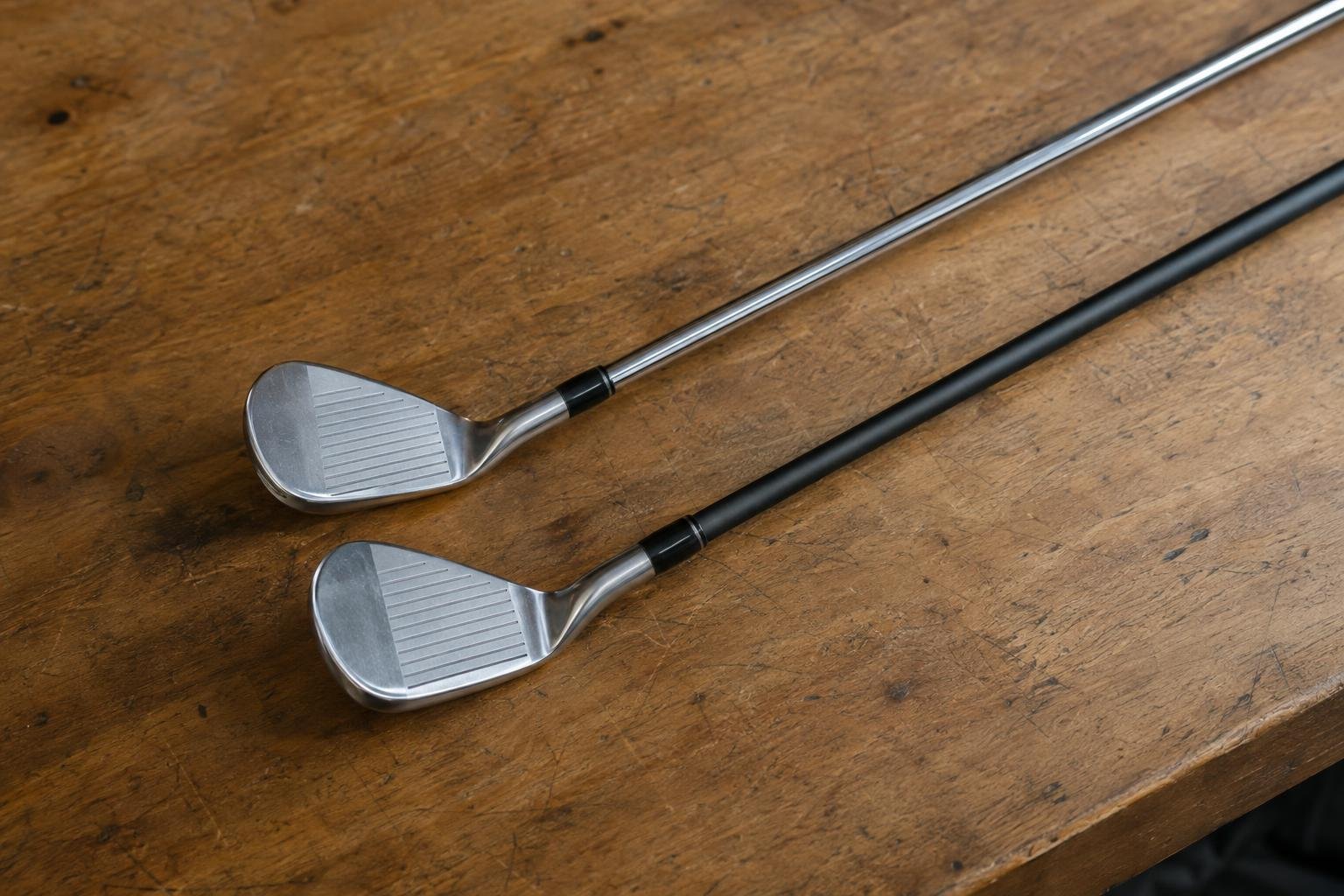
Some golfers love the launch and feel of graphite in their long irons but want the control of steel in the scoring clubs. Others hear that a blended set is something only tour pros do. A combo iron set, with graphite in some clubs and steel in others, is a real option, and when it is done carefully it can solve a specific problem. Done carelessly it creates gapping and feel inconsistencies that are hard to fix.
This guide covers why golfers mix shaft materials, what to match so the set still feels like one set, and when a blended build is not worth it.
Graphite and steel behave differently, and each has strengths. Graphite shafts are typically lighter and can be designed with a wide range of stiffness profiles, which helps golfers who struggle to get long irons airborne or who want less vibration. Steel shafts tend to be heavier and offer a firmer, more connected feel, which many golfers prefer in short irons and wedges for control.
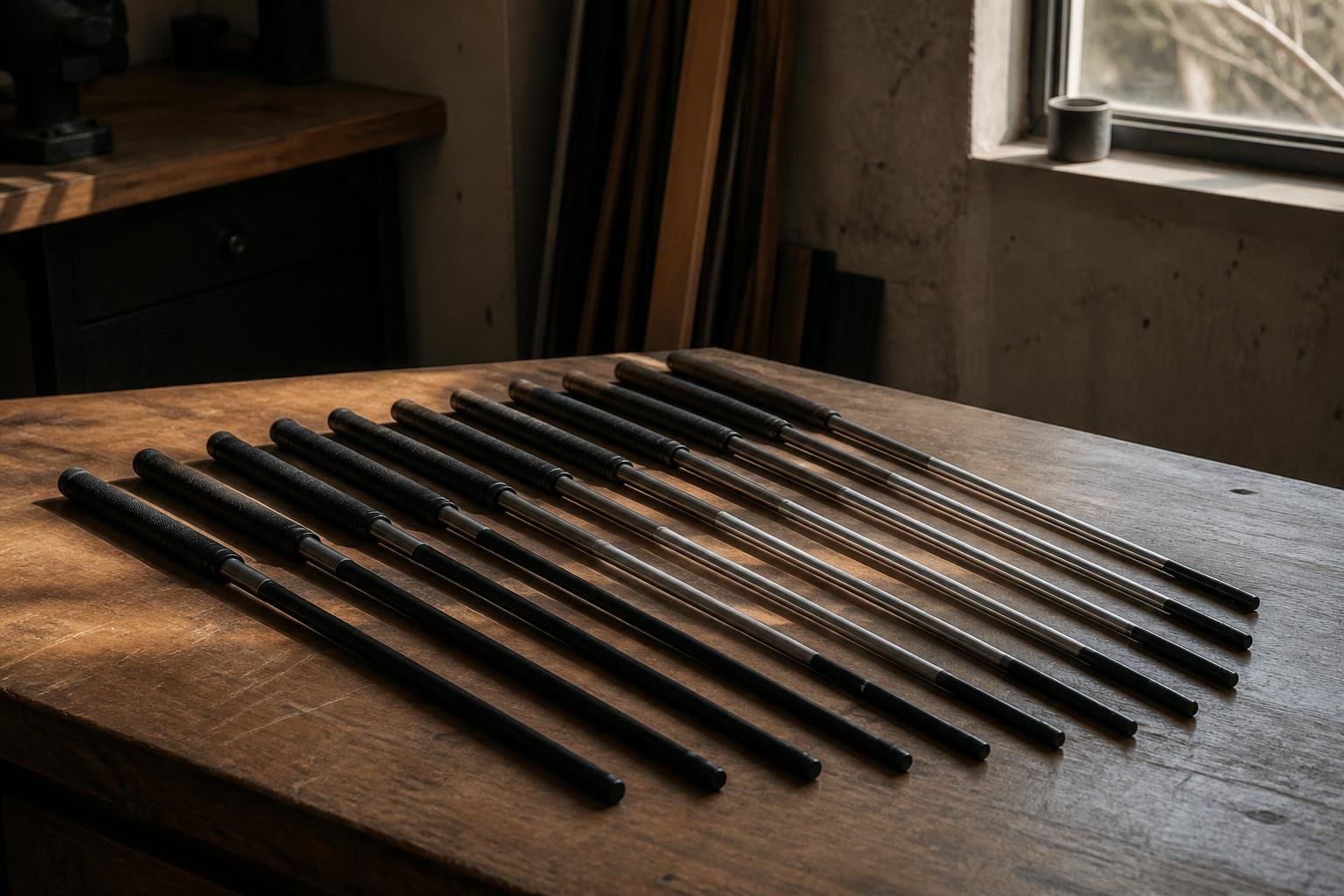
A combo set tries to take the best of both. The classic version puts graphite in the longer irons, where launch and forgiveness are hardest to find, and steel in the shorter irons, where precision matters more. Our comparison of graphite and steel shafts covers the basic tradeoffs.
The danger of a blended set is that the clubs feel unrelated. Several things need to line up:
Shaft weight should step down in a sensible pattern as clubs get longer. Putting a very light graphite shaft in one club next to a heavy steel shaft in the next can create a jarring change in feel and tempo. Our post on iron shaft weight, graphite and steel, and tempo explains how weight shapes your rhythm.
A graphite flex and a steel flex of the same letter do not necessarily feel the same. Builders often compare frequency (CPM) readings to match feel across materials, which we describe in our explanation of CPM and frequency matching. Expect to adjust flex letters on one side to match feel.
Because graphite shafts are lighter than steel, the same head can end up with a different swingweight, so builders adjust with tip weight or head weight. Our post on swing weight versus total weight shows how that works. Lengths should still step evenly through the set.
Heads come with a hosel bore size, and a shaft has to fit it. Graphite and steel shafts each come in parallel and taper tip options, and not all of them fit all heads. Check our explainer on parallel versus taper tip diameter before ordering.
There is no fixed rule, but a common approach is graphite in the long irons through the 6-iron and steel from the 7-iron down. Some golfers go graphite through the 7 or 8. Your choice should follow where your problems actually are, not a template.
If you are also adding a utility or hybrid, it can help to fit that club with a related graphite shaft so the progression flows into the irons. Our guide to fitting a utility iron shows how that gap club gets matched.
For many golfers, a full set of one material, chosen with the right weight and profile, is simpler and just as good. Mix only if you have a clear problem the blend would solve.
Start by writing down what is wrong with your current irons. If the problem is launch in the long irons, a lighter graphite there may help. If the problem is feel in the short irons, stay with steel. If you have no specific complaint, a full set from one family is a safe default.
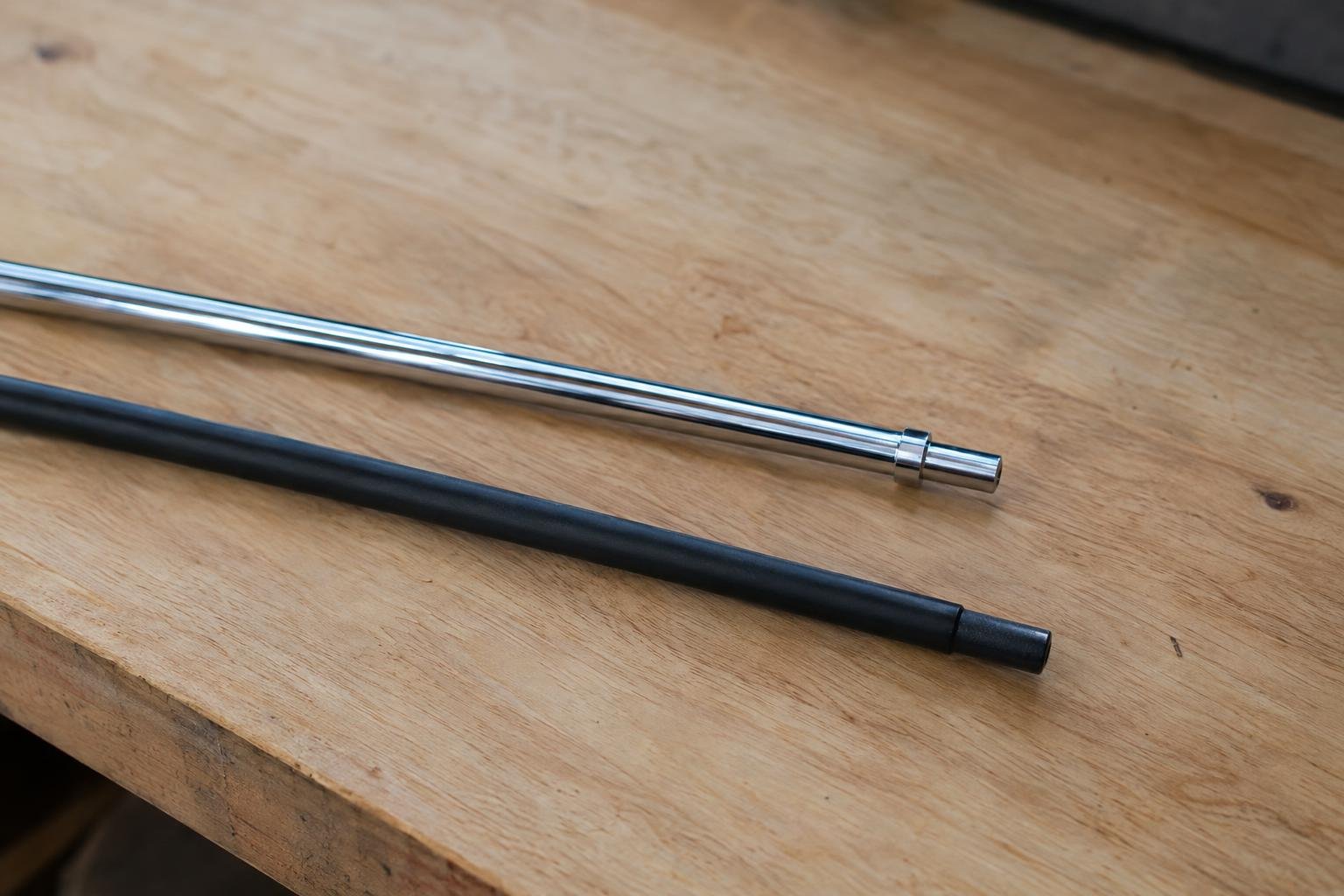
Then test. Hit the proposed long-iron graphite and the proposed short-iron steel back to back, and watch for trajectory and feel at the break point. Our custom shaft service can set that up, and the shaft selector helps narrow the candidates.
Here is an example of how a careful builder might think about a set, using general guidelines rather than a specific product. A golfer who struggles with launch in the 4 through 6 irons might receive a lighter graphite shaft in those clubs, chosen to match the feel of the steel in the 7 through pitching wedge. The builder compares frequency, adjusts swingweight, and checks that lengths step evenly.
The golfer then hits the set on a launch monitor and compares the 6 and 7 irons. If the 6 feels light or the 7 feels heavy, the builder can tweak weight or flex. The goal is not a perfect match on paper, but a set where each club feels like it belongs to the next one.
Bring your current irons, a note about where you struggle, and any pain or comfort issues. If you have had a hand, wrist, or elbow concern, mention it, because vibration and weight are part of the discussion. A fitter can only help with what you tell them, so be specific about how the clubs feel and what you would change.
Many golfers who consider a blended set find that a lighter steel or a heavier graphite across the whole set gets them most of the way there. A lightweight steel shaft is a middle ground that gives steel feel at lower weight, and a heavier graphite iron shaft can offer a firmer feel in a graphite set. Consider these before you commit to a blend.
The point where the set changes material is the place to test hardest. Hit the last graphite iron and the first steel iron in a row, using the same ball and target, and compare trajectory, feel, and how far each goes. If the last graphite club flies noticeably higher or shorter than the steel club beside it, the builder can adjust weight, flex, or length until the gap looks right. Taking the time to do this during the fitting saves a rebuild later.
Yes, when the weights, flex, and swingweights are matched. It is a legitimate approach for specific problems.
A careful build keeps the change subtle, but you may feel a small difference at the break point. Matching weight and frequency reduces it.
The longer irons, such as the 4 through 6, because that is where height and forgiveness are hardest to find.
A fitting is strongly recommended. Matching across materials is the hard part, and testing shows whether the blend helps.
Fitting appointments are local to Southwest Florida. Online buyers can read our FAQs or call 1-800-380-7901 to talk through a combo build. For the formal standard each club in a mixed set must meet, see the R&A equipment rules on club conformance.
Also Read: Discover the Best Golf Shaft Store for All Your Needs
Written by Patrick Greene|Golf shaft specialist with 15+ years in

Written by Patrick Greene|Golf shaft specialist with 15+ years in

Free golf guide · 26 pages
How to Teach Your Wife Golf (And Live to Talk About It)
A funny, practical guide to better golf and fewer arguments: setup, swing, short game, putting and what not to say on the course.
Get the free guide