
How Custom Golf Shafts Enhance Distance and Accuracy
Written by Patrick Greene|Golf shaft specialist with 15+ years in

Hand a golfer two drivers that weigh exactly the same on a scale, and there is a fair chance they will describe one as heavy and the other as light. Nobody is imagining things. The scale is reporting one measurement while the hands are responding to another, and confusing the two is one of the most common reasons a custom build comes back feeling wrong even when every component matched the order.
We spend a lot of bench time on this distinction, because it decides how a finished club feels during the swing rather than in the spec sheet. Here is what each measurement actually tells you, how they interact, and which questions to answer before a build so the club feels the way you expect on the first swing, not after three adjustment visits.
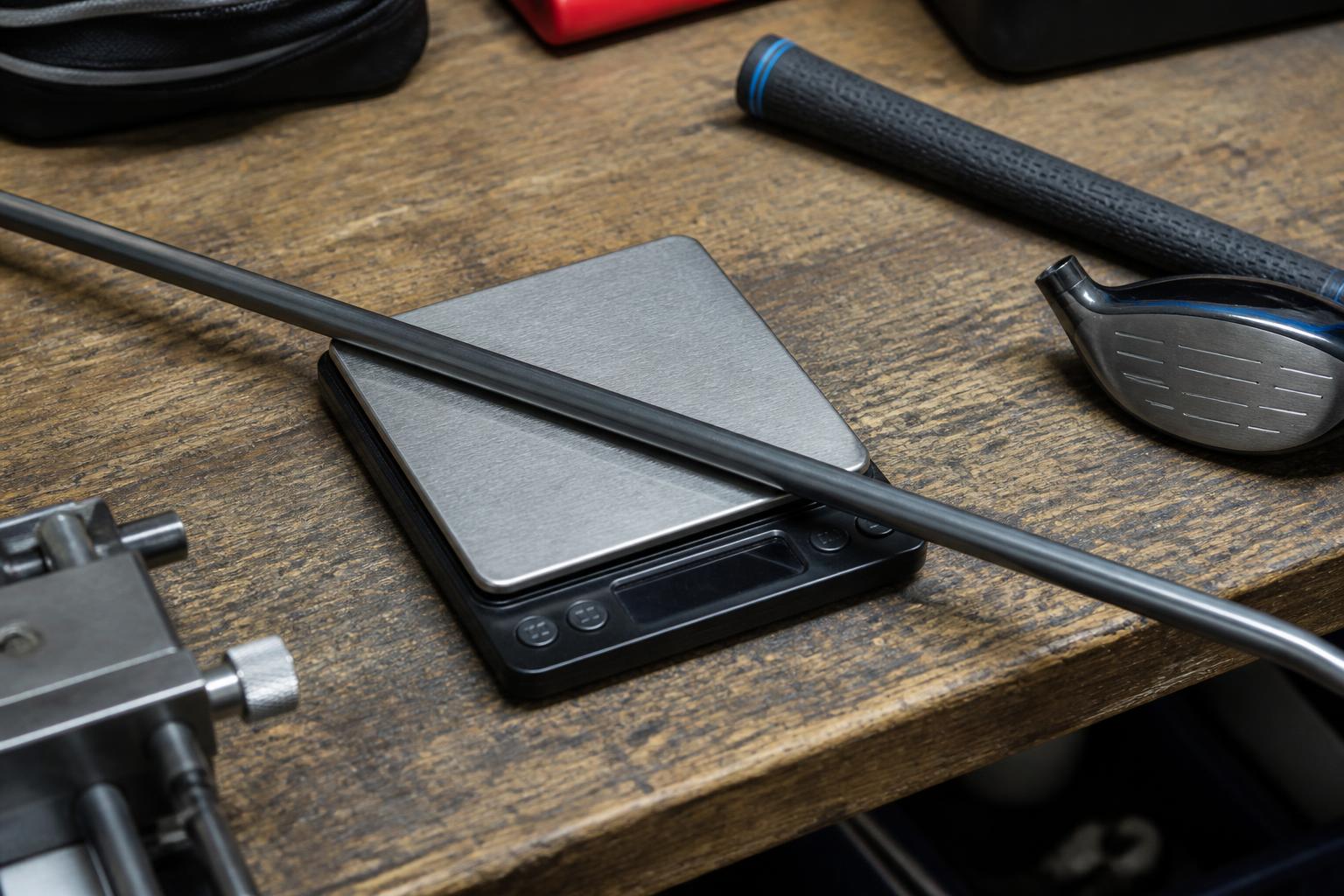
Total weight, sometimes called static weight, is the whole club on a gram scale: head, shaft, grip, adapter, epoxy, everything. It answers the question, how much mass am I moving? Shaft weight is usually the biggest lever here, which is why moving from a heavier shaft into a lighter one changes total weight noticeably even when nothing else moves; browse a maker’s catalog such as Mitsubishi Chemical’s shaft lineup and you will see single models offered across wide weight ranges for exactly this reason.
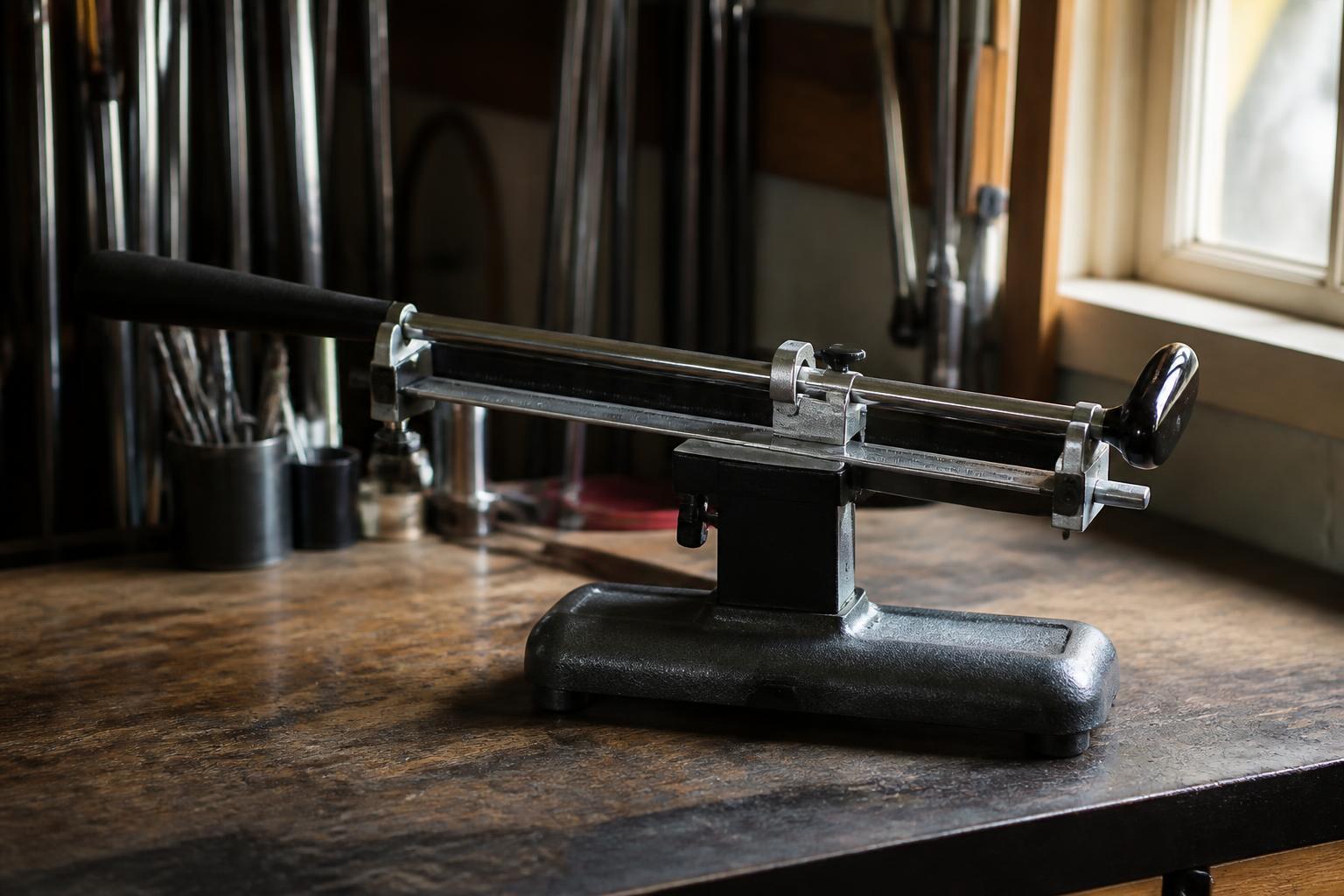
Swing weight answers a different question: how is that mass distributed? It is measured on a fulcrum scale and expressed on a letter-number scale, such as C9 or D3, where higher readings mean the club feels more head-heavy about that fulcrum. It is not a measure of how heavy the club is. It is a standardized way of describing balance, so a builder can reproduce a feel instead of guessing at it.
The debate framed as swing weight vs total weight is really a false choice, because a good fitting sets both on purpose. Total weight influences how fast you can move the club and how much effort a full round demands. Swing weight influences tempo, your awareness of where the head is, and how confidently you release the club. Change either one carelessly and the club feels foreign, even when the other number stayed identical.
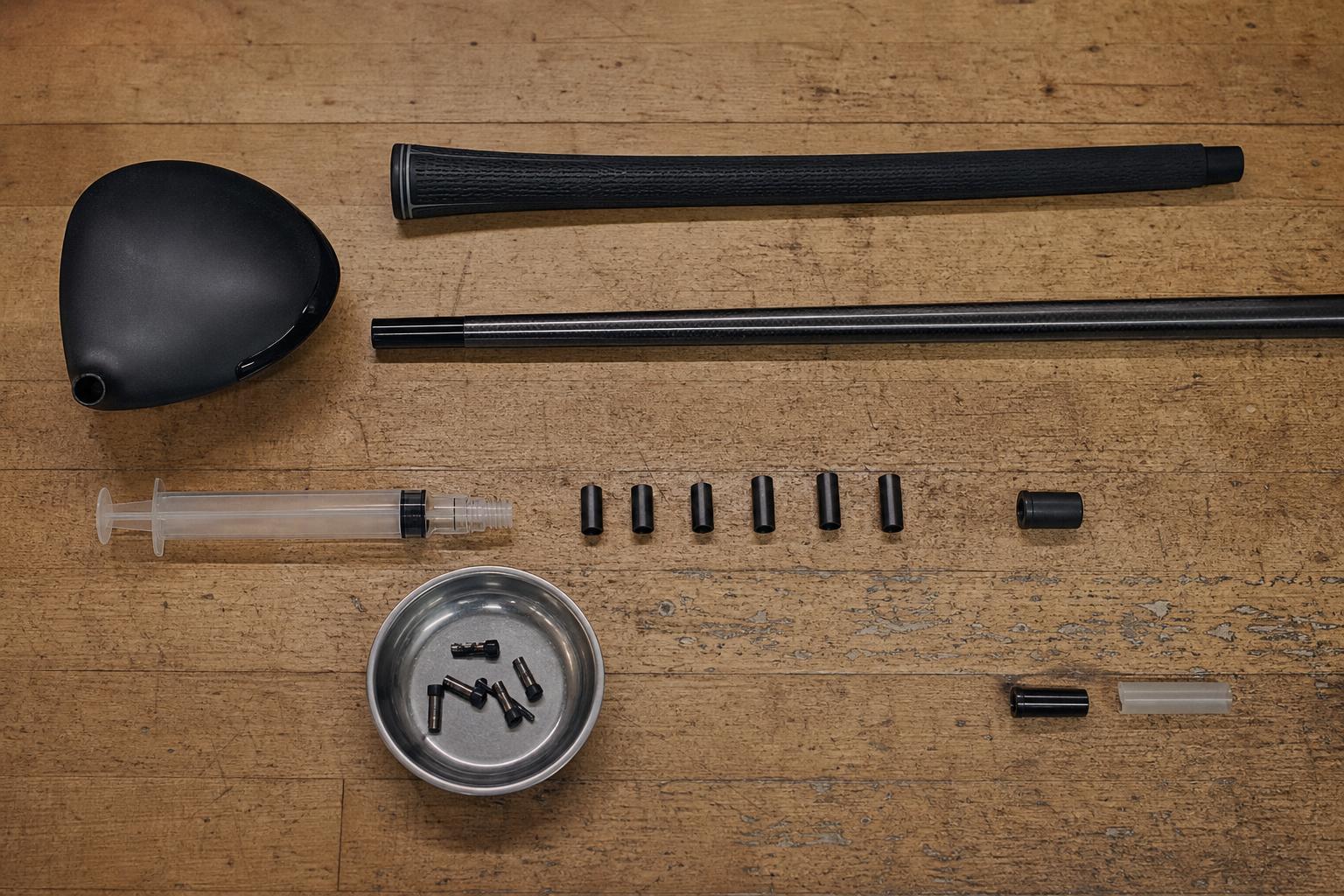
The levers are surprisingly independent. Total weight moves mainly with component choices: a lighter or heavier shaft, a lighter or heavier grip, a different head. Swing weight moves with distribution: head weights or hot-melt style adjustments, playing length, tip weights, grip weight, and where mass sits relative to the hands.
That grip example trips up more golfers than any other. Swapping to a noticeably heavier grip makes the scale reading drop, and it is tempting to conclude the club got lighter. It did not. You added mass. The balance changed. This is exactly why reading one number in isolation misleads.
There is no universally correct target, but the symptoms of a mismatch are consistent. A club that is too light overall often gets quick: tempo shortens, the transition rushes, and strike location wanders even though speed looks great on the monitor. A club that is too heavy overall produces the opposite, solid early-round contact that degrades as fatigue arrives.
Balance problems feel different. When swing weight is too low for you, golfers describe losing the head, not knowing where the club is during the downswing. When it is too high, the club feels sluggish through the ball and hard to square. Notice that none of these symptoms name a number. That is the point. The numbers exist so the builder can reproduce the feel that fixes the symptom.
The most useful thing you can bring to a build is your most trusted current club. Measuring its total weight, swing weight, and length gives the builder a proven reference point. If the new build changes shaft weight, the builder can then decide deliberately whether to preserve your familiar balance or move it intentionally, and tell you which choice was made and why. Builds that skip this step are the ones that come back with that vague something-is-off complaint.
First, what does your current club measure, and do you like it? Second, if the new shaft is meaningfully lighter or heavier, do you want the familiar feel preserved or are you deliberately chasing a change, more speed from a lighter build, more stability from a heavier one? Third, are grip and length staying fixed? Every one of those answers feeds the final numbers, and settling them up front is the difference between a one-visit build and a series of tweaks.
This is standard procedure for our custom shaft builds: Patrick measures the reference club, agrees on targets, and assembles to those targets rather than to whatever the components happen to produce. If you are still deciding which shaft belongs in the build at all, the shaft selector narrows the field first, and the weighting conversation follows naturally from there.
A few situations come across our bench so often that they are worth naming. The first is the golfer who cut down a driver for control and now cannot find the face. Shortening the club dropped its swing weight substantially, and the missing head-feel, not the new length, is usually what the player is fighting. Restoring some balance with head weight often rescues the experiment.
The second is the shaft upgrade that measures better and feels worse. A new shaft thirty grams lighter than the old one changes total weight and balance simultaneously, and if the builder assembled it without rebalancing, the golfer is really reviewing the weighting, not the shaft. We see promising shafts condemned this way regularly, which is a shame, because the fix is a few grams in the right place.
The third is the set that feels inconsistent even though every club is the correct spec on paper. Sets assembled club by club over years, different grips, different eras, no common target, drift apart in both measurements. Measuring the outliers and bringing them back to a single standard is unglamorous work that transforms how a bag feels. In all three cases the mystery dissolves the moment both numbers get measured instead of assumed.
D-range readings are common in stock men’s builds, but common is not the same as correct. The right reading is the one that reproduces a balance you strike well with, which is why we measure a club you already trust instead of defaulting to a chart.
No. Swing weight describes balance around a fulcrum, not mass. A club can gain total weight while its swing weight reading falls, which is exactly what happens when you install a heavier grip.
Often it adds some speed, but not automatically, and not for free. If the lighter build disrupts your tempo or strike, ball speed can fall even as club speed rises. Test the change, and let contact quality cast the deciding vote.
Within a range, yes. Head weights, grip changes, and small length adjustments all move it. Large corrections are harder, which is why agreeing on targets before assembly beats chasing feel afterward.
If a past build ever felt wrong in a way you could not name, the answer was probably hiding in these two numbers. Bring us the club you trust and the one you do not, and Patrick can measure both and build your next one to a target instead of a guess. Call 1-800-380-7901 to start the conversation.
Also Read: Improve Your Game with the Right Shaft Flex
Written by Patrick Greene|Golf shaft specialist with 15+ years in

Written by Patrick Greene|Golf shaft specialist with 15+ years in