
How Custom Golf Shafts Enhance Distance and Accuracy
Written by Patrick Greene|Golf shaft specialist with 15+ years in

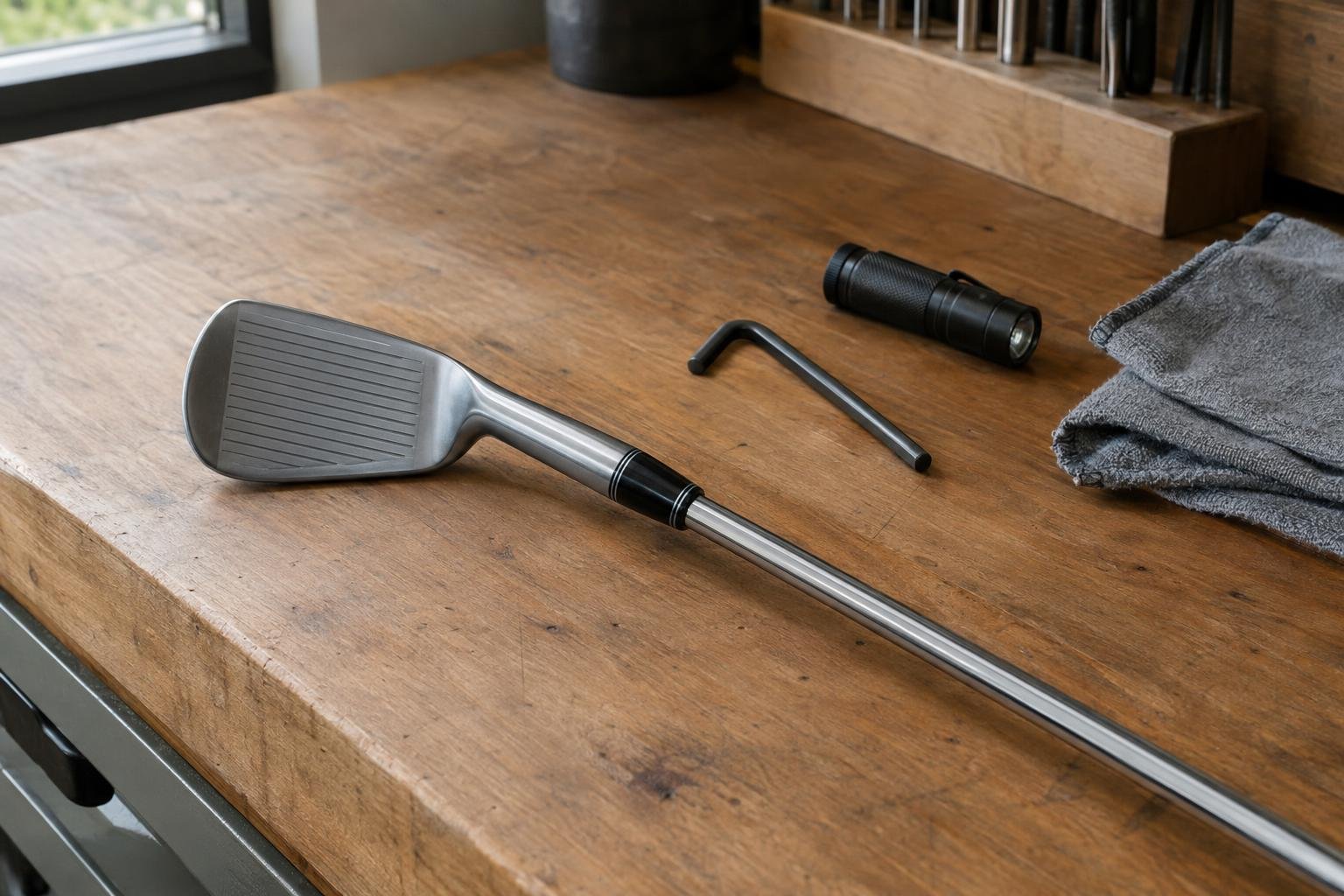
You take a practice swing, give the club a gentle shake, and hear a faint rattle. Maybe it only shows up at the top of the backswing or when you tilt the club. A golf shaft rattle is unsettling, and golfers usually fear the worst. In most cases the noise is not the shaft cracking. It is something loose in the head or hosel, and the fix is far less dramatic than a new shaft.
This guide covers the common causes of a rattle, how to narrow down where the sound is coming from, and when you should stop playing the club and have a builder look at it.
A rattle can travel along the whole club, so your ears can mislead you. Start with a few simple checks, performed gently and without prying at anything:
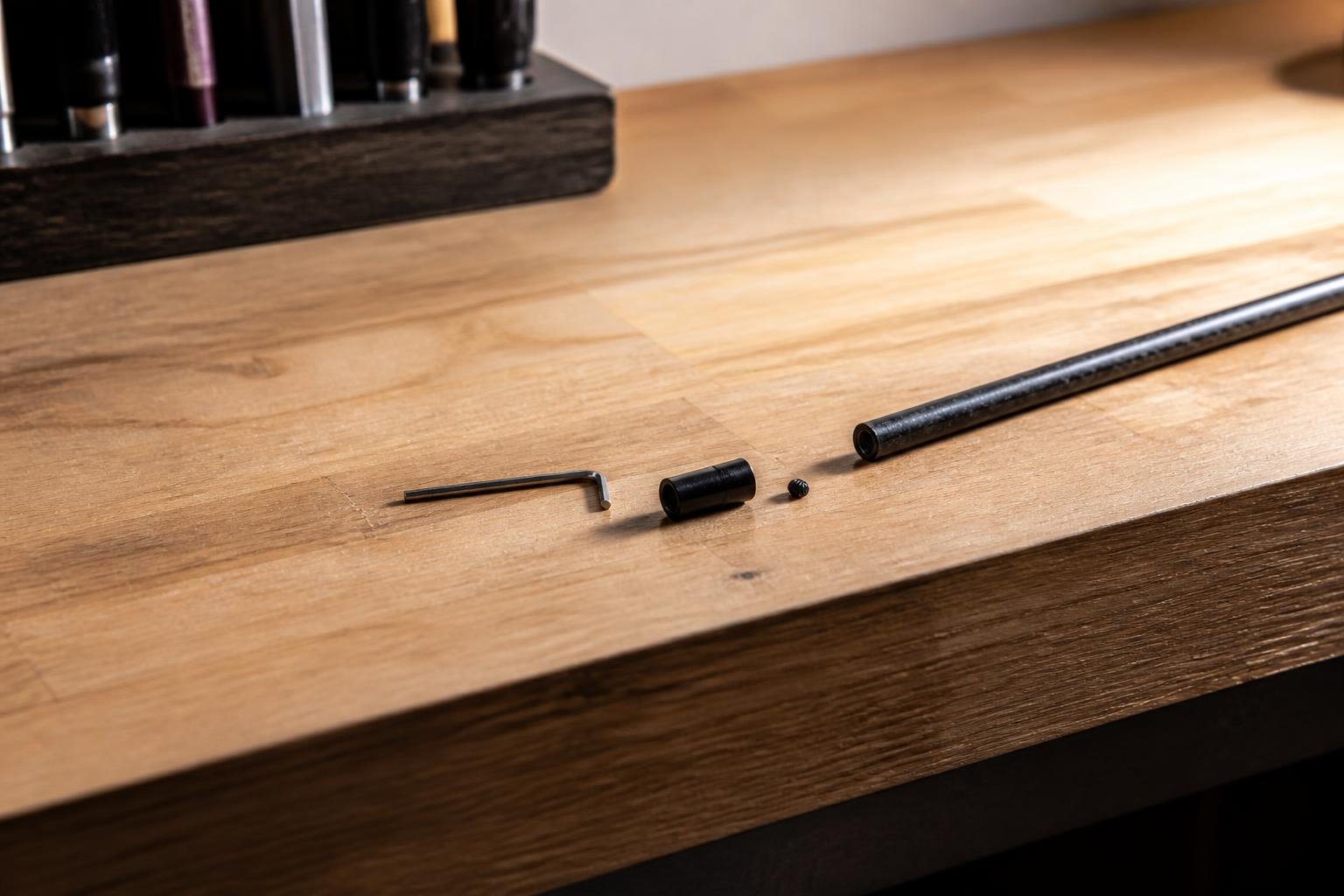
If the sound is clearly at the head end, you are probably dealing with something in the head or hosel. If it travels the full length and you cannot place it, take the club to a builder instead of guessing.
During a build, a bead of epoxy or a small piece of debris can end up inside the hosel and sit loose. It makes noise but does not change performance. Over time it can shake free, which is why a new reshaft sometimes rattles for a while. A builder can usually clear it out.
Many modern heads carry movable or fixed weights, and some irons and wedges have inserts. A weight whose screw has backed out, or a head with an internal piece that has come unbonded, will rattle when shaken. Check any removable weight to see that it is seated, using the manufacturer’s recommended tool and torque.
Drivers and fairway woods with adjustable hosels can rattle if the adapter screw is not tight. Retighten it with the manufacturer’s wrench, and make sure it clicks to its torque setting. Our guide to adjustable driver adapters explains how those settings work, and our ferrule guide explains the difference between a ferrule and an adapter.
Less often, the sound is inside the shaft itself. Loose epoxy or debris from the manufacturing or installation process can sit inside a graphite or steel tube and make noise. That kind of rattle is usually harmless, but it can also be a sign of an internal problem, so do not assume.
This is the serious one. A shaft that has been hit hard, struck against a tree or cart, or damaged by a tool can develop a crack that makes a faint click when flexed. The sound usually changes when you bend the shaft gently or twist the grip. If you see surface cracks, splinters, or a bulge, stop using the club.
Take the club out of play if you find any of the following:
A shaft that fails during a swing can injure you or someone nearby, and continuing to use a damaged shaft makes the damage worse. Our post on when to replace a graphite shaft lists the warning signs in more detail.
A builder can inspect the club under good light, check the hosel and bond, and often tell you the cause quickly. Possible outcomes include clearing debris, tightening or replacing an adapter or weight, re-bonding a shaft that has loosened, or recommending a new shaft if there is real damage. If a shaft is pulled, the builder will check it before it is reused. We explain that process in reusing a pulled graphite shaft.
Avoid trying to fix a rattle by prying at the head or drilling into anything. You may affect a warranty, damage the head, or make an inexpensive problem into an expensive one. Keep the work to non-destructive checks and let a builder do the rest.
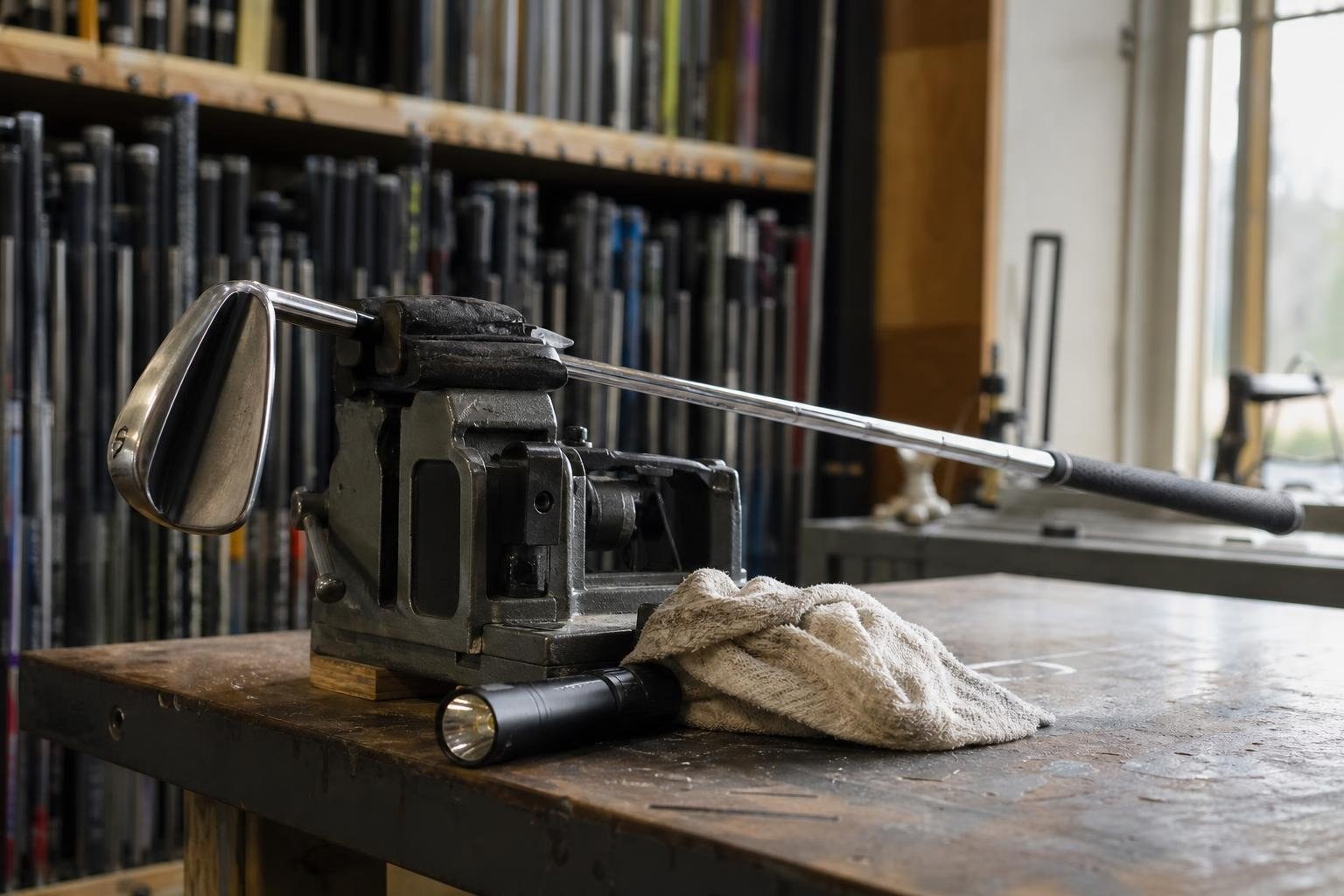
Taking a minute to inspect clubs now and then catches small issues before they become big ones.
Work through these steps in order, stopping if you find the cause:
If you run through the list and still cannot find the cause, stop and bring the club in. Writing down when the noise started and what happened right before it helps a builder narrow things down.
Not every sound is a defect. Some heads include internal materials designed to dampen vibration, and some make a soft sound by design. A sound that has always been there on a particular model is likely normal. A new sound on a club that used to be quiet deserves attention.
After a reshaft, a small piece of epoxy or a bit of debris can end up in the hosel cavity. A careful builder cleans it out, but it can still happen. If you notice a rattle on a fresh build, tell your builder right away. It is almost always an easy correction, and catching it early avoids any question about what caused it.
When you bring a club in, describe what you heard and when it started, including any knocks, drops, or hot-car storage. The more accurate the history, the faster the diagnosis. A builder is not judging how the club got that way; they are trying to find the safest and simplest fix for you.
Often it is not, but you cannot tell without looking. Treat a new rattle as a reason to inspect the club before you swing it hard.
Debris in a hosel generally does not. A loose weight or a loose shaft can change feel and consistency, so it is best to fix it.
Small bits of epoxy or debris can end up inside the hosel during a build. Tell your builder, who can check and clear it.
Tighten only what the manufacturer says you can, such as an adapter or weight. For anything beyond that, take the club to a builder.
If you are not sure what you are hearing, call 1-800-380-7901 or read our FAQs. If a new shaft is the answer, browse the shaft collection or our custom shaft service. For the formal standard, the R&A equipment rules require adjustable parts to be firmly fixed, with no reasonable likelihood of working loose during a round.
Also Read: Shaft Fitting With Range Balls: What the Numbers Can Tell You
Written by Patrick Greene|Golf shaft specialist with 15+ years in

Written by Patrick Greene|Golf shaft specialist with 15+ years in

Free golf guide · 26 pages
How to Teach Your Wife Golf (And Live to Talk About It)
A funny, practical guide to better golf and fewer arguments: setup, swing, short game, putting and what not to say on the course.
Get the free guide