
How Custom Golf Shafts Enhance Distance and Accuracy
Written by Patrick Greene|Golf shaft specialist with 15+ years in

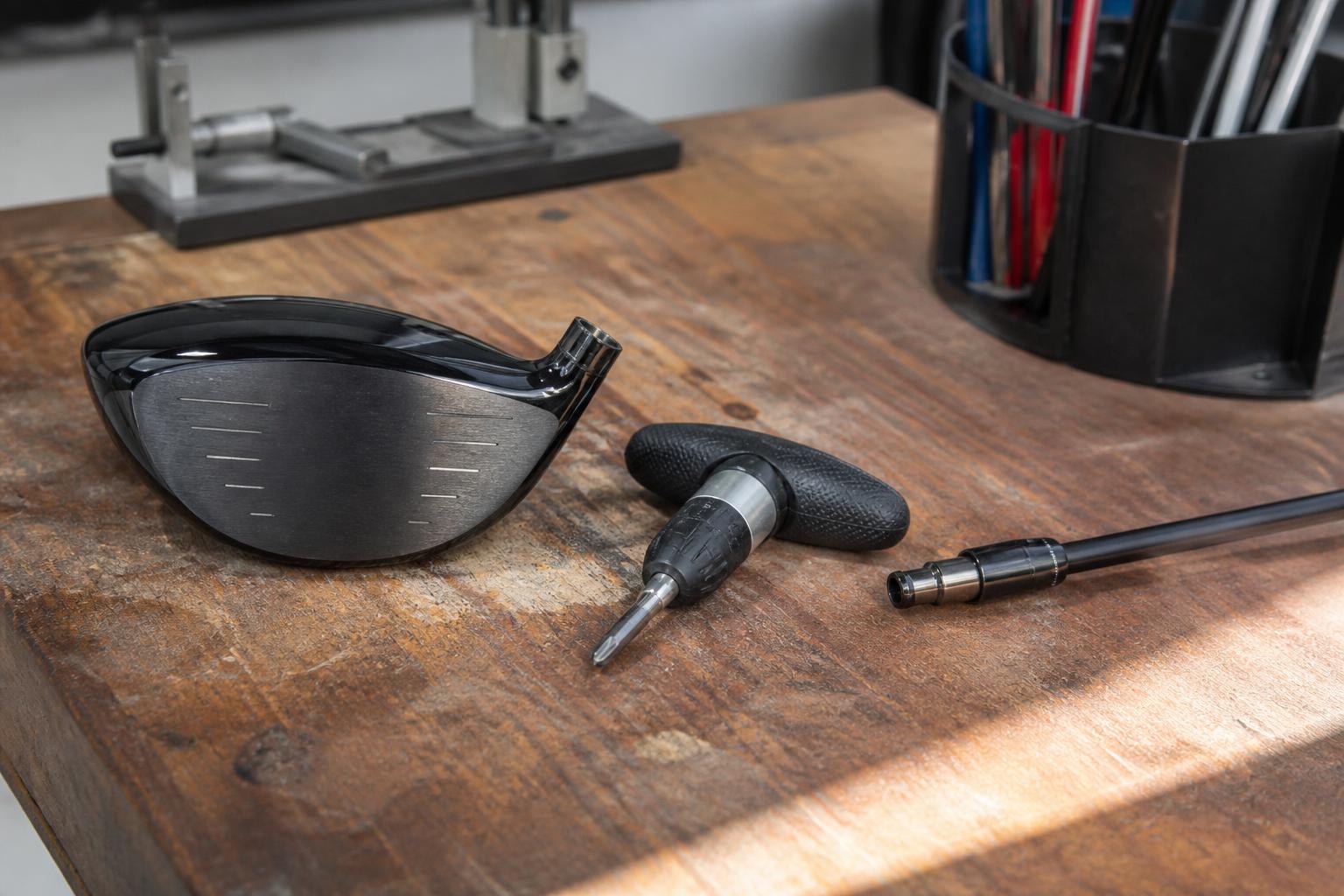
Almost every modern driver ships with an adjustable hosel, a couple of degrees of advertised loft change, a wrench, and a small chart most golfers read once and never quite trust. Fair enough, because the chart undersells what is actually happening. Those settings do not simply add or subtract loft the way the labels imply, and understanding what really moves when you click the sleeve is the difference between using adjustability as a fitting tool and using it as a slot machine.
We install and swap a lot of these sleeves, since every shaft we build for an adjustable head gets an adapter fitted to it. So here is the working explanation we give customers: what the settings genuinely change, what they cannot fix, and how hosel adjustment and shaft selection should work together rather than fighting each other.
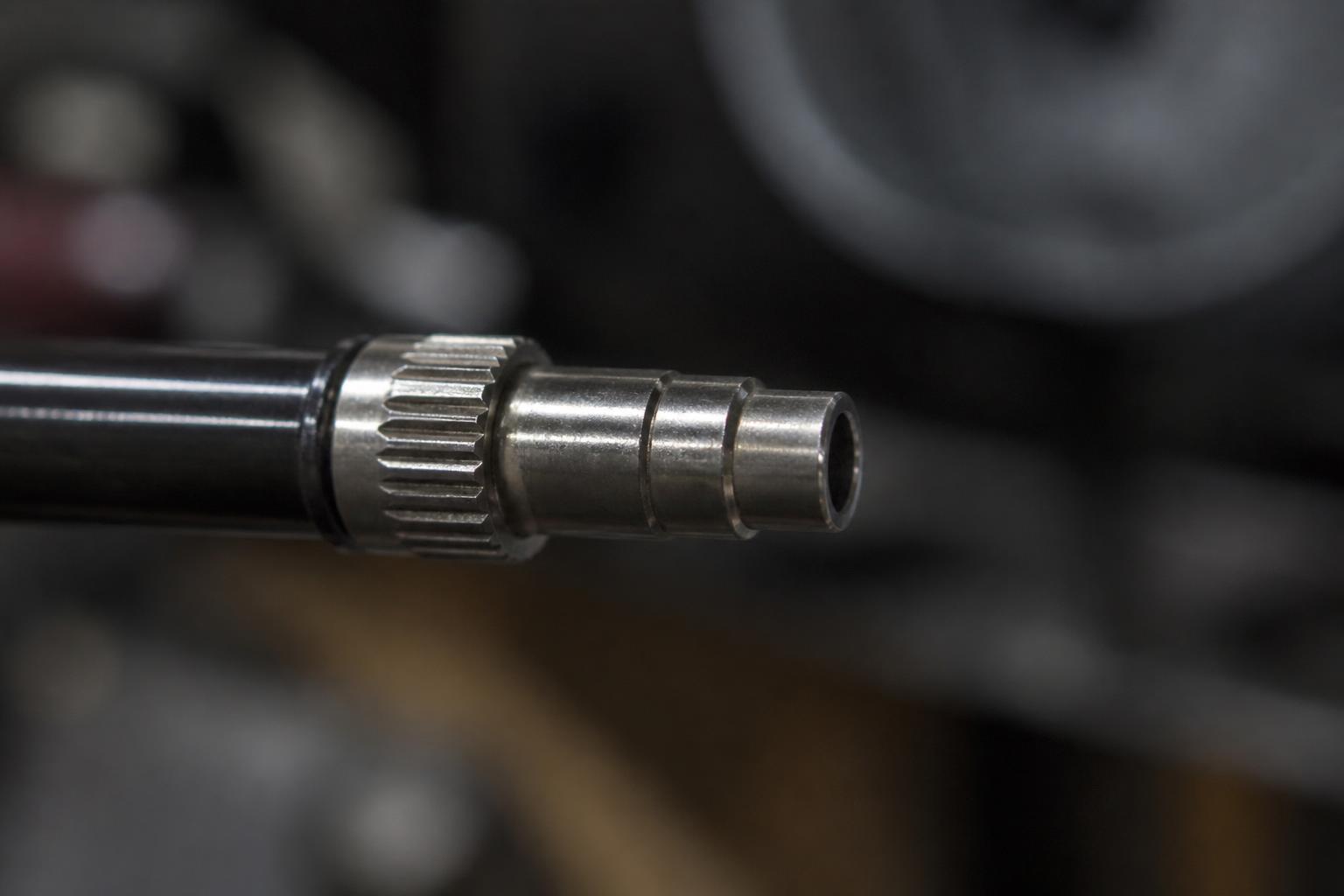
An adjustable hosel cannot bend the head. What it does is rotate the shaft’s insertion angle relative to the head, and that single rotation shows up in three connected ways: delivered loft, face angle, and lie. When you set the sleeve to a higher loft position, you are also closing the face slightly relative to a square hold; lower loft settings open it. That is why the classic advice pairs adding loft with fighting a slice, and reducing loft with fighting hooks; the face-angle side effect is doing real work alongside the loft change.
This coupling is not a design flaw, it is geometry, and every manufacturer’s adjustable system lives with some version of it. The practical takeaway: never think of a setting change as one variable. You changed loft and face presentation together, and your start line will notice even when the launch monitor’s loft change looks small.
The number on the sleeve describes the static change at the hosel, not what the ball experiences. Delivered loft depends on your attack angle, where on the face you strike, and how the shaft delivers the head. Two golfers using identical settings can launch degrees apart. So judge settings by outcomes, launch, spin, start line, carry, rather than by whether the sleeve now says the number you wanted to see.
The productive way to use an adjustable driver adapter is as a fine-tuning stage after the big decisions are made, not as a substitute for them. The sequence matters:
A setting change that improves flight but makes the club look wrong at address deserves caution, because what your eyes fight at setup tends to leak into the delivery. Some heads pair the hosel with movable weights; adjust one system at a time so you know which change did what.
The sleeve is also the connector that makes shaft swapping possible, and this is where buying and building intersect. Adapters are brand- and system-specific: a shaft with one maker’s sleeve does not click into another maker’s head, and even within a brand, generations can differ. When we build a wood shaft, say a Fujikura Air Speeder, for your driver, the correct adapter for your exact head gets installed, aligned, and epoxied as part of the custom build, so what arrives clicks in and plays.
Two build details are worth knowing. First, adapter alignment matters: the sleeve’s neutral marking needs to be installed square to the shaft’s intended orientation, or every chart position is subtly off. Second, swapping an adapter to move a shaft between brands is routine bench work, but each removal and reinstallation is a job for someone with the right tooling; a scorched tip or a misaligned sleeve turns a premium shaft into a problem.
Honest limits, briefly. A hosel cannot fix a strike problem; low-face contact will launch low and spin high at any setting. It cannot substitute for fitting; a couple of degrees of range will not bridge a fundamentally wrong shaft or head. And chasing a miss around the settings week to week usually means the miss lives in the delivery, not the equipment. Set it deliberately, verify it with a pattern of shots, write the setting down, and stop touching it.

Take your driver to a launch monitor or a range with flight tracking and give it twenty minutes. Establish a baseline at your current setting, eight to ten swings, average and miss noted. Move one click in the direction your pattern suggests, higher loft if you are struggling for carry or fighting a fade you cannot turn over, lower if you are ballooning with excess spin, and repeat the same eight to ten swings. Keep the winner, note the setting somewhere permanent, and re-verify only when something real changes: a new shaft, a swing change, or a new miss that persists for weeks.
If that session reveals problems a setting cannot solve, launch that will not come down, spin that will not behave, dispersion that ignores every click, the sleeve has done you a favor: it has told you the answer lives in the shaft or the fitting, not the hosel. That is exactly the point where the shaft selector and a conversation with Patrick become the fastest path forward.
The most overlooked habit in adjustable-driver ownership is documentation. Your driver’s real specification is not just the head and shaft; it is the head, the shaft, the tipping, the length, the grip, the swing weight, and the sleeve setting you validated, together. Golfers who keep that record can rebuild the club after a breakage, order a true backup, or diagnose a sudden flight change by checking whether the sleeve got rotated during travel or a regrip. Golfers who do not keep it end up re-fitting from scratch to rediscover information they already paid for once.
This is also the record that makes future shaft experiments clean. When a new shaft goes in, keeping the hosel at your documented baseline setting means the comparison isolates the shaft itself, and any later sleeve adjustment happens on purpose, one variable at a time, from a known starting point. Every build we ship goes out with its specs recorded for exactly this reason, and the sleeve position you settle on deserves a line in the same file.
On the common adapter designs, yes, higher loft settings also present the face slightly closed, and lower settings slightly open. Treat every setting change as a loft-and-face change together and judge it by start line as well as launch.
No. Sleeves are proprietary to each manufacturer’s system, and sometimes to specific generations within a brand. Moving a shaft between systems means having the correct adapter professionally installed on the shaft.
The shaft itself is unchanged, but face angle and delivered loft shifts can alter the flight you attribute to the shaft. That is why we set the hosel to a deliberate baseline before judging any new shaft’s performance.
Set it before you play and leave it alone. Mid-round tinkering chases single-swing noise, and the R&A’s Rules of Golf prohibit changing a club’s playing characteristics during a round anyway. Adjustment is a practice-session tool.
The wrench in your driver’s box is a genuinely useful fitting tool once you know what it moves and what it cannot. Dial the setting deliberately, and if the flight you want is not inside the range, that is a shaft conversation, one Patrick has every day. Call 1-800-380-7901 or start with the shaft selector, and bring your baseline numbers along.
Also Read: Driver Adapter Compatibility: What to Confirm Before You Buy
Written by Patrick Greene|Golf shaft specialist with 15+ years in

Written by Patrick Greene|Golf shaft specialist with 15+ years in

Free golf guide · 26 pages
How to Teach Your Wife Golf (And Live to Talk About It)
A funny, practical guide to better golf and fewer arguments: setup, swing, short game, putting and what not to say on the course.
Get the free guide