
How Custom Golf Shafts Enhance Distance and Accuracy
Written by Patrick Greene|Golf shaft specialist with 15+ years in


The choice between a senior flex vs regular flex driver shaft is not a verdict on your age or ability. It is a question of how you load the club and which profile helps you return the head with speed, centered contact, and a playable face. “Senior” is commonly used for A-flex or lite-flex models, while “regular” is the next familiar label, but those letters are not standardized across manufacturers.
That lack of a universal flex scale is why buying from swing speed alone can go wrong. Club speed is a useful starting point. Transition, tempo, release, shaft weight, head weight, playing length, and the profile’s stiffness distribution decide how the finished driver behaves. The goal is not to play the stiffest shaft you can handle. It is to play the build you can deliver repeatedly.
Senior flex generally describes a more flexible option designed to load with less force than a typical regular. Some brands call it A, lite, R2, or something proprietary. It often appears in lighter shaft families aimed at golfers seeking more speed and launch from a manageable total weight.
That does not mean every senior-flex shaft is soft in the same places. One model may have a soft handle and stable tip; another may feel firm in the hands but bend more through the middle. Weight also changes the experience. A 40-gram senior shaft and a 60-gram senior shaft can feel like entirely different categories.
Regular flex is generally built for a somewhat stronger load than senior flex, but it covers an enormous range of golfers. A smooth player with useful speed may fit regular, while a lower-speed player with a quick transition may also prefer the control it provides. The same player can fit senior in one brand and regular in another because the labels do not share one test standard.
Use the label to choose what to test first, not to finalize the order. Compare actual model, weight, torque, bend profile, and measured results. Fujikura’s current Air Speeder specifications and fitting details are available on the official Air Speeder page.
Driver speed helps narrow the rack. Many fitters begin looking at senior-style flexes for players in the 70s and low-to-mid 80s mph, then move into regular as speed and load increase. Those windows overlap. A number cannot see your transition or strike pattern, and a five-mph range should never overrule better contact.
The Fujikura Air Speeder shows why model-level detail matters. The lightweight family includes R3, R2, R, and S options, and Fujikura positions the current profile for high launch. Treat spin as a measured outcome rather than a fixed promise because the head, loft, strike, delivered dynamics, and complete build all influence it. A golfer choosing between senior and regular can test within the same lightweight family instead of changing every variable at once.
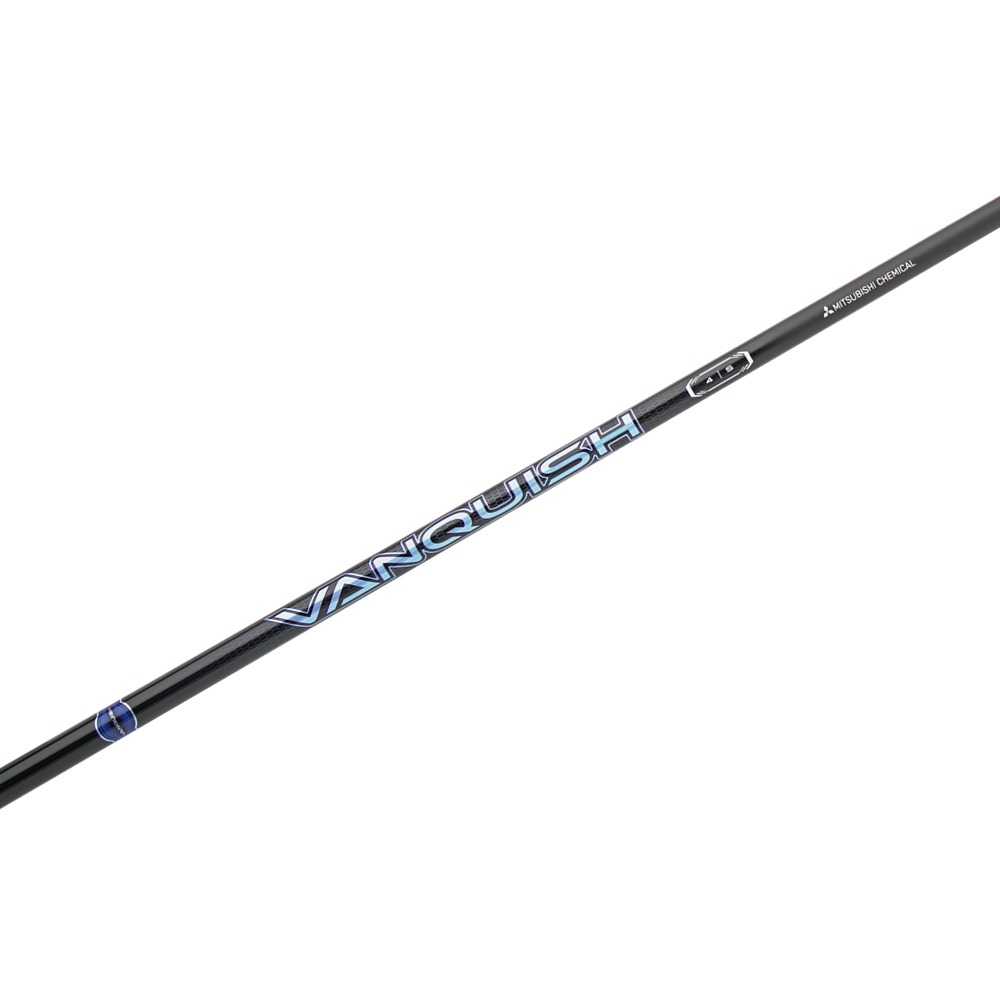
Air Speeder is not the only lightweight comparison worth testing. A model such as the Mitsubishi VANQUISH Blue gives the fitter another real product family to compare for weight, load, and delivery. The point is not that one brand’s flex equals another’s; it is to test complete profiles rather than treating the letter on the label as a universal measurement.
Tempo describes the overall pace of the swing. Transition describes how abruptly you change direction at the top. Two golfers can produce the same club speed with very different loads. The smooth player may create speed gradually and enjoy feeling a softer shaft load. The quick-transition player may need more resistance even at the same measured speed.
A shaft that asks for more load than you deliver can feel difficult to launch or hard to square. You may start swinging harder to make it work, lose center contact, and produce a low flight that falls short of its carry potential. The club can feel board-like or absent during the downswing.
Those symptoms are not proof. Low launch may come from low delivered loft, a low-face strike, or the head setting. A heavy shaft can feel too demanding even when its flex label looks right. Test a softer and/or lighter comparison while holding the head and playing length as constant as possible.
A shaft that is too soft for your load may feel as though the head is arriving at a different time on every swing. Some golfers see a higher flight, extra spin, or a wider two-way miss. Others simply lose awareness of the face during a forceful transition.
Again, none of those patterns proves a flex problem by itself. A poor strike or changing delivery can imitate the same result. The useful test is whether the regular option improves contact and dispersion without costing playable launch and carry.

Many golfers comparing senior and regular are also comparing different weights without realizing it. Moving from a 40-gram senior model to a 55-gram regular changes mass and balance as well as flex. If the heavier build improves timing, the benefit may come from weight. If it reduces speed and center contact, the flex letter will not rescue it.
A clean fitting tests one variable at a time where possible. Try adjacent flexes in the same family and weight, then compare weights after you have a baseline. Look at strike location, ball speed, carry, launch, spin, peak height, landing angle, and left-right dispersion. Keep the build that makes your normal swing better.
A golfer can be 70 with a fast, aggressive transition or 45 with a smooth, moderate-speed delivery. Senior flex is a product label, not an identity. Choosing it because it improves performance is smart fitting. Avoiding it because of the name can leave distance and accuracy on the table.
The reverse is also true. A softer shaft does not automatically create speed. If it disrupts face control or strike, regular may be the better option even when a speed chart points toward senior. Fit the motion in front of you.
The senior flex vs regular flex driver shaft comparison is most useful when every other build variable stays consistent. The shaft selector can narrow models, and our custom shaft service turns the chosen profile into a finished build with the correct adapter, length, and grip.
There is no universal cutoff. Speeds in the 70s and low-to-mid 80s often put senior-style flexes into the test set, but transition, contact, model stiffness, and weight can move the answer.
It may help if your current shaft is difficult to load, but launch also depends on the shaft profile, head loft, delivered loft, and strike. Compare measured shots rather than relying on the flex label.
No. Accuracy improves when the shaft helps you return the face and center contact consistently. That can be senior or regular depending on the golfer and model.
No. Choose based on delivery and results. Age may correlate with changes in speed for some golfers, but it does not measure tempo, transition, strength, or strike.
If you are deciding between a senior flex vs regular flex driver shaft, bring your current driver and test adjacent options instead of guessing. Patrick can compare the Air Speeder and other lightweight profiles, then build the winner to the specifications you actually tested. Call 1-800-380-7901 to talk through the options.
Also Read: Regular Golfers Share What Misled Them About Hybrid Shafts
Written by Patrick Greene|Golf shaft specialist with 15+ years in

Written by Patrick Greene|Golf shaft specialist with 15+ years in

Free golf guide · 26 pages
How to Teach Your Wife Golf (And Live to Talk About It)
A funny, practical guide to better golf and fewer arguments: setup, swing, short game, putting and what not to say on the course.
Get the free guide