
How Custom Golf Shafts Enhance Distance and Accuracy
Written by Patrick Greene|Golf shaft specialist with 15+ years in


Plenty of golfers assume an X on the shaft label means they are playing like a tour pro. Plenty of others have been told they need an X-flex shaft because they swing hard. Both assumptions can leave you with a club that launches low, feels dead, and sends the ball right of the target. If you are weighing an X-flex golf shaft, the real question is whether it matches how you load and unload the shaft, not how fast the swing looks.
This guide explains what X-flex actually means, why the letter is not a universal standard, and the signs that point toward (or away from) extra stiff. It is the same conversation we have with customers deciding between a stiff and an extra stiff shaft before they order.
X stands for extra stiff. It sits above S (stiff) on the usual flex ladder of L, A or M (senior), R (regular), S, and X. A few makers add steps in between, such as a stiff-plus or a tour-stiff option, and some brands skip letters entirely and use numbers instead.

Here is the catch: there is no industry-wide rule that says how stiff an X must be. One maker’s X can play close to another maker’s S. Two shafts from the same brand can carry the same letter and feel different because their weight, bend profile, and tip stiffness differ. The letter is a starting point for a conversation, not a measurement.
Flex is one number describing a shaft that actually has a stiffness profile along its whole length. A stiff tip and a softer midsection can sit under the same X as a firm butt section with a softer tip. We cover one part of that shape in our guide to kick point and ball flight. If you only shop by letter, you are shopping by a fraction of the information.
Most flex charts line up club speed with a letter. Driver swing speeds well above roughly 100 mph often get pointed toward stiff or extra stiff, and slower speeds toward regular or senior. Those charts are fine for narrowing a list, and our shaft selector uses the same idea to get you started.
Treat them as a rough guide because speed alone ignores how you deliver the club. Two golfers can both swing 105 mph and need different shafts. One builds speed smoothly and the other jumps at the ball from the top. The aggressive transition loads the shaft harder, and that player may genuinely need X. The smoother player at the same speed can end up with a shaft that never fully loads.
Transition is the moment the club changes direction at the top. A quick, forceful transition bends the shaft more, especially through the lower half, so it calls for a stiffer shaft to keep the face stable. A patient, rhythmic transition asks less of the shaft. We go into this in our post on smooth tempo versus aggressive transition.
Playing a flex that is too stiff is a common mistake because stiffer feels like the safe choice. It usually shows up in a few ways:
If two or three of these sound familiar, a flex that was recommended by a chart rather than a fitting may be the reason.
We cover this in more depth in our posts on signs your driver shaft is too stiff and stiff versus X-stiff.
The opposite problem exists too, and it is where X-flex genuinely helps. A shaft that is too soft for a hard, fast swing tends to produce:
A golfer with quick tempo, a steep transition, and a pattern of left misses is the classic candidate to try extra stiff.
Flex does not live alone. A 60-gram X and a 75-gram X are different tools, and the heavier one tends to feel more stable at the same letter. Moving to a lighter shaft sometimes means you can stay in a stiffer flex without losing the ability to load it. Moving to a heavier shaft can let you go a touch softer in letter and still feel firm. Our guide to 60g versus 70g driver shafts walks through that tradeoff.

That is also why a hybrid or fairway wood often calls for a different flex than your driver. The shorter shaft and slower speed change how the shaft loads, so copying your driver’s X into every club is not automatic.
The most reliable way is to hit real options on a launch monitor and compare launch, spin, dispersion, and feel, not to guess from a chart. Hit a stiff and an extra stiff in the same head, same length, and similar weight, and let the numbers and your own eyes decide.
If you cannot get in front of a launch monitor right away, answer these before you buy:
Bring those answers to our custom shaft service and we can point you toward a short list that fits your swing instead of your pride.
When you test, change one thing at a time. Keep the head, loft, length, and grip the same, and swap only the shaft. Hit at least ten good swings with each option before you decide, and ignore the first couple of swings while you settle in. Write down average carry, spin, launch, and how far offline your misses go, not only your best shot.
Pay special attention to the miss. A shaft that makes your best swing slightly better but your bad swing much worse is usually the wrong choice for the course. The shaft that tightens your dispersion is often the one that scores better, even if the peak distance is a few yards shorter.
No. X-flex is for any golfer whose swing loads a shaft hard enough to need it. Plenty of strong amateurs play it and plenty of tour players do not. The right flex is the one that gives you a consistent face and a ball flight you can repeat.
Only if your swing was overloading a softer shaft. For a golfer who does not load an extra stiff shaft, it usually costs distance because the club launches lower and feels harder to release.
That is common. A shaft with a stiff-plus rating, a different weight, or a different bend profile may fit better than either letter. Testing both in the same head helps decide.
It feels firmer, and a firmer shaft gives less feedback if you do not load it. If you can feel the shaft working in the transition without losing control of the face, you are probably close.
If you would like help sorting it out, check our FAQs or call 1-800-380-7901 and we will talk through your swing before you spend anything. Whichever flex you choose, the shaft still has to conform to the R&A equipment rules on club design.
Also Read: Why the Best Iron Golf Shafts Aren't Always the Heaviest
Written by Patrick Greene|Golf shaft specialist with 15+ years in

Written by Patrick Greene|Golf shaft specialist with 15+ years in
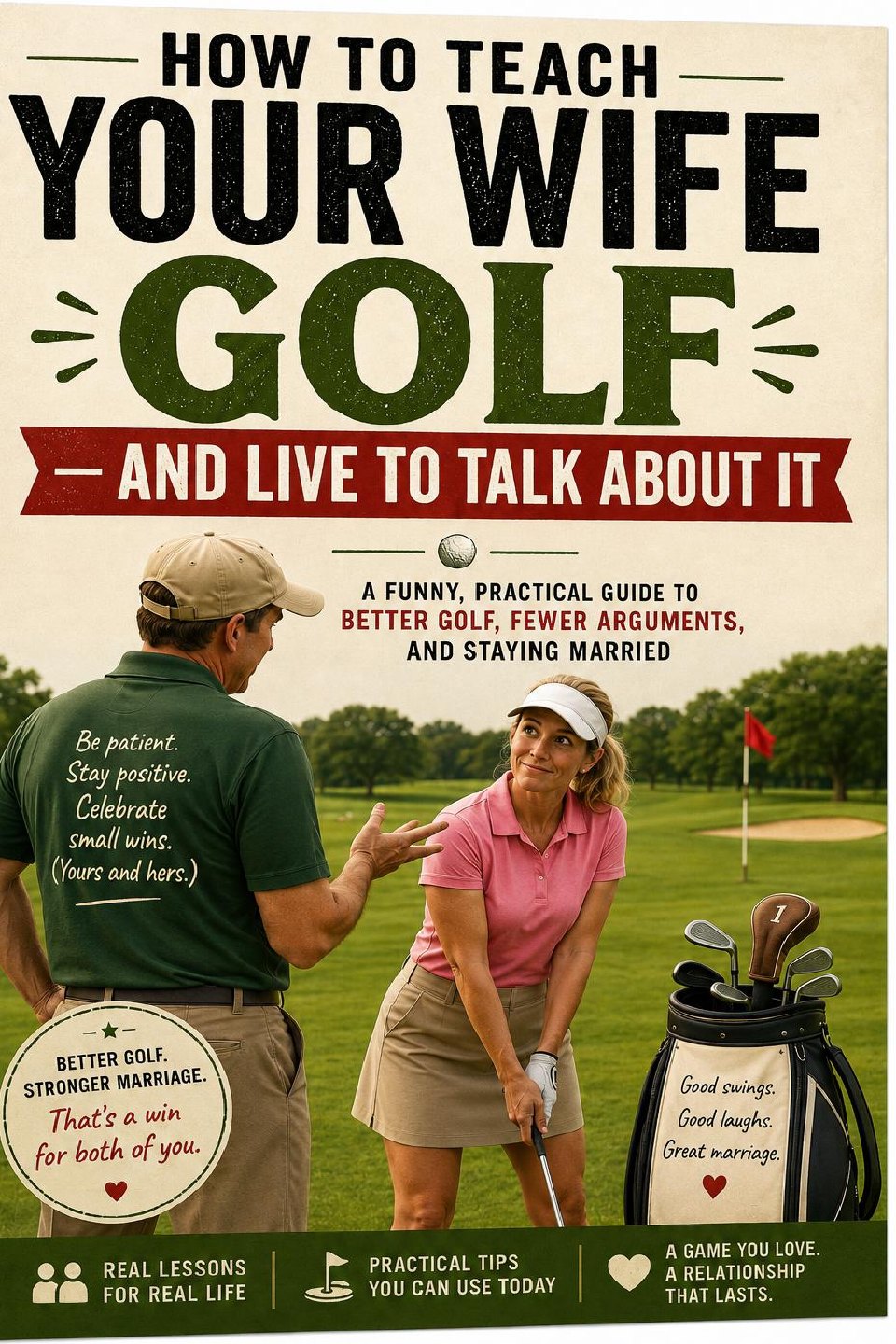
Free golf guide · 26 pages
How to Teach Your Wife Golf (And Live to Talk About It)
A funny, practical guide to better golf and fewer arguments: setup, swing, short game, putting and what not to say on the course.
Get the free guide