
How Custom Golf Shafts Enhance Distance and Accuracy
Written by Patrick Greene|Golf shaft specialist with 15+ years in

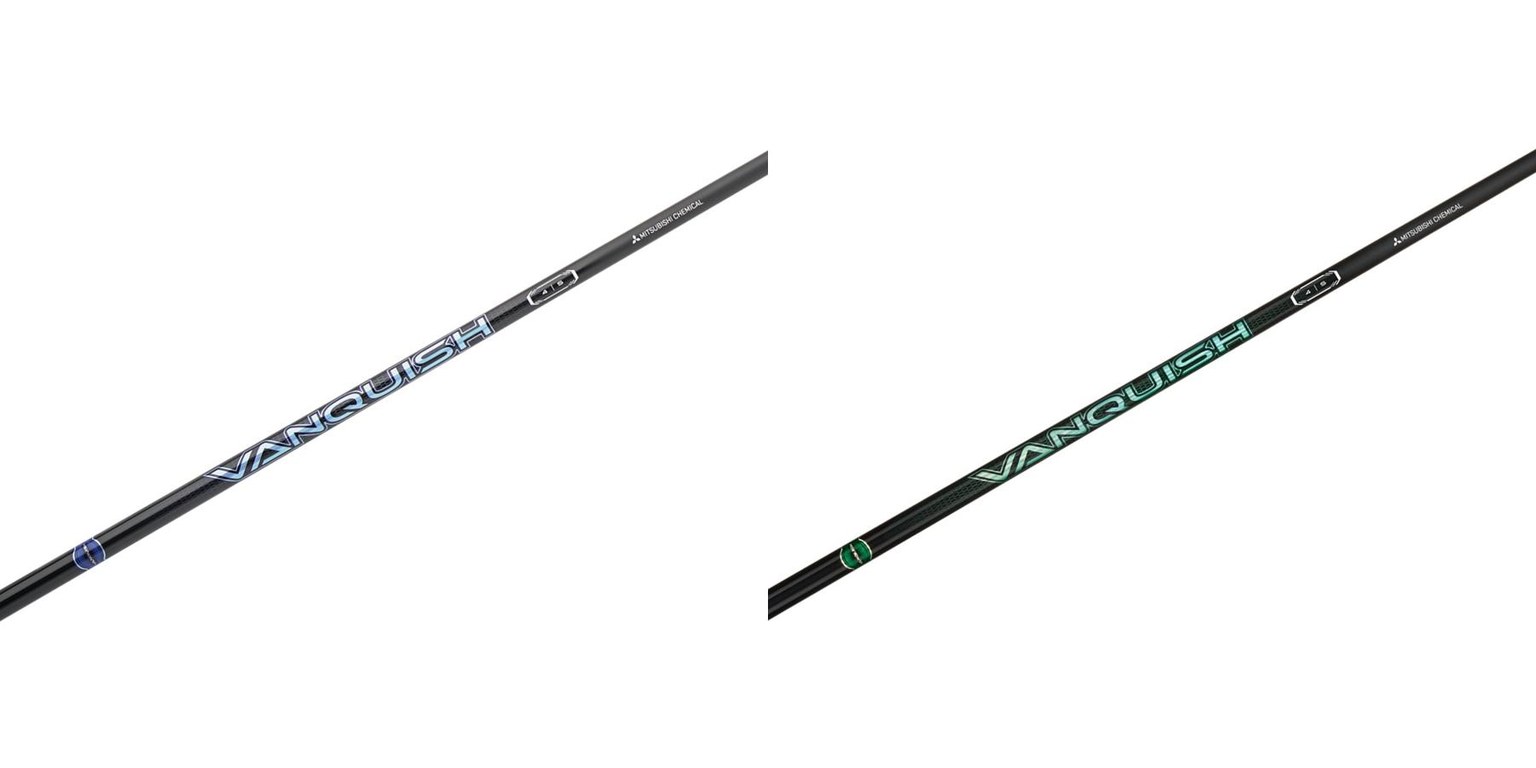
If you are shopping for a lightweight driver or fairway shaft, the Mitsubishi family keeps pointing you to the same name with two colors attached. The Mitsubishi Vanquish shaft comes in the original Blue and the VV in Green, and they look almost identical on a spec sheet until you read how each one is tuned. Picking the wrong one is an easy mistake, and it is an avoidable one.
Here is a plain-English comparison of the two, who each tends to fit, what to watch for with any ultralight shaft, and how we sort it out with a golfer before a build.
Both models are built on the same ultra-premium lightweight platform. According to the product specifications, Mitsubishi created VANQUISH with direct input from top players on the LPGA Tour, and it is aimed at any golfer curious about what a lightweight shaft can do for club head speed and ball speed.
Three construction details are shared across both shafts, as Mitsubishi describes them:
Mitsubishi also describes a Consistent Feel Design that reduces variation between weights and flexes, so fitting is more straightforward, and a Precision Crafted Design that holds tight tolerances.
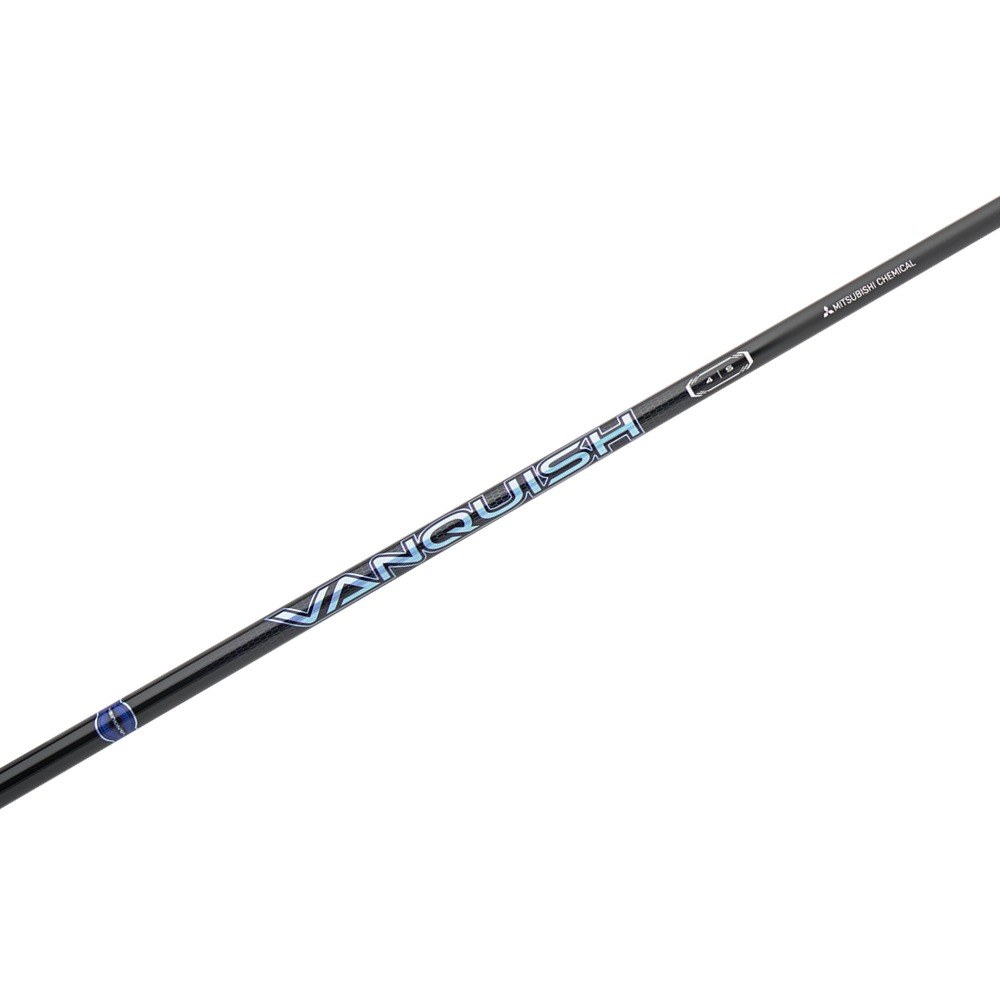
The original is the high-launch option. Mitsubishi rates VANQUISH (Blue) as high launch, mid-plus spin, and mid/low kick point, offered in 36 to 59 gram models from R3 to X flex. Our listing shows every Blue shaft at 46 inches with a .335-inch tip.
The model number follows weight. VANQUISH 3 is the lightest, running 36 to 43 grams in R3, R2, R, S, and X. VANQUISH 4 runs 47 to 52 grams, and VANQUISH 5 runs 53 to 59 grams. If you want a high, active launch from a lightweight shaft, the Blue model is where we usually begin the conversation.
The torque figures in the specifications drop as the models get heavier. The VANQUISH 3 lists around 10.4 to 10.6 degrees, the VANQUISH 4 around 5.2 to 5.4 degrees, and the VANQUISH 5 around 4.1 to 4.2 degrees. If you want background on why that number matters, see our post on how shaft torque affects accuracy.
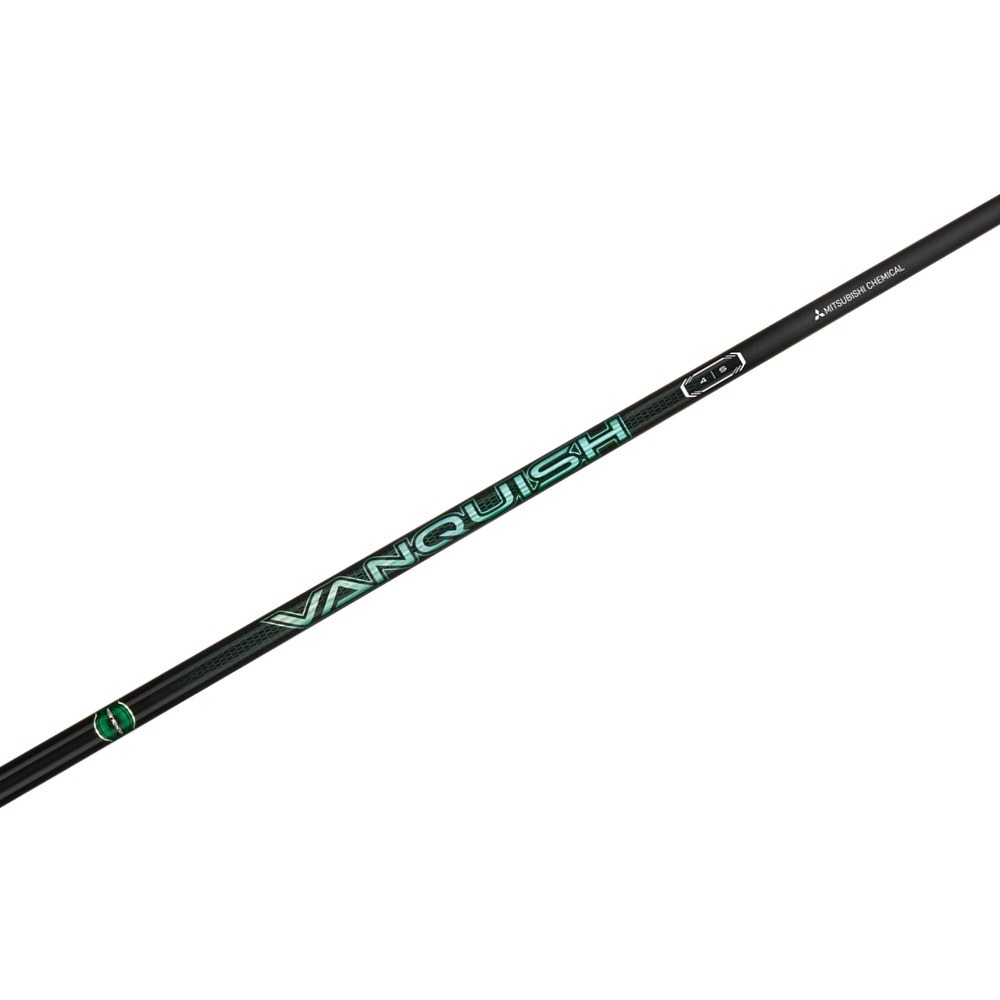
VANQUISH VV (Green) is described as the lower-launching counterpart to the original. It keeps the same lightweight design and lively tip but raises the kick point. Mitsubishi rates it mid-plus launch and mid spin with a mid kick point, and says it adds feedback in the handle for players who want to feel the shaft load.
In the maker’s words, the higher kick point is what flights the ball lower than the original. The VANQUISH VV is offered in 3, 4, and 5 wood models, in flex R2 through X. For a refresher on how kick point works in general, read our guide to kick point and ball flight.
Notice that these are tuning differences, not a good-versus-bad ranking, and that both are offered in 3, 4, and 5 models. The question is which launch and feel suits your swing.
These are starting points we use in conversation, not guarantees. The final answer comes from how the shaft performs in your hands.
If you tell us your typical miss and ball flight, we can narrow the choice quickly. It also helps to know whether your current driver launches high or low with a well-struck shot, because that single detail often decides between the two colors before we look at anything else.
Lightweight shafts are not automatically better. Some golfers love how easy the club feels to swing, and others lose their sense of where the head is. A few things to keep in mind:
We cover the broader picture in our driver shaft weight guide, and in when a lightweight shaft can help a tired swing.
Fitting starts with a few simple facts: your driver speed, your current shaft, your usual miss, and whether you want the ball higher or flatter. When we fit a Mitsubishi Vanquish shaft, we ask whether the current shaft feels too heavy, too stiff, or simply dull, and whether a higher or lower ball flight would help on your home course. Those answers matter as much as the speed number. From there we pick a model number and flex. According to our product pages, each shaft is built to order to your adapter, tipping, and grip, fit by Patrick. In-person fittings are available by appointment in Southwest Florida, and you can also send Patrick your driver speed and current shaft.
For independent background reading on equipment trends, the gear section at Golf.com is a useful place to compare general club technology.
Mitsubishi rates Blue as high launch with a mid/low kick point, and VV as lower launching with a higher, mid kick point and added handle feedback. The rest of the platform is the same.
The model number follows weight. VANQUISH 3 is the lightest, VANQUISH 5 the heaviest. Your swing, tempo, and the club you are building decide the right one.
Yes. According to the listings, we build both for drivers and fairway woods. The 3, 4, and 5 models are the wood-shaft options, and you choose driver or fairway wood when you order.
Describe your ball flight to us. A golfer who already launches high usually points toward VV, and one who needs help getting airborne usually points toward Blue.
If you would like a second opinion, try the shaft selector or call 1-800-380-7901 to talk it through with Patrick. There is no pressure, and we are happy to help you compare options before you decide.
Also Read: Common Questions About Fujikura Shaft Dealers Answered
Written by Patrick Greene|Golf shaft specialist with 15+ years in

Written by Patrick Greene|Golf shaft specialist with 15+ years in

Free golf guide · 26 pages
How to Teach Your Wife Golf (And Live to Talk About It)
A funny, practical guide to better golf and fewer arguments: setup, swing, short game, putting and what not to say on the course.
Get the free guide