
How Custom Golf Shafts Enhance Distance and Accuracy
Written by Patrick Greene|Golf shaft specialist with 15+ years in


A repeatable ball-flight pattern can help you and a fitter investigate whether the shaft contributes, but ball flight alone cannot separate equipment effects from swing mechanics. The useful starting point is to describe what repeats, when it appears, and whether anything in the build recently changed.
Patrick Greene can use that information to suggest a controlled comparison. The goal is not to diagnose the cause from a hook, fade, or launch window by itself; it is to decide what should be tested before you spend money on a replacement shaft.

Ball flight shows the combined result of the swing, strike, clubhead, loft, shaft, and ball. A pattern that changes after a shaft or build change can justify testing the equipment, especially when the head and swing conditions remain similar. It is still evidence for a test, not proof of the cause.
Pay attention to how often the flight occurs and what happens when you swing at different effort levels. Record whether the ball starts left or right, curves in flight, launches unusually high or low, or loses carry. Those observations give a fitter a clearer comparison point than a label such as “too spinny” or “too soft.”
Tempo, transition force, strike location, attack angle, face delivery, and the clubhead can all affect the pattern you see. A golfer may produce the same miss for more than one reason, so changing the shaft without controlling the other variables can create another guess rather than an answer.
When possible, compare shafts in the same head, at similar lengths, and with comparable total weight. Use several representative swings and track strike location. If the pattern changes consistently under controlled conditions, the equipment explanation becomes more credible.
The first mistake is treating one bad shot as a fitting diagnosis. The second is assuming that every left miss means a shaft is too soft or every low flight means it is too stiff. Those shortcuts ignore face angle, path, strike, loft, and the player’s timing.
Another mistake is changing several parts of the club at once. A new head, loft, shaft, length, and grip can all affect the result. A smaller, controlled comparison makes it easier to learn whether a shaft change is helping.
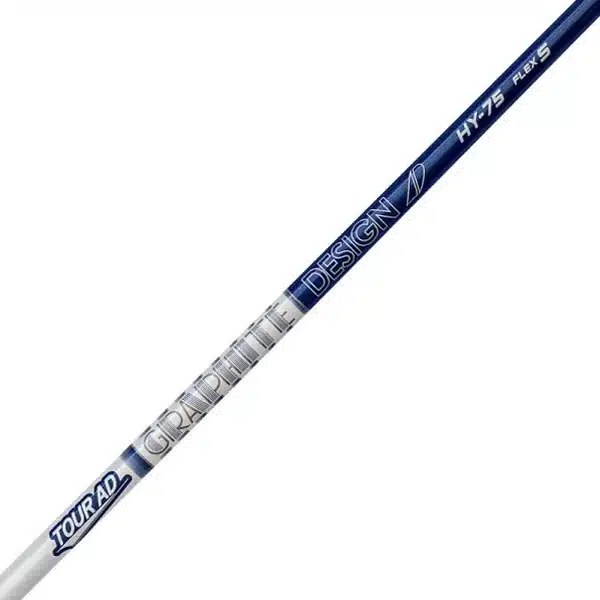
Share the current head, loft, adapter setting, shaft model, weight, flex, playing length, and grip. Describe the typical ball flight and miss, how often it appears, and whether it changes when you swing harder or smoother. If the pattern started after an equipment change, include that timeline.
Launch-monitor averages and strike-location notes are useful when available, but a clear on-course description still helps. The best recommendation may be to test another shaft, adjust the build, or work on the swing before buying anything.
Describe the start direction, curve, launch height, carry, and strike pattern over several swings. Note what stays consistent and what changes with effort. Those details make it easier to reproduce the issue during a fitting.
Keep the head, loft, ball, and playing length comparable when testing another shaft. If the result improves, repeat the comparison before drawing a conclusion. A repeatable difference is more useful than a single better shot.
Finally, decide what you want the test to improve: launch, spin, dispersion, strike consistency, or feel. Clear priorities make it easier to describe the pattern and decide what to test first without claiming that ball flight alone identifies the cause.
A flight that changed after a shaft swap, length change, or other build adjustment is a useful reason to recreate the old and new conditions. A miss that becomes more pronounced only at higher effort may also justify comparing profiles, provided the head, loft, and strike are considered at the same time.
These clues do not prove that the shaft is responsible. They narrow the experiment. If the flight changes consistently when only the shaft or one build variable changes, the equipment explanation becomes more credible.
A shaft can influence loading feel, timing, and delivery, while the swing determines path, face orientation, and much of the strike pattern. Because those effects interact, a remote description cannot reliably assign the cause to one side.
Use face tape or impact spray, launch-monitor averages, and a fitter’s observation when possible. If the same miss follows the golfer through multiple controlled builds, swing mechanics deserve closer attention before another purchase.
Explain where the ball starts, how it curves, how high it launches, and whether carry changes. Add the strike location and whether the pattern appears on normal swings, hard swings, or both. Avoid reducing the description to “too soft” or “too stiff” before the test.
A consistent change after an equipment swap can justify testing the shaft, but ball flight alone cannot diagnose the cause. Compare controlled swings with the same head and build, preferably with a fitter, before deciding.
If the first comparison is inconclusive, do not force a purchase decision. Repeat the test with a smaller set of candidate shafts, keep the same ball and target, and give the golfer enough time to return to a normal rhythm. An uncertain result is a reason to gather better evidence, not to choose the firmest or most expensive option.
Ask whether the miss appears with other clubs. A similar start line or curve throughout the bag can point toward a broader delivery pattern, while a problem isolated to one build gives the fitter a stronger reason to inspect that club. It still needs a controlled comparison before the shaft is blamed.
Also separate feel from outcome. A shaft can feel unfamiliar on the first few swings and still produce a useful pattern, or feel comfortable while the strike and dispersion remain poor. Give both the measured result and the golfer’s feedback a place in the decision.
Write down the conclusion in test language: what changed, what stayed the same, and which variable should be checked next. That record prevents a tentative observation from turning into a confident diagnosis after the session.
The shaft selector and shaft catalog can help identify candidates for that test. The PGA fitting overview adds useful context, and Patrick can review the pattern through the contact page.
A consistent change after an equipment swap can justify testing the shaft, but ball flight alone cannot diagnose the cause. Compare controlled swings with the same head and build, preferably with a fitter, before deciding.
Start with swing speed, but do not stop there. Tempo, transition, strike quality, and the head you play can change the right answer.
Yes. Share your current setup and ball flight through the contact form. Patrick can help narrow the options before you buy.
If your ball flight suggests the shaft may be part of the problem, Bogey Buster Golf Shafts can help you avoid a guess. Call 1-800-380-7901 or ask Patrick for fitting help before ordering your next custom shaft.
Also Read: Understanding the Role of Shaft Flexibility
Written by Patrick Greene|Golf shaft specialist with 15+ years in

Written by Patrick Greene|Golf shaft specialist with 15+ years in

Free golf guide · 26 pages
How to Teach Your Wife Golf (And Live to Talk About It)
A funny, practical guide to better golf and fewer arguments: setup, swing, short game, putting and what not to say on the course.
Get the free guide