
How Custom Golf Shafts Enhance Distance and Accuracy
Written by Patrick Greene|Golf shaft specialist with 15+ years in


Ask ten good players whether Fujikura or Mitsubishi makes the better wood shaft and you will get a coin flip, which tells you the Ventus vs Tensei debate is really a fitting question, not a brand question. Both companies build premium shafts at the very top of the aftermarket, both organize their lineups so you can find nearly any launch and spin combination, and both families are stocked here at the shop. The Fujikura Ventus Blue is one of the most asked about shafts we carry, and Mitsubishi’s Tensei line generates just as many questions from players trying to decide where their money should go.
So instead of declaring a winner, this guide explains how each family is built, what the color codes actually mean in each system, and how a fitter narrows the field when a player could genuinely go either way. By the end you should know which two or three specific shafts are worth your swings, because that head to head is the only comparison that matters.
Fujikura’s Ventus family is built around the VeloCore concept, a multi material core construction designed to stabilize the clubface through impact. The thinking is that most real world distance loss comes from off center strikes, so the shaft is engineered to keep the head from twisting when contact is less than perfect. Every true Ventus model carries that construction, and the family has grown up around the idea that forgiveness lives in the shaft as much as in the head.
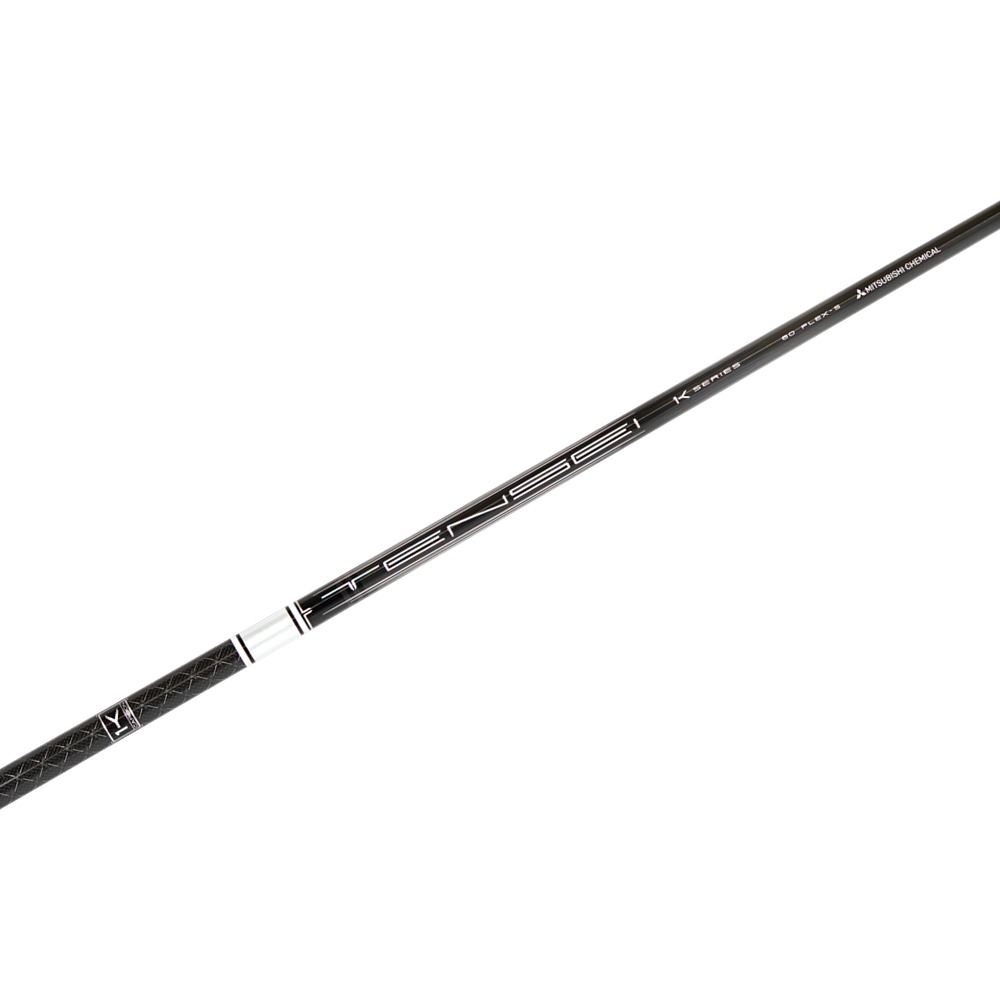
Mitsubishi’s flagship Tensei models take a materials first route. The Tensei 1K line is built around an extremely fine woven carbon cloth that lets the company combine a smooth, quiet feel with serious torsional stability, and Mitsubishi manufactures its own carbon fiber materials in house, which shapes everything it builds. Two different roads, similar destination: stability without harshness. The meaningful differences show up in how each shaft feels while it loads, which is exactly why hitting them matters more than reading about them.
Fujikura uses colors to signal profile. Ventus Blue sits in the middle with a mid launch and mid spin tendency, which is why it is so often the first shaft pulled on a fitting cart. Ventus Black is the low launching, firmest feeling member of the family, built for aggressive transitions and players who want the flattest possible window. Ventus Red is the most active of the three, with a higher launch tendency for players who need help getting the ball in the air. The TR versions layer a firmer mid section onto the familiar recipes for players who load the middle of the shaft especially hard.
The Ventus Black in particular has earned a reputation as a stout, no nonsense profile. It rewards speed and a forceful move, and it quietly punishes players who buy it for image reasons. If you find yourself drawn to it, be honest about your transition before you commit, because the Blue covers a far wider range of swings than most golfers assume.
Mitsubishi’s color language works in a similar spirit but with its own vocabulary. Blue models are the mid launch, smoother feeling center of the family. White models launch lower and carry a firmer handle section for players who attack the ball. Within the current range, the 1K construction is the headline, and the Pro versions push each color toward the more demanding end of its profile. The Tensei 1K Pro White is the clearest example, a low launch profile refined for strong players who overpower softer handles and want the flight held down without the feel turning dead.
If you map the two families side by side, Ventus Blue and the Tensei Blue profiles occupy similar territory, while Ventus Black and the Tensei White profiles court the same aggressive player. The overlap is real, but the sensation during loading is distinct between the brands, and that difference in feel decides more fittings than any launch chart ever will.

A good fitting starts with four inputs. Tempo comes first: a smooth, flowing swing points toward the Blue profiles in either family, while a quick, compact action points firmer. Transition is second: how much force you apply at the top determines how much handle and mid section stiffness you can actually use before the shaft stops responding to you. Miss pattern is third: a high spinning miss argues for the lower launching options, and a weak, low miss argues the other way. Your current gamer is fourth, because it is the baseline every candidate has to beat on the monitor.
From those four inputs, Patrick will usually pull two or three candidates across both brands rather than staying inside one catalog. A typical shootout puts a Ventus Blue against a comparable Tensei at the same weight and flex, then adjusts from whichever one produces the tighter pattern. The winner is the shaft that gives you your best misses, not your best single strike, because the misses are what you play with on Saturday.
Golfers get attached to shaft brands the way they get attached to ball markers, and there is nothing wrong with that until it costs fairways. The plain truth is that both companies build shafts good enough that the wrong model from your favorite brand will lose to the right model from the other one every single time. Profile beats logo, and it is not close.
There are still legitimate reasons to lean one way. If you already play a Ventus in your driver and love it, matching the family in your fairway wood keeps feel consistent through the top of the bag. If a previous Tensei fit you beautifully, its modern equivalent is a sensible starting point for the next build. Notice that both of those are fitting reasons wearing a brand jersey, and that is exactly how the decision should work.
Both companies publish their own profile descriptions, and Fujikura’s official site is the right place to confirm current Ventus model details before you compare.
Neither, as a rule. Distance comes from delivering the face consistently with a launch window that matches your speed. Either family can be the distance winner for a given player, which is why side by side testing settles the question faster than any forum thread.
They rhyme but do not match exactly. Blue signals a mid profile in both families, while Fujikura’s low launch model is the Black while Mitsubishi’s is the White, and Fujikura’s lineup also includes a Ventus White for players who want an even firmer, flatter profile. Always read the actual profile description rather than assuming a color translates one to one.
Yes, and you should. We stock both families, so one session can put a Ventus and a Tensei of comparable weight and flex head to head on the same day, with the same ball and the same baseline driver head.
Weight, flex, and tipping adjustments can move a shaft meaningfully within its profile. That is usually how a fitter splits the difference between two close candidates, and it is one more reason to buy through a shop that builds to your spec instead of pulling something off a rack.
If you are stuck between these two families, do not settle the argument in your head, settle it on a monitor. Book a session and hit them back to back, or order your known spec through the Ventus Blue or Tensei 1K Pro White pages and we will build it exactly to your measurements.
Also Read: Different Golf Shaft Materials Explained
Written by Patrick Greene|Golf shaft specialist with 15+ years in

Written by Patrick Greene|Golf shaft specialist with 15+ years in