
How Custom Golf Shafts Enhance Distance and Accuracy
Written by Patrick Greene|Golf shaft specialist with 15+ years in


I get asked to settle the mid launch vs low launch shaft debate almost every week on the fitting bay, and the honest answer is that neither one wins on its own. The right pick depends on how you deliver the club into the ball, and specifically your angle of attack. In this piece I want to walk you through how launch, spin, and dispersion actually respond to your swing, so you stop chasing a shaft that fights your delivery instead of helping it.
I am Patrick Greene, and I build and fit shafts for a living. Everything below comes from what I see on the monitor with real players, not from a marketing sheet. Let’s get into the part that matters most: your attack angle.
Angle of attack, or AoA, is simply whether the clubhead is moving up or down at impact with the driver. A positive number means you are hitting up on the ball, a negative number means you are hitting down on it. That single measurement changes how much launch and spin you already produce before the shaft ever gets involved.
Here is the pattern I see hold up over and over:
So when someone asks me to rank mid launch vs low launch shaft options in a vacuum, I push back. A player hitting three degrees down and a player hitting four degrees up need very different tools, even at the same swing speed.
To compare published launch and spin classifications across real shaft profiles, review Fujikura’s technical shaft specifications.

Shaft companies label profiles as low, mid, or high launch based mostly on where the stiffness lives along the shaft, especially the tip and mid sections. A stiffer tip generally resists loft add at impact and produces a lower launch with less spin. A softer or more active tip tends to add dynamic loft and launch the ball higher, often with a touch more spin.
Two things I want you to hold onto:
A low-launch shaft usually reduces spin as well, and a higher-launch shaft usually adds a little. But loft, ball position, and strike location all move spin too, so I never treat the shaft as a spin dial by itself.
Your AoA, clubhead, and loft set the broad flight window. The shaft refines it and, just as importantly, changes how the club feels and where your dispersion tightens up. If your numbers are far off, we fix loft and setup first, then let the shaft do the finishing work.
Let me make the mid launch vs low launch shaft choice concrete with the kinds of players I fit most often.
Plenty of amateurs deliver the driver with a downward strike because they set up like they are hitting an iron. If that is you, and you are launching low with high spin, a low-launch shaft usually makes things worse, because it strips away the height you already lack and leaves the ball falling out of the sky short. A mid or higher-launch profile here often adds carry and a stronger descent that actually holds the fairway.
If you have learned to hit up on the ball, tee it high, and play the ball forward, you likely launch it high with lower spin already. This is where a low-launch shaft shines. It keeps the peak height in a controlled window, trims a bit of spin, and gives you that flatter, running flight without turning every drive into a knuckleball.
Most golfers live near neutral, and that is where feel and dispersion break the tie. I will often put a player through both a mid and a low profile at the same loft and watch which one tightens the shot pattern. Two shafts can produce nearly identical launch and spin averages yet very different left-to-right scatter. The tighter pattern wins, full stop.
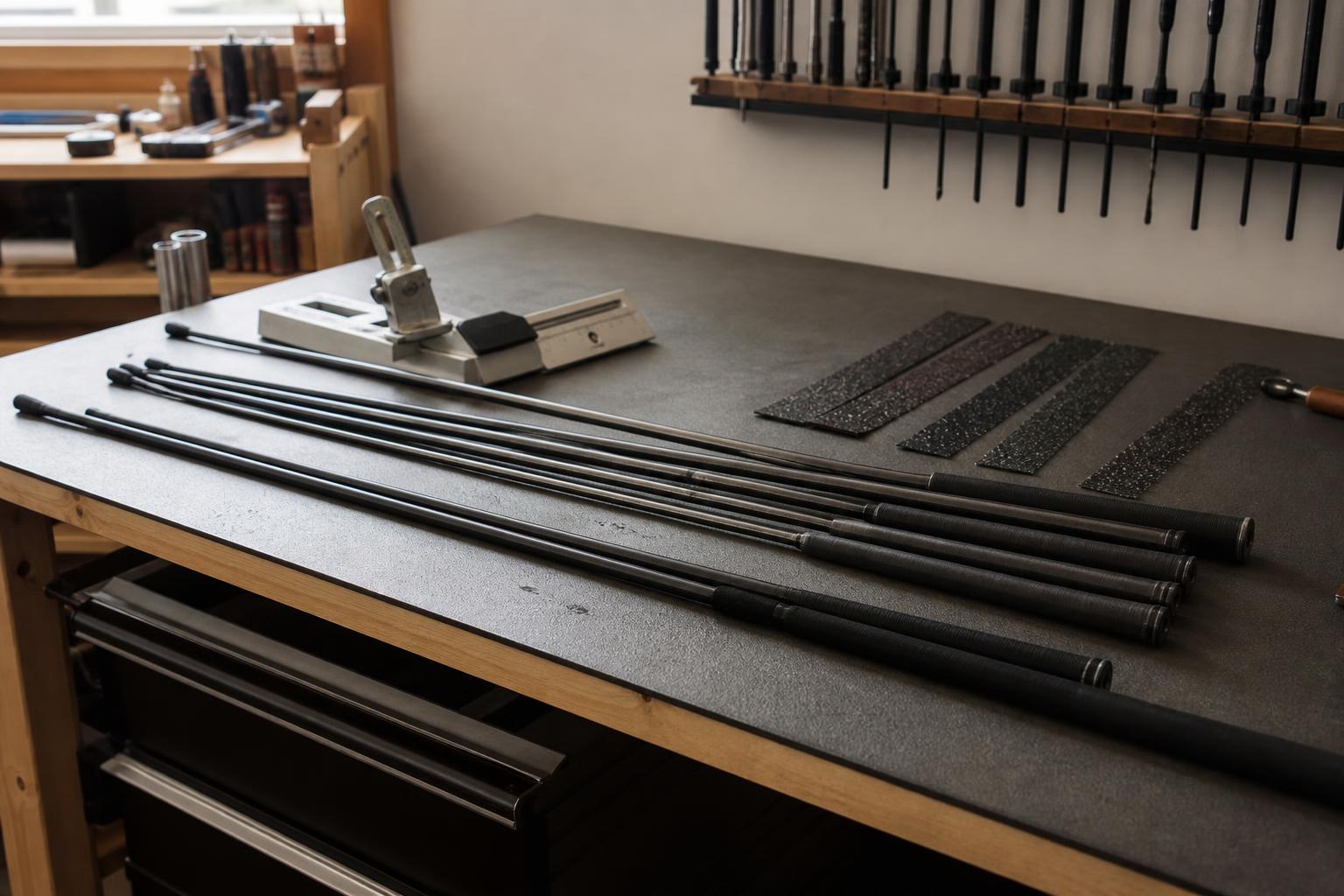
Carry distance gets all the attention, but dispersion is what lowers scores. A shaft that fits your tempo and transition lets you square the face more consistently, and consistency shows up as a smaller cluster on the monitor, not a single hero drive.
When I compare mid launch vs low launch shaft candidates, I am watching for:
A shaft that flatters your best swing but punishes your average one is the wrong shaft. I fit to the pattern, not the peak.
You cannot see your own AoA, spin, or dispersion with your eyes. You can feel that a drive “felt good,” but feel and fact diverge all the time on the monitor. That is the whole reason I insist on a launch-monitor fitting before committing to a profile. We measure your delivery, test real profiles against your actual numbers, and let the data settle the mid launch vs low launch shaft question for your swing specifically.
A proper session usually looks like this:
If you want to explore the specific profiles and weights I build, take a look at our custom shafts, and when you want a starting point tailored to your numbers, our shaft selector is a solid first filter before you get on the monitor.
A few traps come up again and again, and avoiding them saves you money and frustration.
Usually yes, because the stiffer tip that lowers launch also tends to reduce dynamic loft and spin. But it is not guaranteed. Your loft, ball position, and strike move spin too, so I confirm it on a launch monitor rather than assuming the label tells the whole story.
Most likely not. If you deliver a negative angle of attack, you already start the ball lower, and a low-launch shaft can leave you short on carry with a weak, diving flight. A mid or higher-launch profile often helps you get the ball up and hold a stronger descent. Getting your ball position and setup checked can help too.
Only if it matches your delivery. For an upward striker who already launches high with low spin, trimming height and spin can produce a more efficient, penetrating flight that carries and rolls out. For a downward striker, it can cost carry. Distance comes from the right launch and spin for your swing, not from “low” as a label.
You really cannot measure it reliably by feel. Angle of attack, spin, and dispersion all require a launch monitor to read accurately. That is exactly why I recommend a fitting: we measure your delivery and test real profiles against your numbers instead of guessing.
Absolutely. Two profiles can average nearly identical launch and spin yet produce very different dispersion because of how they match your tempo and transition. The one that tightens your shot pattern is the better fit, even when the headline numbers look the same.
If you are ready to stop guessing and let your numbers pick the profile, come get fitted with us. Start with our shaft selector to narrow things down, then contact us to book a fitting and we will get you on the monitor and build a shaft matched to your attack angle, launch, and dispersion. Let’s find the flight that actually lowers your scores.
Also Read: How to Find the Perfect Golf Shaft
Written by Patrick Greene|Golf shaft specialist with 15+ years in

Written by Patrick Greene|Golf shaft specialist with 15+ years in