
How Custom Golf Shafts Enhance Distance and Accuracy
Written by Patrick Greene|Golf shaft specialist with 15+ years in

Search for a hybrid shaft flex chart and you will find tidy tables that match a swing speed to a letter. They are a fine place to start, but a hybrid is the club where a chart is most likely to mislead you. The shaft is short, the swing is steeper, and a flex letter on one brand does not match the same letter on another.
This guide shows how hybrid flex relates to your driver and irons, offers a rough starting ladder, and explains how to test your way to the right answer. Our guide to hybrid shaft weight and launch covers the other half of the decision, so this one stays focused on flex.
A hybrid sits between your fairway woods and your irons, so its flex usually lands between the two. Many golfers play the same letter in their hybrid as in their irons, while others match their fairway wood. There is no rule, and the better approach is to ask what the shaft needs to do: launch the ball from mixed lies and fit the gap in your set.
If your irons are in stiff and your driver is in regular, do not be surprised if the hybrid fits better in stiff. The shorter length and steeper delivery often make a hybrid load like an iron. Our guide on matching shaft flex to swing speed explains the general principle.
Here is a starting ladder, based on driver swing speed. Treat it as a way to narrow the list, not a standard, because the bands overlap and tempo can move you up or down a step:
Remember that the chart is describing a swing, not a golfer. A player with a smooth, patient tempo at 98 mph and a player who jumps at the ball from the top at the same speed will not load a hybrid shaft the same way, and the second player is the one more likely to need the firmer letter.
These bands use driver speed only to give you a first guess. Hybrid clubhead speed is lower, and the shaft is shorter, so some golfers can end up a half step softer than the chart suggests. Others, with a hard transition, need to go firmer.
Makers set their own flex scale, and nothing forces an S from one brand to match an S from another. The specifications on our product pages show it clearly. Three hybrid shafts in R flex sit near the same weight but differ in torque:
Same letter, similar weight, different torque, and each maker has its own bend profile and tip design on top of that. That is why we ask about feel and ball flight as much as the label.
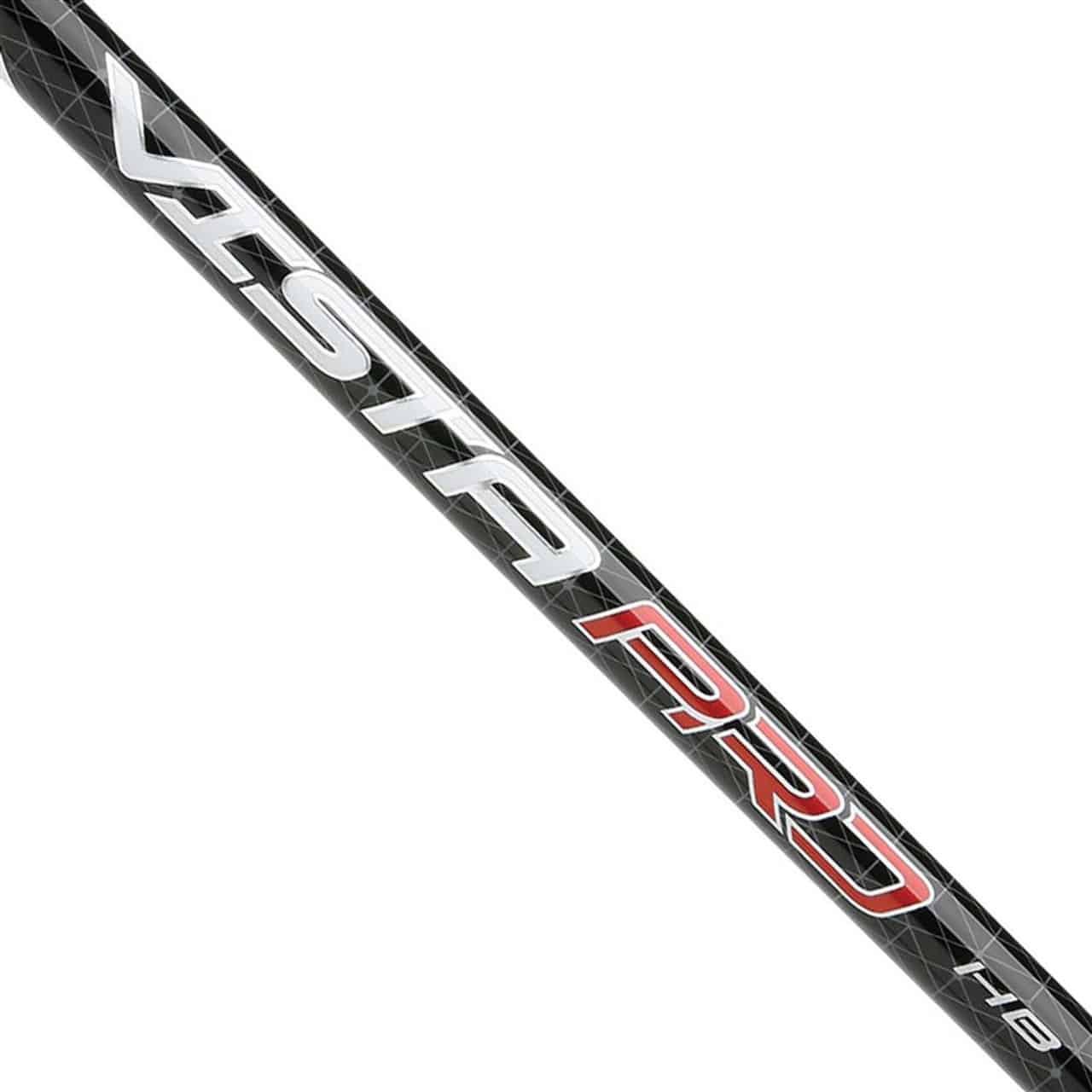
Within one brand, weight and flex travel together. Fujikura’s Vista Pro hybrids are described as flighted lines, where lighter weights give higher launch and more spin and heavier weights give a mid launch with moderate spin. The Vista Pro 40 HB comes in R3 and R2 at about 48 grams, while the Vista Pro 70 HB comes in S at 75.5 grams. That means a lighter R and a heavier S in the same family can feel quite different even though the letters are only one step apart, which is why we change weight and flex one at a time when we test.
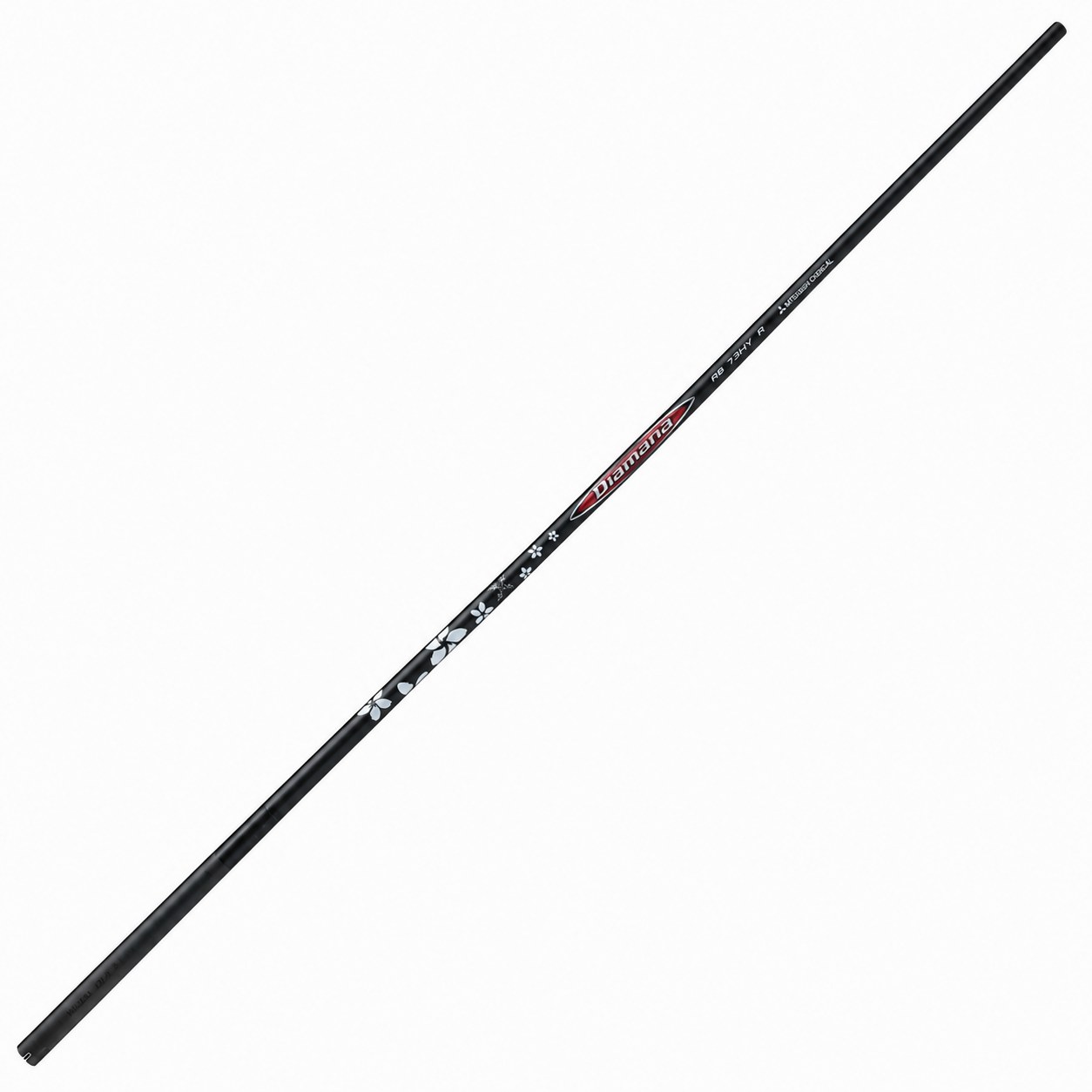
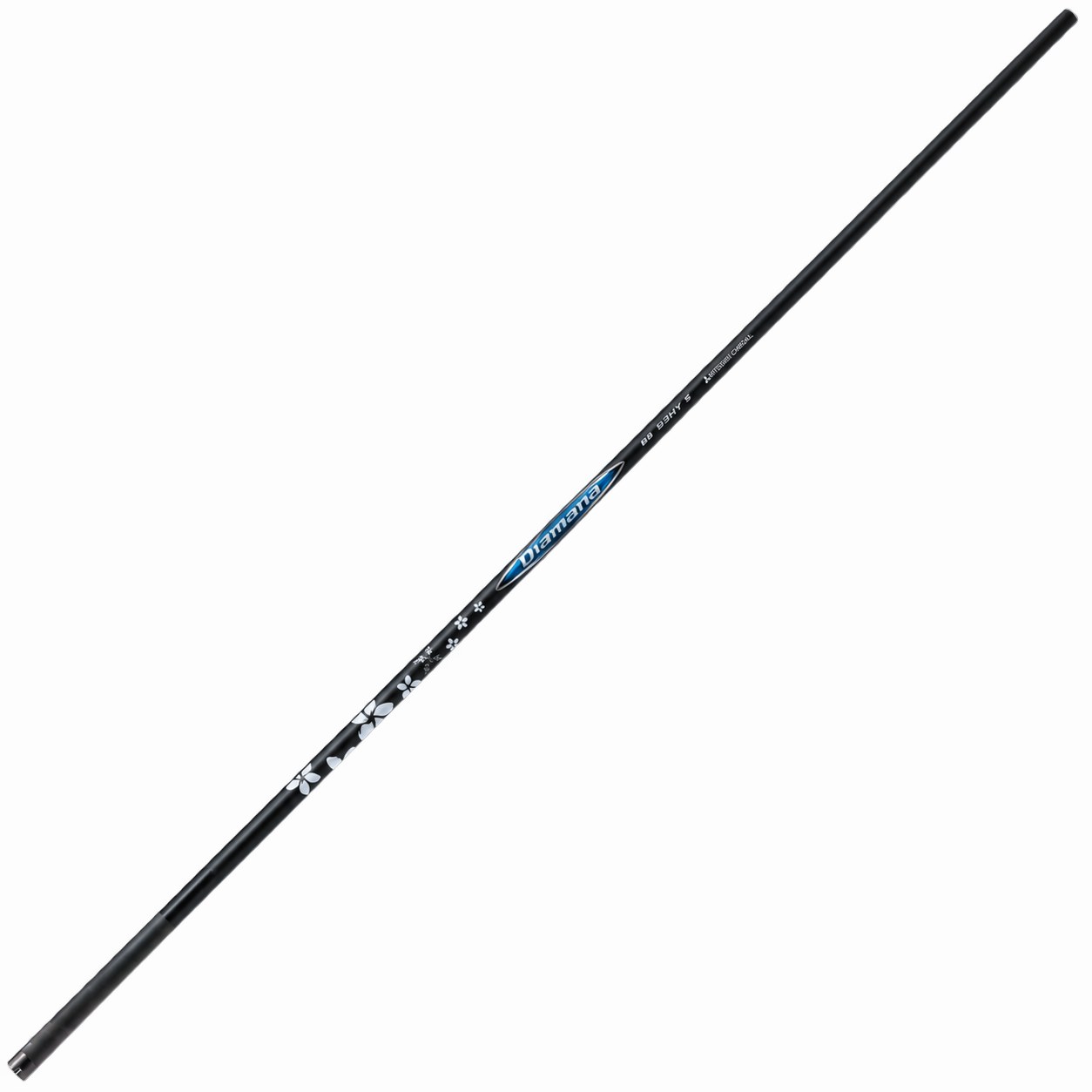
You can see the same pattern in Mitsubishi’s Diamana hybrids. The RB Hybrid uses a softer tip profile with lightweight options of 62 to 79 grams and a low kick point, while the BB Hybrid is offered in 83 and 93 gram models with a mid/high kick point. For a golfer who wants a heavier, firmer build, the WB Hybrid 103 X weighs 109 grams. See the Diamana RB Hybrid and Vista Pro Hybrid pages for the full tables.
Your ball flight usually tells you before a launch monitor does. Look for these patterns:
A hybrid also gets used from the rough and tight lies, so a shaft that works only from a perfect tee is not doing its job. Pay attention to the feel at impact from a poor lie too, since a shaft that stays composed when the turf grabs the head is usually the better flex for you.
Testing is simple when you change one thing at a time:
Write the results down as you go so you are not relying on memory at the end of the session. Pay special attention to the average. A shaft that tightens your dispersion is usually worth more than one that adds a few yards on a perfect strike.
Once the testing is done, use the ladder above as a conversation starter, not a verdict. If two flexes give similar numbers, pick the one that feels better and keeps the miss smaller. If you land between two letters, a different weight or a different bend profile may fit better than either. That is common, and it is where a fitting earns its keep. Our shaft selector can narrow the options, and you can compare candidates such as the Ventus hybrids, the Tour AD hybrids, and the Vista Pro. For a look at how a maker explains its own range, Fujikura’s site is a helpful outside reference.
It depends on how you swing the hybrid. Many golfers match their irons because the swing is similar, but some prefer to match a fairway wood. Test the hybrid in both flexes and keep the one that gives the tighter pattern.
Yes. The shorter shaft and lower speed mean some golfers do well a half step softer, but a hard transition may need the opposite. Let the ball flight decide.
No. Each maker sets its own scale, and weight, torque, and bend profile all change how a flex plays. Compare specifications, not only the letter.
Try a different weight or profile in the flex that feels closer. A small change in weight can solve what a flex change cannot.
If you would like help working it out, take a look at our custom shaft options or call 1-800-380-7901 to talk it through with Patrick. There is no pressure, and we are glad to help you land on a hybrid shaft that fits your game.
Also Read: Choosing Golf Shafts to Improve Swing Speed
Written by Patrick Greene|Golf shaft specialist with 15+ years in

Written by Patrick Greene|Golf shaft specialist with 15+ years in

Free golf guide · 26 pages
How to Teach Your Wife Golf (And Live to Talk About It)
A funny, practical guide to better golf and fewer arguments: setup, swing, short game, putting and what not to say on the course.
Get the free guide