
How Custom Golf Shafts Enhance Distance and Accuracy
Written by Patrick Greene|Golf shaft specialist with 15+ years in

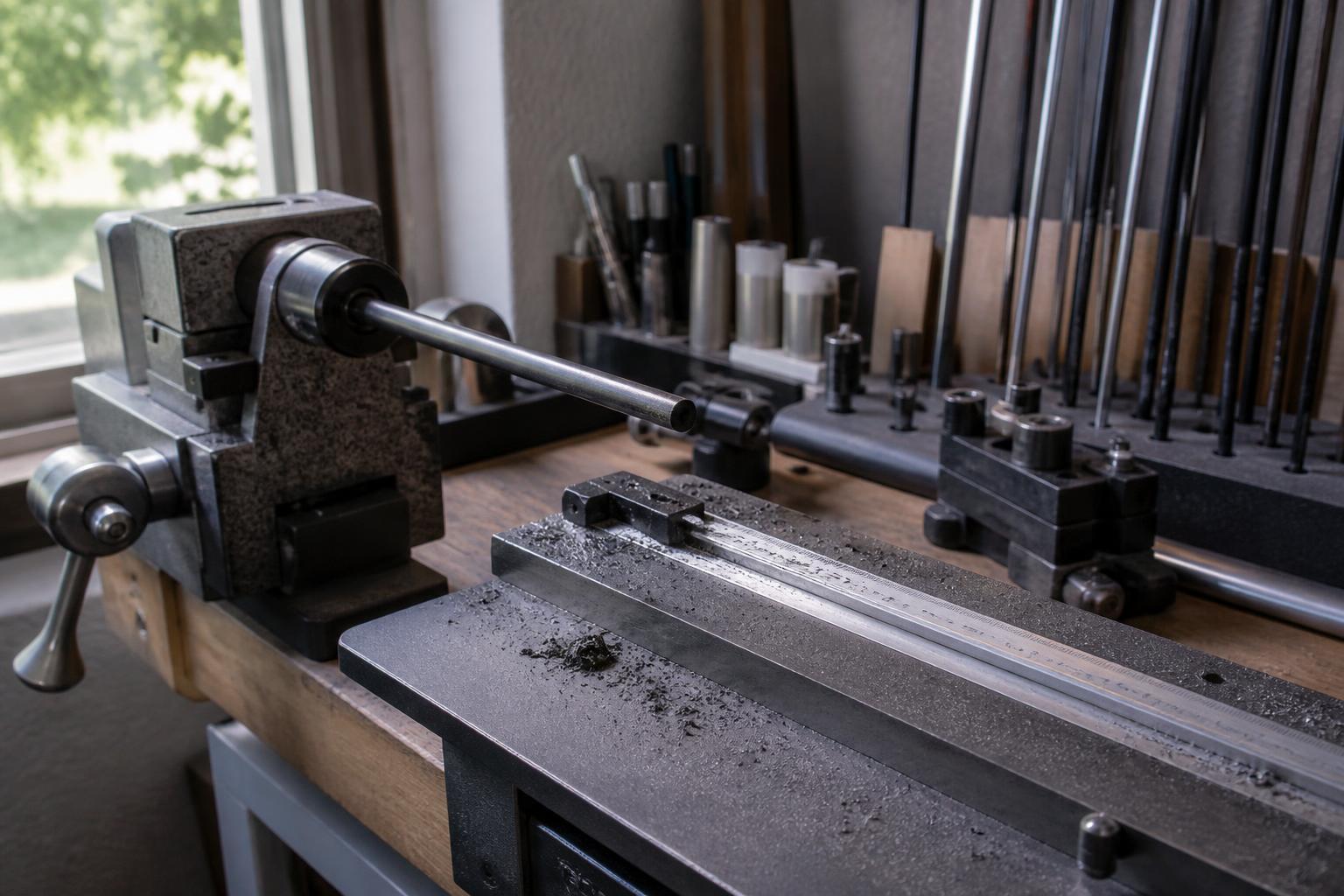
Almost every week someone hands me a shaft, points at the small end, and asks what happens if we cut a little off. That question is the heart of golf shaft tip trimming, and it is one of the most misunderstood steps in building a club. I am Patrick Greene, and I have trimmed and installed enough shafts to tell you that where you cut, and how much, changes far more about ball flight than most golfers expect. Done right, tip trimming lets me dial in flex, launch, and spin to match a real swing. Done carelessly, it turns a good shaft into one that fights the player.
In this guide I want to walk through exactly what tip trimming does, how it differs from butt trimming, why I follow manufacturer trim charts to the millimeter, and where the risks live. My goal is not to turn you into a clubbuilder overnight. It is to help you understand what is happening inside your club so you can make a smart decision about your next build.
A golf shaft is not uniform. It is engineered with different wall thicknesses and material stiffness along its length. The tip section, the narrow end that seats into the clubhead, is a major driver of how the shaft loads and unloads through impact. When I perform golf shaft tip trimming, I remove material from that tip end before the head is installed. Because I am taking away some of the softest, most active part of the shaft, the result is a tip section that behaves stiffer than it did at full length.
That added tip stiffness is the whole point. A stiffer tip resists twisting and bending late in the downswing, which tends to lower launch and reduce spin. A softer, untrimmed or lightly trimmed tip stays more active, which tends to raise launch and add spin. So the small cut at the narrow end is really a launch and spin adjustment disguised as a length adjustment.
For model-specific build preparation, start with the shaft manufacturer’s trim chart and use The GolfWorks shaft-trimming resources as additional clubmaking guidance.
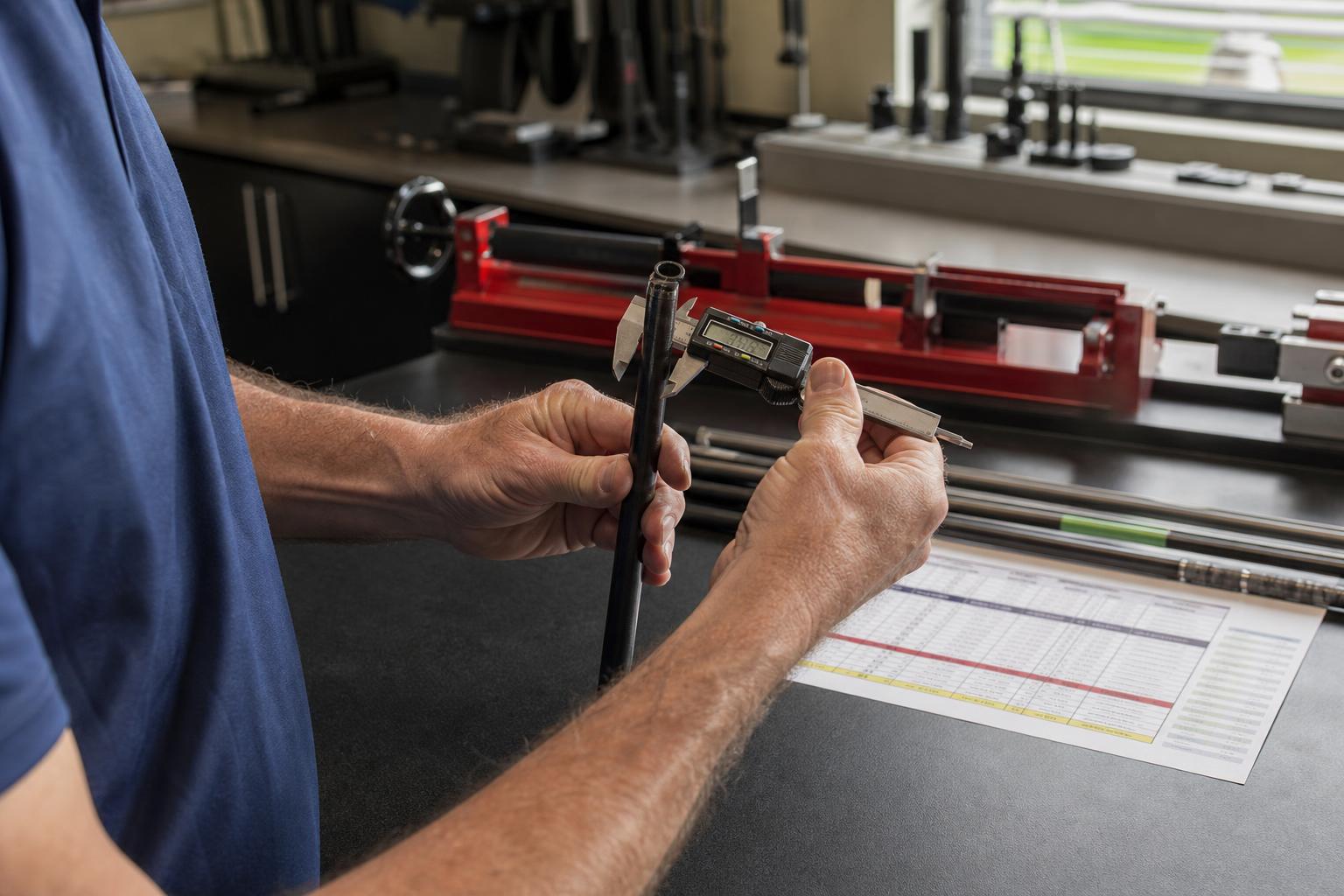
People often blur these two cuts together, but they do very different jobs, and confusing them is where a lot of homemade builds go wrong.
Tip trimming happens at the head end and primarily changes stiffness profile, launch, and spin. Even a small tip cut has an outsized effect on how the shaft loads, because you are altering the most active region.
Butt trimming happens at the grip end and is mostly about setting playing length. Trimming the butt does firm up the shaft slightly, but the effect per inch is far gentler than a tip cut. That is why I set length with the butt and set stiffness profile with the tip, not the other way around.
Here is the practical order I follow on the bench. I confirm the target playing length and the head’s hosel depth, I apply the correct tip trim first based on the shaft’s chart, then I butt trim to reach final length after a test fit. Reversing that sequence, or trying to fix a launch problem by hacking length off the grip end, almost always produces a club that plays nothing like the player wanted.
Every quality shaft ships with a trim chart, and I treat it as gospel for a reason. Shaft designers build their stiffness profiles around specific trim instructions. The chart tells me how much to remove from the tip for a driver, a fairway wood, a hybrid, or an iron set, and those numbers are not interchangeable between models.
A shaft that calls for a certain tip trim in a driver may call for a different amount in a 3-wood, because the designer wants the profile to behave consistently across the set. If I ignore the chart and guess, I am overriding engineering work that took the manufacturer months to validate. The chart is also how I keep a set of irons flowing correctly, so the wedge does not feel wildly different from the mid irons.
When a customer brings me an unusual request, say they want a slightly softer tip than the chart recommends to chase more launch, I can do it. But I do it deliberately, I document it, and I set expectations first. That is very different from blindly deviating and hoping it works out.
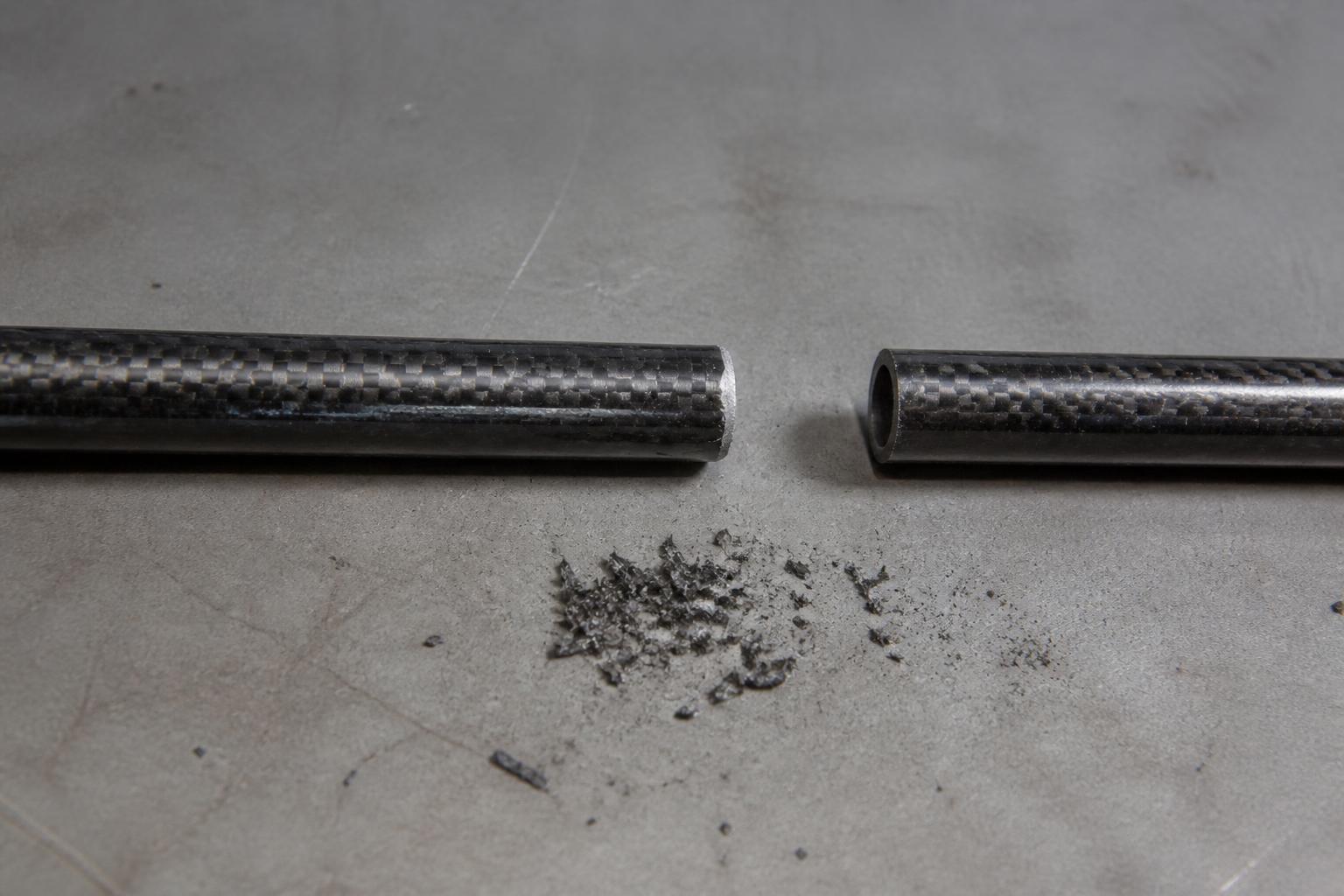
The most common mistake I see, especially in DIY builds, is over-tipping. That means removing too much material from the tip, either by misreading a chart, double-counting a raw versus trimmed length, or assuming more tip stiffness is always better. It is not.
Over-tipping makes the tip so stiff that the shaft never really loads for the player. The club can feel dead, harsh, and unresponsive. Launch drops too far, the ball flight gets low and knuckly, and the golfer loses the very feel they were chasing. Worse, you cannot undo it. Once material is gone from the tip, it is gone. You cannot add length back to that end without changing the entire profile, so an over-tipped shaft usually means starting over with a new one.
This is exactly why I measure twice and cut once, and why I am cautious with any shaft where the raw length is close to the finished length. A few millimeters of extra tip trim sounds trivial, but on the tip section it can be the difference between a shaft that flatters a swing and one that fights it.
In a fitting, tip trimming is one of several levers I combine to shape ball flight. I look at swing speed, transition tempo, angle of attack, and where the player’s misses go. A golfer who launches too high and spins too much is often a candidate for additional tip stiffness, whether through a stiffer tip section by design or a measured tip trim within the chart’s range. A player who struggles to get the ball up may want a more active tip.
The point is that golf shaft tip trimming is never a standalone trick. It works alongside shaft weight, flex, torque, head design, and loft. When I explore options with a golfer through our shaft selector, tip behavior is one of the first characteristics I weigh, because it quietly controls so much of the launch window. From there, a fully custom shaft build lets me match the tip profile to your delivery instead of forcing your swing to adapt to an off-the-rack compromise.
None of this requires you to own a bench or memorize trim charts. It just helps to know that when I talk about tightening your launch or calming your spin, the humble tip cut is often doing the heavy lifting behind the scenes.
Yes. Removing material from the tip end firms up the most active part of the shaft, so the club plays stiffer overall, especially through the impact zone. This is why tip trimming is used to fine-tune flex behavior, launch, and spin rather than just to set length.
Tip trimming happens at the clubhead end and mainly changes stiffness profile, launch, and spin, with a large effect per small cut. Butt trimming happens at the grip end and mainly sets playing length, with a much gentler effect on stiffness. I use the tip cut for profile and the butt cut for length.
It varies by shaft model, player speed, and how the club is delivered, so there is no single universal number. In general, more tip trim produces a stiffer tip that deflects less at impact, which tends to lower launch and reduce spin. The right amount depends on your swing and the manufacturer’s trim chart.
Yes, you can over-tip, and it usually cannot be reversed. Removing too much tip material can make the shaft feel dead and drop launch too far. Because you cannot add tip material back without changing the whole profile, an over-tipped shaft typically has to be replaced, which is why careful measurement and following the trim chart matter so much.
For predictable results, yes. The stamped flex and intended launch numbers assume the shaft is trimmed as specified. Deviating on purpose is possible for a specific fitting goal, but it should be a deliberate, documented choice, not a guess, so the club behaves the way the player expects.
If you want your launch and spin dialed in rather than left to chance, let me build it around your swing. Explore your options through our custom shafts page and reach out to start a fitting, and I will walk you through exactly how tip trimming and every other lever will shape your next set.
Also Read: The Role of Shaft Flex in Improving Your Golf Game
Written by Patrick Greene|Golf shaft specialist with 15+ years in

Written by Patrick Greene|Golf shaft specialist with 15+ years in

Free golf guide · 26 pages
How to Teach Your Wife Golf (And Live to Talk About It)
A funny, practical guide to better golf and fewer arguments: setup, swing, short game, putting and what not to say on the course.
Get the free guide