
How Custom Golf Shafts Enhance Distance and Accuracy
Written by Patrick Greene|Golf shaft specialist with 15+ years in

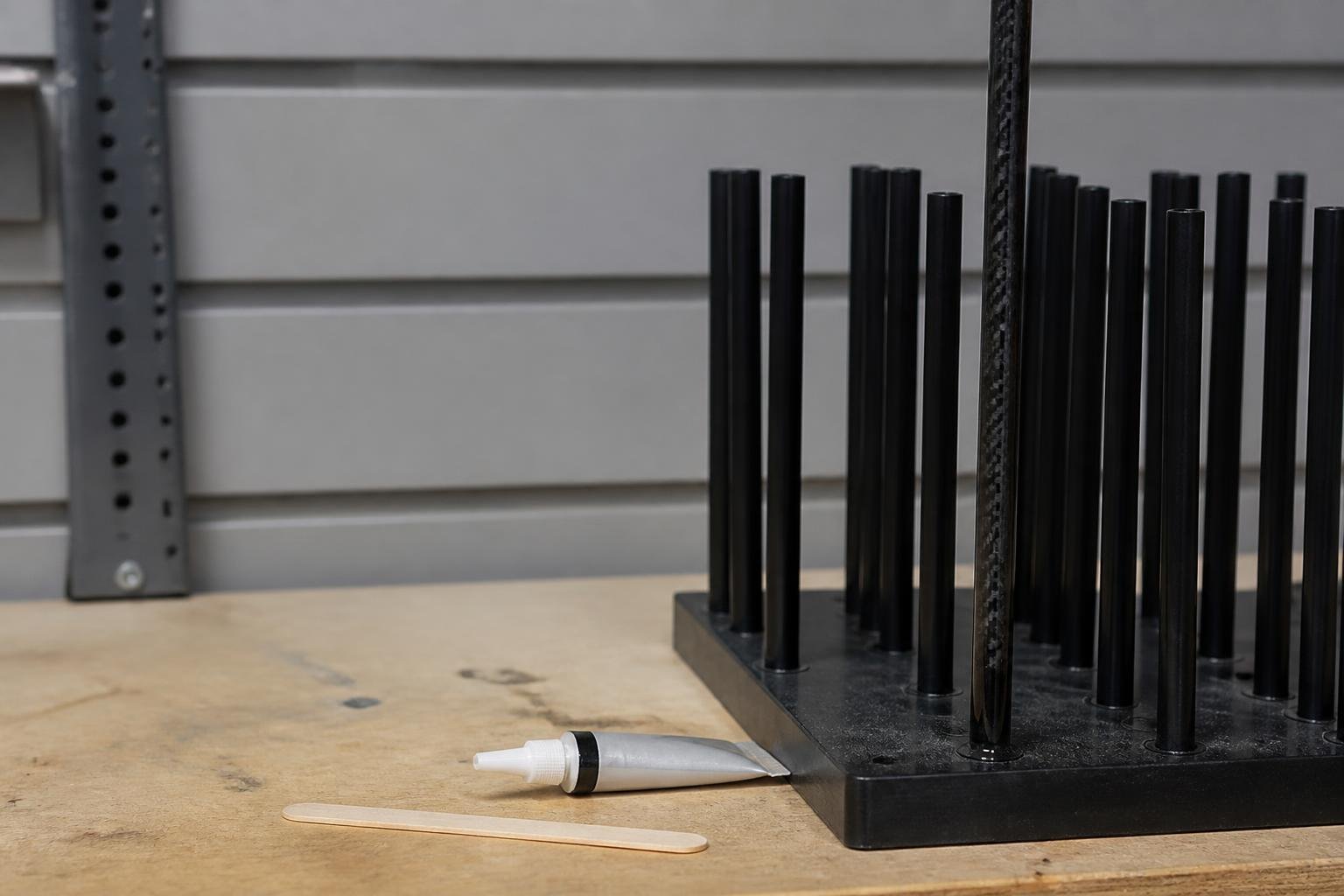
Epoxy is the least glamorous part of a shaft install and one of the most important. Every measurement, trim, and fitting decision that went into a build gets locked in by a bead of adhesive in the hosel, and that bead needs time to reach full strength before the club is asked to do its actual job. Skip that time, and everything upstream of it stops mattering.
We see rushed cure times more than any other build shortcut, usually because a golfer wants clubs back for a weekend round. This guide explains what is actually happening while epoxy cures, why the clock matters more than it seems, and how to plan a build so you are never tempted to skip it.
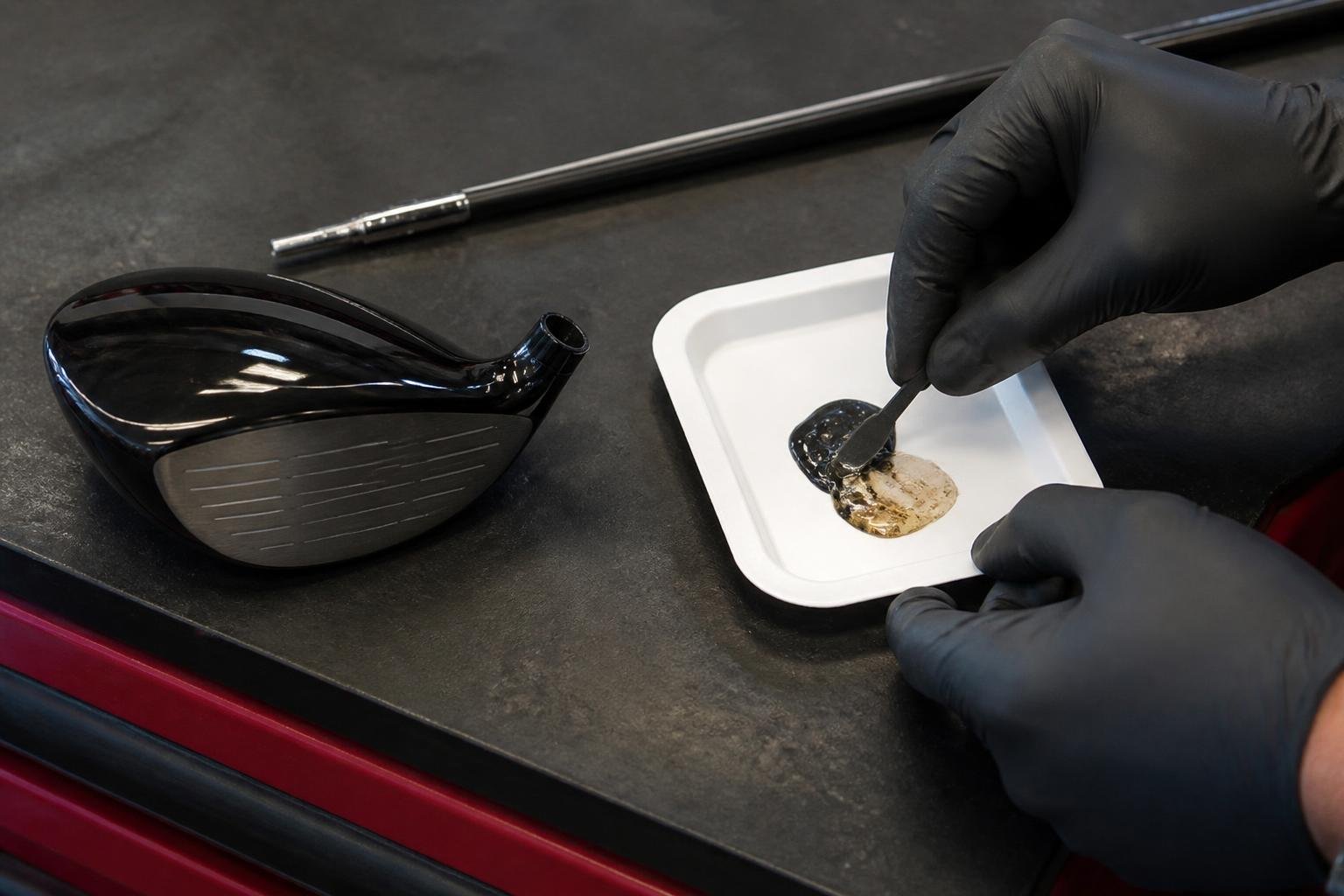
Two-part epoxy cures through a chemical reaction between its resin and hardener, and that reaction happens on its own schedule regardless of how the epoxy feels to the touch. A bead that feels solid an hour after application has not reached its full bond strength; it has simply reached the point where it no longer feels wet. Manufacturers publish a recommended full-cure window for a reason, and touching it before that window closes means testing a bond that is still developing.
Epoxy sets in stages. The surface can feel tack-free well before the interior of the bond has finished curing, especially inside a hosel where airflow and temperature differ from the open bench. That gap between how a bond feels and how strong it actually is is exactly why cure time recommendations exist, rather than a simple touch test.
Swinging a club before the epoxy has fully cured puts torque and impact stress on a bond that has not reached its rated strength. The most common result is a shaft that rotates slightly in the hosel, sometimes without an obvious break, which quietly changes face angle at impact and throws off shots in a way that is hard to diagnose. In more severe cases, an early-stress bond can fail outright, sending the head loose or the shaft cracking at the joint.
Cure time is not a fixed number independent of conditions. Cooler temperatures slow the chemical reaction, meaning a bond that would be ready in a certain window at room temperature can need meaningfully longer in a cold shop or during shipping in winter. Humidity plays a smaller but real role as well. This is one reason a reputable builder plans cure time around actual shop conditions rather than a generic number, and it is a detail worth asking about if you are having work done anywhere.
Any build process promising a same-day turnaround on a full epoxy install should be evaluated carefully. A rush job is not necessarily using a different chemistry; it may simply be skipping part of the recommended cure window. If timing matters for an upcoming trip or tournament, the right move is to plan the build early, not to compress the epoxy schedule at the end.
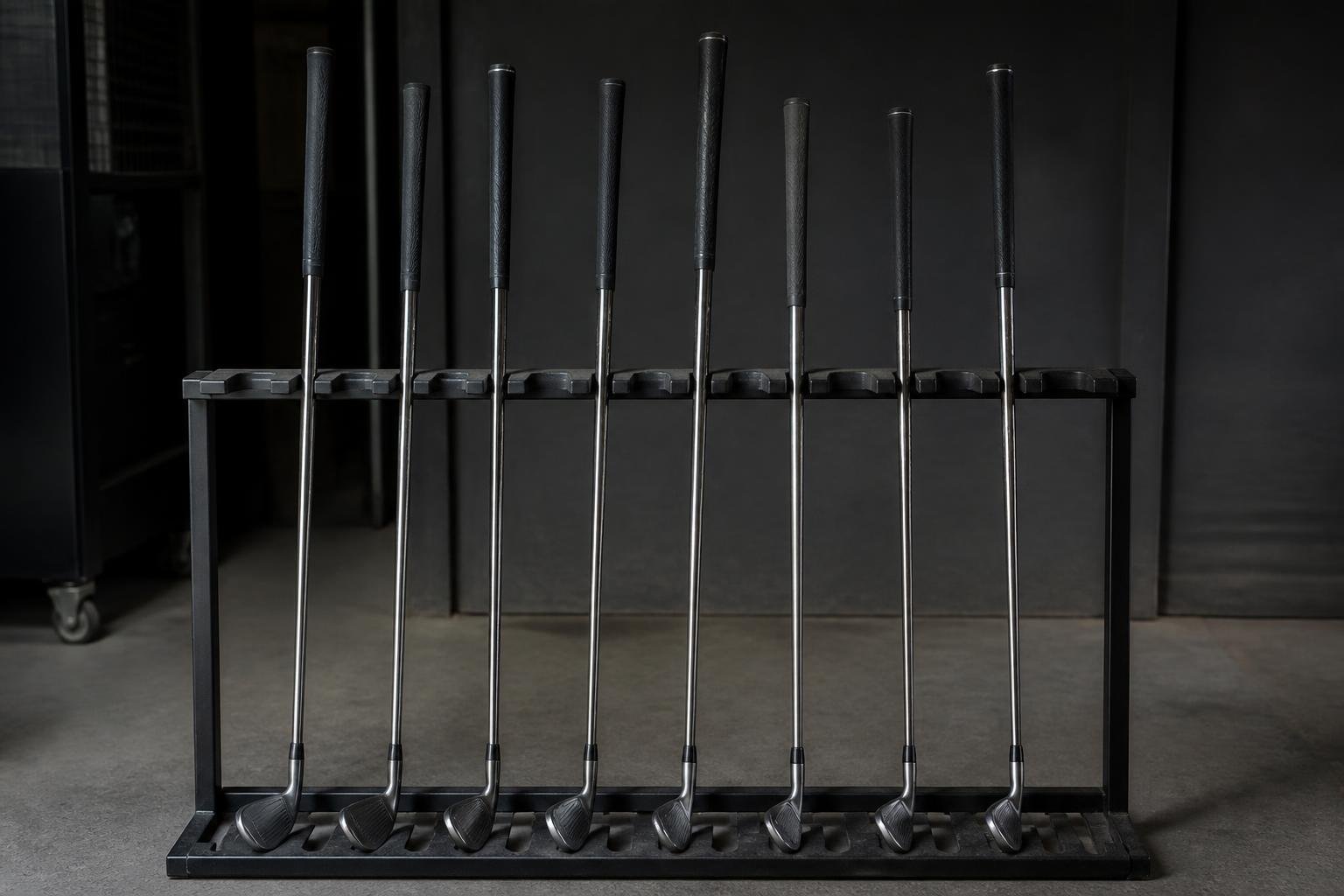
Every shaft that goes through our custom shaft service sits for its full cure window before it ships or gets handed back, regardless of how the schedule is otherwise looking that week. It is a boring step, and it is also the one that protects everything else about the build. If you are planning a build around a deadline, tell us up front, and we will build the timeline backward from the epoxy cure rather than forward from your travel date.
The easiest way to avoid ever feeling pressure to rush an epoxy cure is to build the schedule backward from it. If you know you want clubs in hand a week before a trip, work backward from the full cure window, then the install date, then whatever fitting or shaft-selection steps need to happen before that. Done this way, cure time stops being a bottleneck you are fighting against and becomes simply one more fixed step in a plan.
This is especially worth doing for golfers ordering a full set build rather than a single club, since a full set naturally takes longer to strip, fit, trim, epoxy, and cure than one club does, and that total timeline is easy to underestimate if you are only thinking about the single-club version of the process.
If a build is being shipped to you rather than picked up locally, factor shipping time in on top of the cure window rather than assuming the two happen simultaneously. A responsible builder will not ship a club before its epoxy has fully cured, which means shipping time is additive to, not overlapping with, the cure period.
When a full set is being built, each club effectively has its own cure clock starting from when its epoxy was applied, not from when the whole project started. A shop building a set over several days should be tracking each club individually rather than treating the whole set as done the moment the last one is glued, which is worth asking about if a full-set timeline seems compressed.
Clubmaking suppliers such as GolfWorks publish epoxy product guidance and general cure-time reference material worth reviewing if you want the underlying chemistry explained in more depth.
A builder who is willing to explain their cure-time process in plain terms, rather than brushing the question off, is generally a good sign about how the rest of the build will be handled. It costs nothing to ask, and the answer tells you a lot about how the shop operates.
Follow the epoxy manufacturer’s published full-cure recommendation for the specific product used, since cure times vary by formula and by ambient conditions. When in doubt, ask the builder what product was used and what window they are working to.
Not reliably. A bond that has not reached full strength can feel completely normal at address and even through a few swings before a problem shows up, which is exactly why the wait matters more than how the club feels.
Yes. Chemical cure reactions slow down in cooler temperatures, and a shop or garage build in cold weather can need a longer wait than the same install done in a warm room.
Some epoxy formulas cure faster than others, but every formula still has a real cure window that should be respected. Faster-curing epoxy is not an excuse to skip checking the manufacturer’s recommended wait time.
If you have a build coming up and a deadline you are working around, tell us early and we will plan the cure time in from the start. Use the shaft selector to start the build, or call 1-800-380-7901 to talk through the timeline.
Also Read: Easy Tips to Care for Your Golf Shafts
Written by Patrick Greene|Golf shaft specialist with 15+ years in

Written by Patrick Greene|Golf shaft specialist with 15+ years in

Free golf guide · 26 pages
How to Teach Your Wife Golf (And Live to Talk About It)
A funny, practical guide to better golf and fewer arguments: setup, swing, short game, putting and what not to say on the course.
Get the free guide