
How Custom Golf Shafts Enhance Distance and Accuracy
Written by Patrick Greene|Golf shaft specialist with 15+ years in

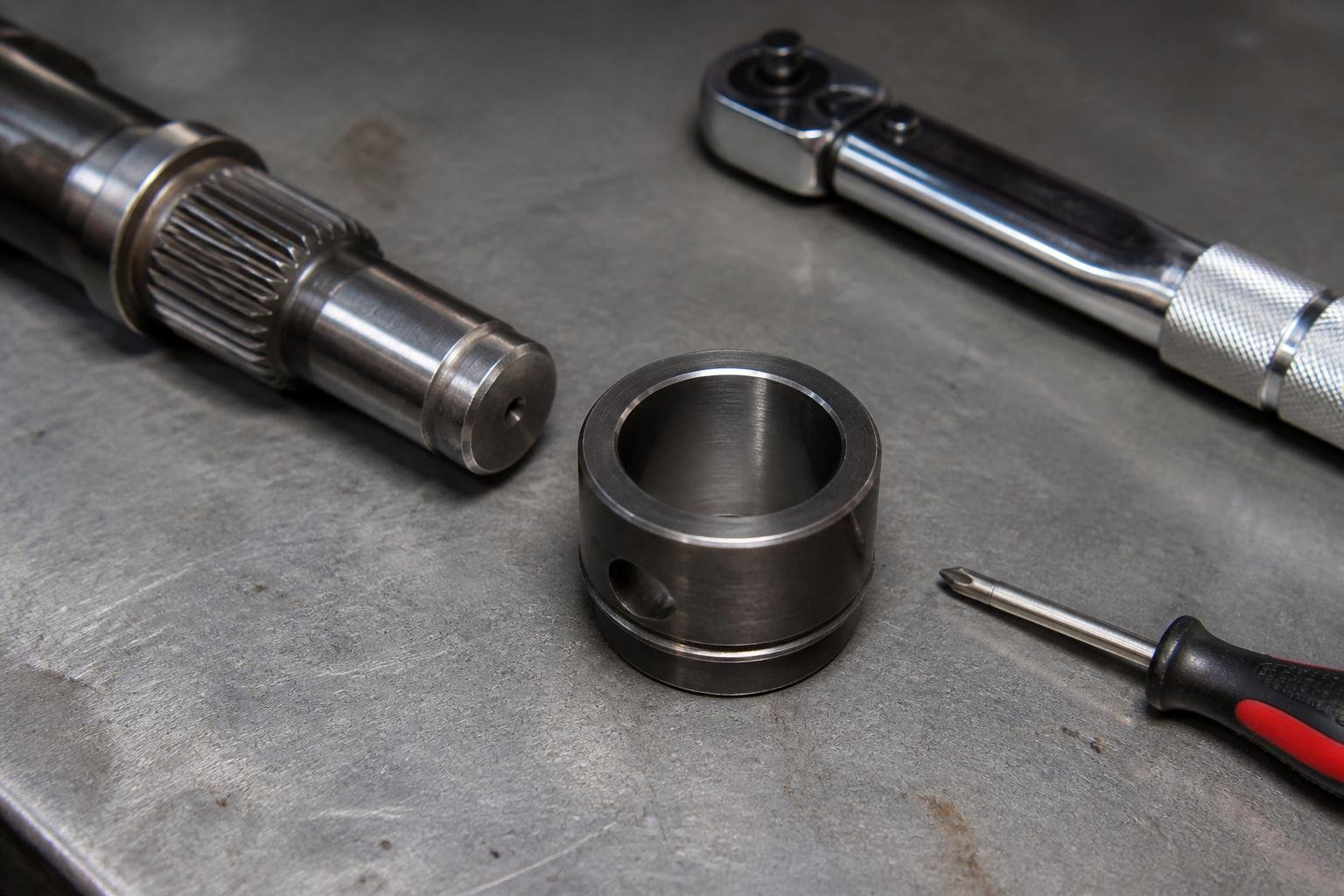
The adapter sleeve on an adjustable driver, fairway wood, or hybrid is a small part doing a lot of work. It transfers every ounce of swing force from the shaft into the head, holds the loft and lie settings you chose, and does all of this through hundreds of swings a season. When it starts to fail, the symptoms are often subtle enough that golfers blame their swing before they think to check the hardware.
This guide walks through the warning signs of a cracked or loose adapter sleeve, why they matter more than they might seem to, and what to do once you notice one.
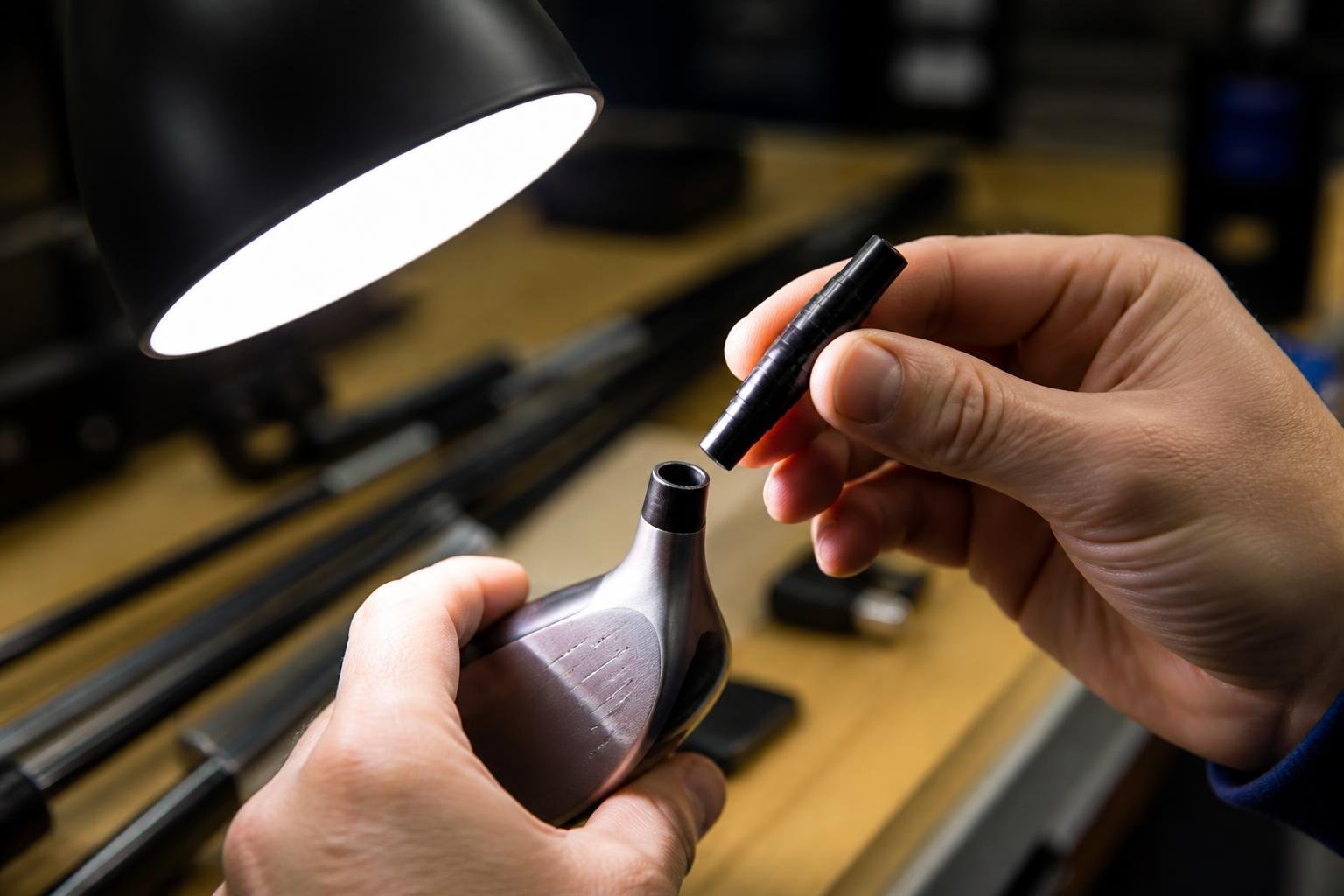
Adapter sleeves are typically made from a hard polymer or lightweight metal designed to be strong but not indestructible. Repeated impact stress, a shaft that was epoxied in slightly off-axis, or simple age and wear can all lead to hairline cracking or a loosening fit between the sleeve, the shaft, and the head over time. It is a wear part, not a permanent one, even though it rarely gets thought of that way.
This is usually the first sign golfers notice. A faint rattle when you waggle the club, or a click during the takeaway, often means the sleeve has developed play between its components. It is easy to dismiss as normal wear, but a healthy adapter should feel and sound solid.
If the adjustable hosel feels like it moves slightly under normal grip pressure, or if you find your settings have shifted from where you last set them without you touching the adjustment, that is a sign the sleeve is no longer holding torque the way it should.
A cracked or loose sleeve can allow tiny amounts of rotation between the shaft and head during the swing, which shows up as inconsistent face angle at impact even when your swing mechanics have not changed. This is one of the harder signs to diagnose because it looks identical to a swing flaw on a launch monitor.
If you remove the head, sometimes a crack is visible directly on the sleeve itself, often starting at a stress point near the screw or the collar. Any visible crack, no matter how small, means the part needs to be replaced before it is used again.
A failing adapter sleeve does not just risk a sudden break, though that can happen. More often, it costs strokes quietly by introducing inconsistency you cannot see or feel directly, which is far more frustrating to diagnose than an outright failure would be. Golfers sometimes spend a season chasing a swing fix for a problem that was sitting in the adapter the whole time.
Even a healthy sleeve can loosen if the retaining screw was not torqued to the manufacturer’s specification during the last install or adjustment. Over-tightening can crack a sleeve outright, while under-tightening leaves it prone to working loose. Both are reasons to have adapter work done by someone using a proper torque tool rather than tightening by feel.
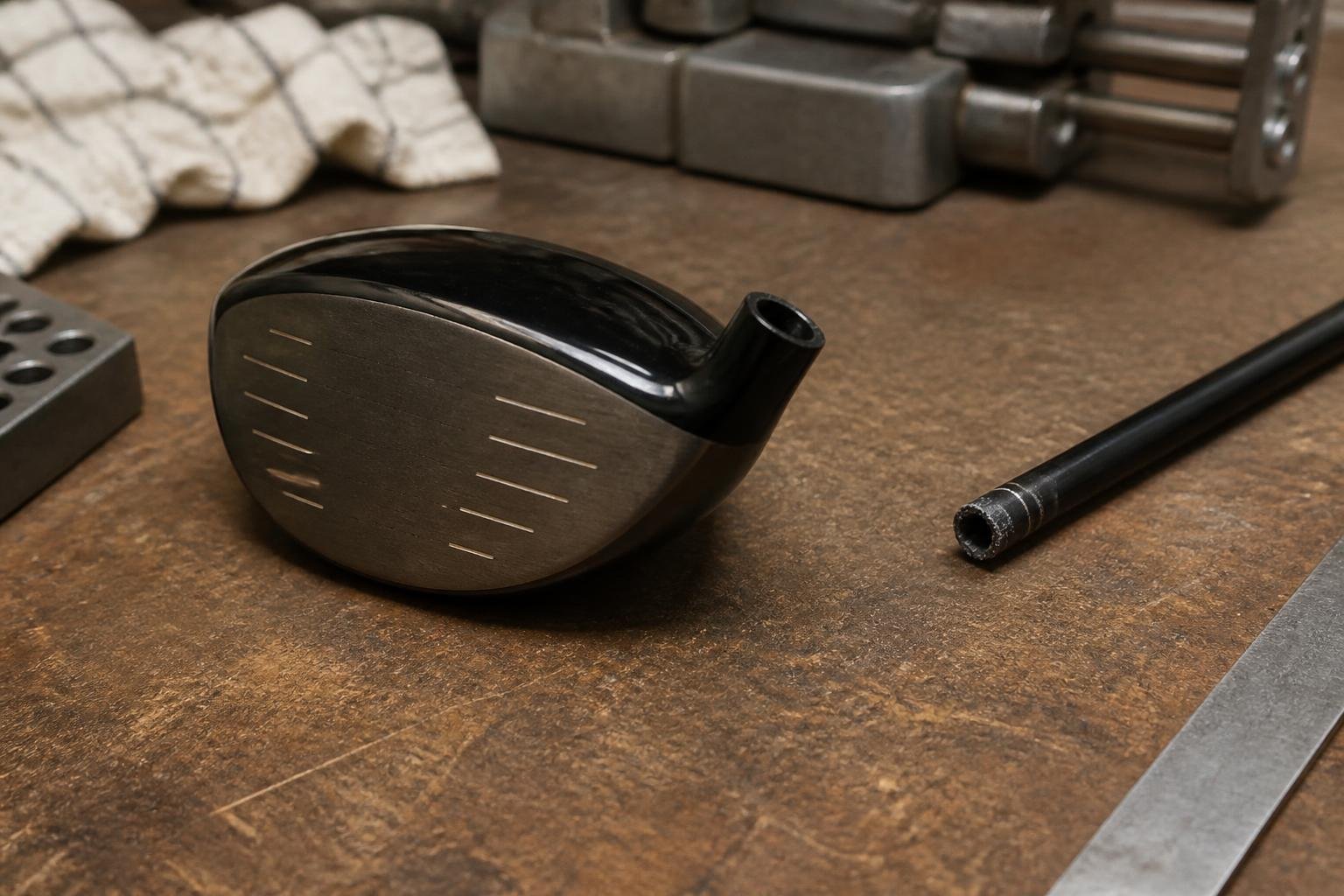
Remove the head if you are comfortable doing so, and inspect the sleeve visually for cracking. If nothing is visibly wrong but you are still hearing a rattle or noticing inconsistent results, the safest move is to have it checked before a full failure happens mid-round. Our custom shaft service can inspect and replace an adapter sleeve without needing to touch the rest of the build.
Because the symptoms of a failing adapter sleeve, inconsistent face angle, unpredictable dispersion, a shot pattern that seems to drift for no reason, overlap heavily with symptoms of common swing flaws, golfers and even well-meaning playing partners often go looking for a swing fix first. Lessons get booked, swing thoughts get tried, and the actual cause sits untouched in the clubhead the entire time.
If a swing change genuinely does not seem to be sticking, or if inconsistency shows up specifically with one club and not others in a way that does not match your usual miss pattern, it is worth ruling out equipment before assuming the problem lives entirely in technique.
With the club unloaded and in a safe space, gently twist the head relative to the shaft by hand, not with force, just enough to feel for any give. A healthy adapter should feel completely rigid. Any perceptible movement, even slight, is worth having checked properly rather than dismissed as normal.
Having a driver or fairway wood properly torqued whenever a shaft or head is changed, and avoiding repeated DIY adapter swaps with the wrong tool, meaningfully reduces the odds of premature adapter failure. Prevention here is inexpensive compared to diagnosing a mystery inconsistency months later.
Golfers who fly frequently with their clubs see more adapter stress than golfers who mostly drive to the course, simply from the extra handling and occasional rough treatment luggage receives. If you travel often with your clubs, it is worth adding an adapter check to your regular travel-prep routine rather than waiting for a symptom to show up mid-trip.
Clubmaking suppliers such as GolfWorks publish torque specifications and adapter-service guidance that are worth reviewing before attempting any at-home adapter inspection or repair.
If more than one club in your bag shares the same adapter system and one has already shown symptoms, it is worth checking the others proactively rather than waiting for each to fail on its own separate timeline.
A cracked sleeve should be replaced rather than repaired, since the crack compromises the part’s structural integrity going forward.
There is no fixed schedule, but a quick inspection whenever you swap heads or shafts, or any time you hear a new rattle, is a reasonable habit.
It is unlikely to be dangerous in the way a snapped shaft could be, but it will affect consistency and can progress to a more serious failure over time, so it should not be ignored indefinitely.
It is possible with the right torque tool and the correct replacement part for your specific brand and model, but a mismatched or over-tightened install can create the same problem you were trying to fix.
If your driver has started rattling or your settings will not hold, reach out before it gets worse, or check our FAQs for more on adapter care. Call 1-800-380-7901 and we can tell you what to check first.
Written by Patrick Greene|Golf shaft specialist with 15+ years in

Written by Patrick Greene|Golf shaft specialist with 15+ years in

Free golf guide · 26 pages
How to Teach Your Wife Golf (And Live to Talk About It)
A funny, practical guide to better golf and fewer arguments: setup, swing, short game, putting and what not to say on the course.
Get the free guide