
How Custom Golf Shafts Enhance Distance and Accuracy
Written by Patrick Greene|Golf shaft specialist with 15+ years in

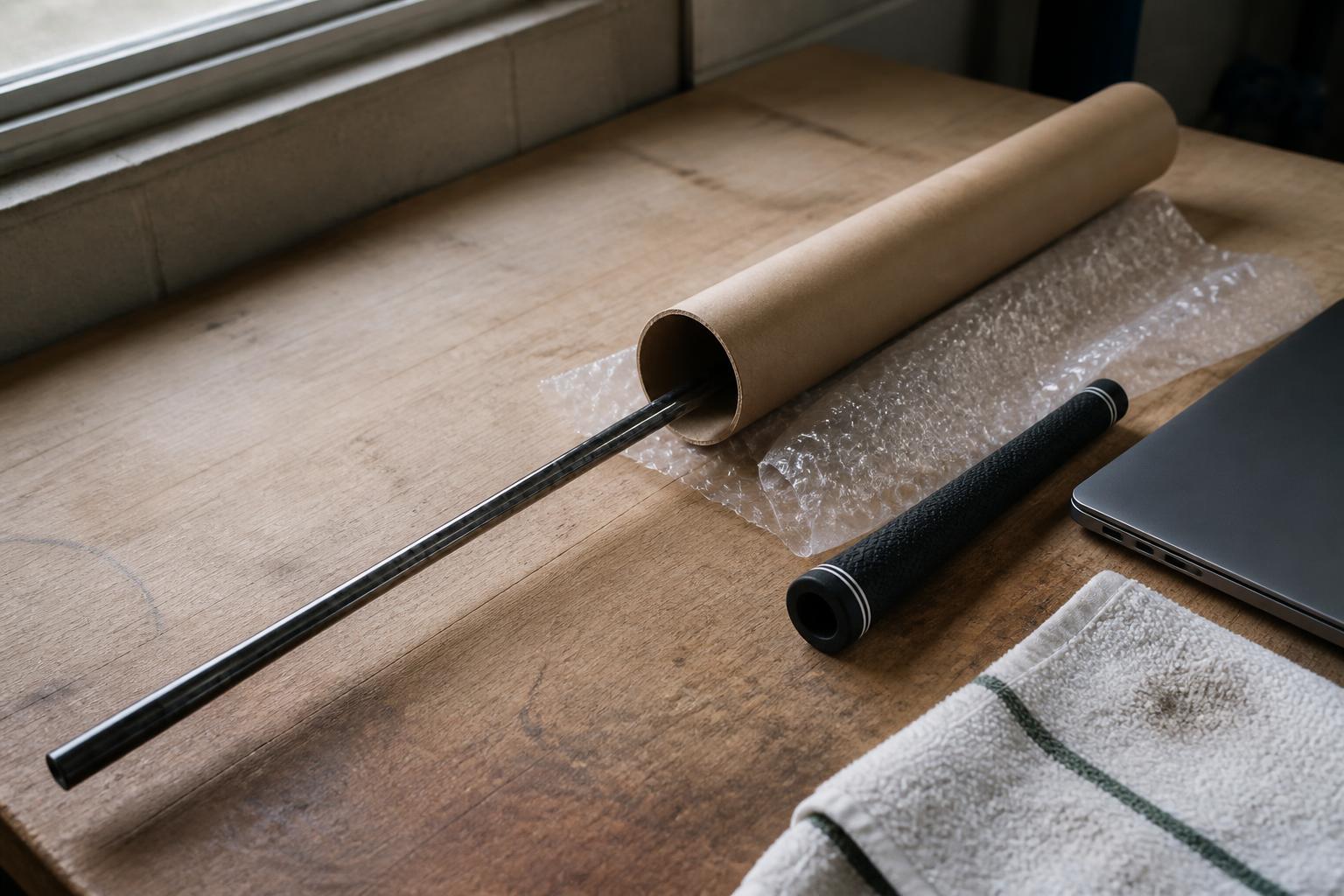
Plenty of golfers live nowhere near a quality fitting studio, and plenty more simply cannot burn a Saturday driving to one. The good news is that a legitimate shaft fitting does not require standing in the same room as your fitter. What it requires is information, and most golfers already have access to more of it than they realize. The difference between a guess and a fitting is not geography. It is whether the person speccing your build knows enough about your delivery, your equipment, and your miss to make the decision an informed one.
We build shafts for players across the country, most of whom Patrick has never watched hit a ball in person. Here is how that process actually works when it is done honestly, what you can gather on your own, and where the limits of distance fitting genuinely are.
Strip away the launch monitors and the fitting carts, and every shaft fitting is trying to answer the same questions. How fast do you deliver the club, and with what kind of tempo and transition? What does the ball currently do, especially the miss you are trying to eliminate? What are you playing now, in complete detail? And what does the club feel like to you, too stiff, too loose, too heavy, just right but flying wrong?
Notice that only the first question benefits enormously from in-person observation, and even it can be answered remotely with decent data. The rest travel just fine over a phone call or an email, provided you gather them carefully rather than from memory.
The single most valuable thing in a remote golf shaft fitting is a complete, accurate description of what you play now and how you feel about it. Not just the brand, the full spec: shaft model, flex, weight, playing length, tipping if known, grip model and size, and the head with its loft setting. A known shaft plus an honest review of it tells a fitter more than a bare swing-speed number ever could, because it anchors every recommendation to a reference point you have actually hit.
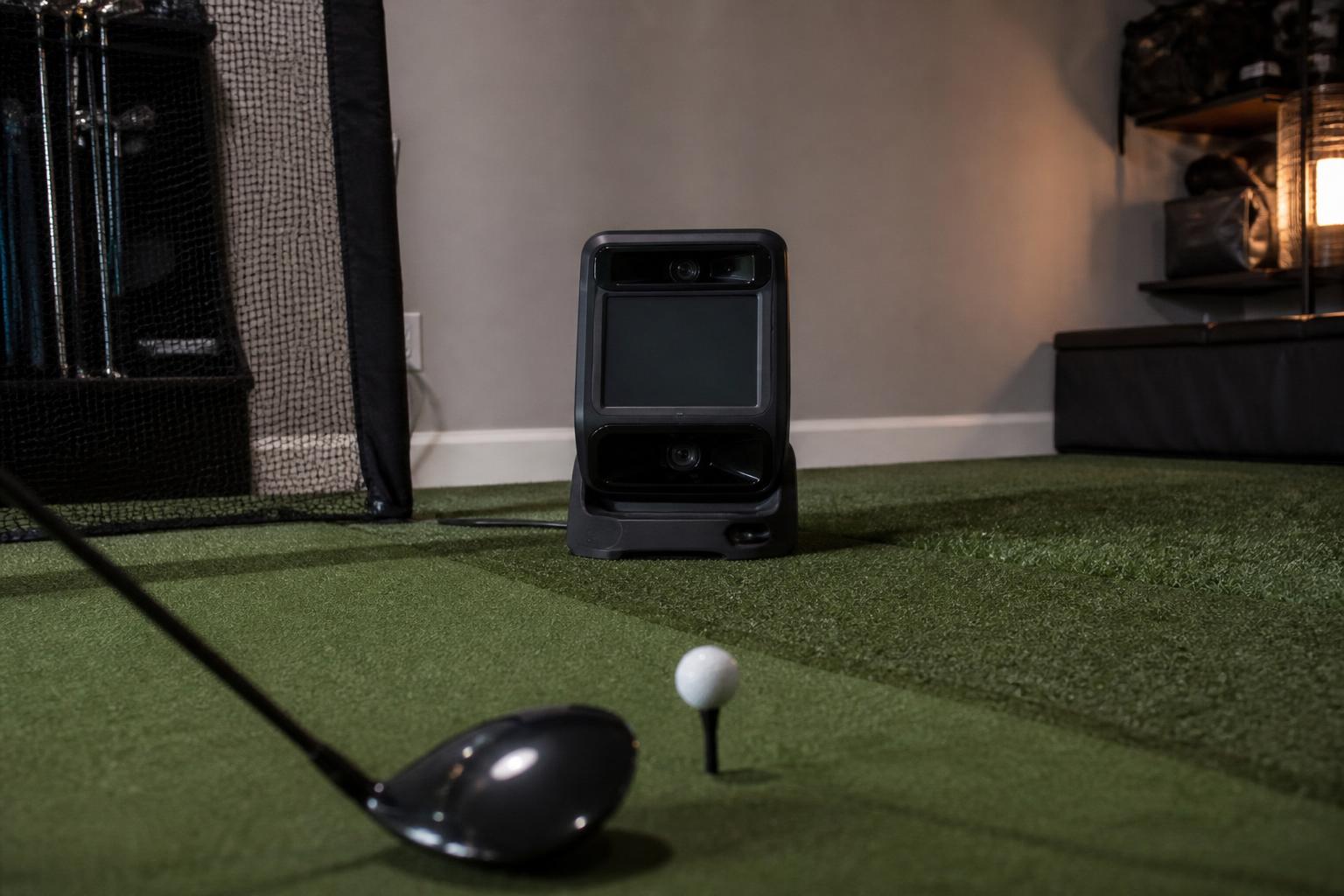
Launch data used to be the missing piece for distance fittings, but that has changed. If you have access to any launch monitor, a lesson facility running Trackman or similar, an indoor sim bay, a retail hitting bay, or a friend’s portable unit, one focused session gives you what matters: club speed, ball speed, launch angle, spin rate, and carry, ideally for ten or more swings with your gamer so the pattern shows, not just the best strike.
Phone slow-motion video is a useful supplement. A down-the-line and a face-on clip at full speed lets a fitter see tempo and transition character, the ingredients that separate two golfers with identical swing speeds who need different shafts.
With that package assembled, the fitting becomes a conversation rather than a form. You describe the goal: tighter dispersion, easier launch, a driver that stops leaking right. The fitter interrogates the data, asks the questions the numbers raise, and proposes a spec: model, weight, flex, tipping, length, grip, and swing weight target, along with the reasoning. Good remote fitting always shows its reasoning, because you should understand why the recommendation follows from your information, not just accept it on authority.
Our version of this starts two ways. The shaft selector turns your inputs into a shortlist on your own time, and a call with Patrick pressure-tests that shortlist against everything the form could not capture. From there, the custom build is assembled to the agreed spec, adapter installed, cut to length, gripped, and weighted, so what arrives is ready to play rather than a raw component and a wish.
Remote fitting has real limits, and pretending otherwise helps nobody. You cannot A/B test six shafts in an afternoon the way a demo cart allows, so the process leans harder on getting the first spec right and on choosing well-understood models over exotic guesses. Feel preferences are described rather than demonstrated. And if your delivery is changing rapidly, mid-lesson-program, for example, any fitting is aiming at a moving target. A candid remote fitter will tell you when your situation genuinely warrants an in-person session, and it is worth asking that question directly.
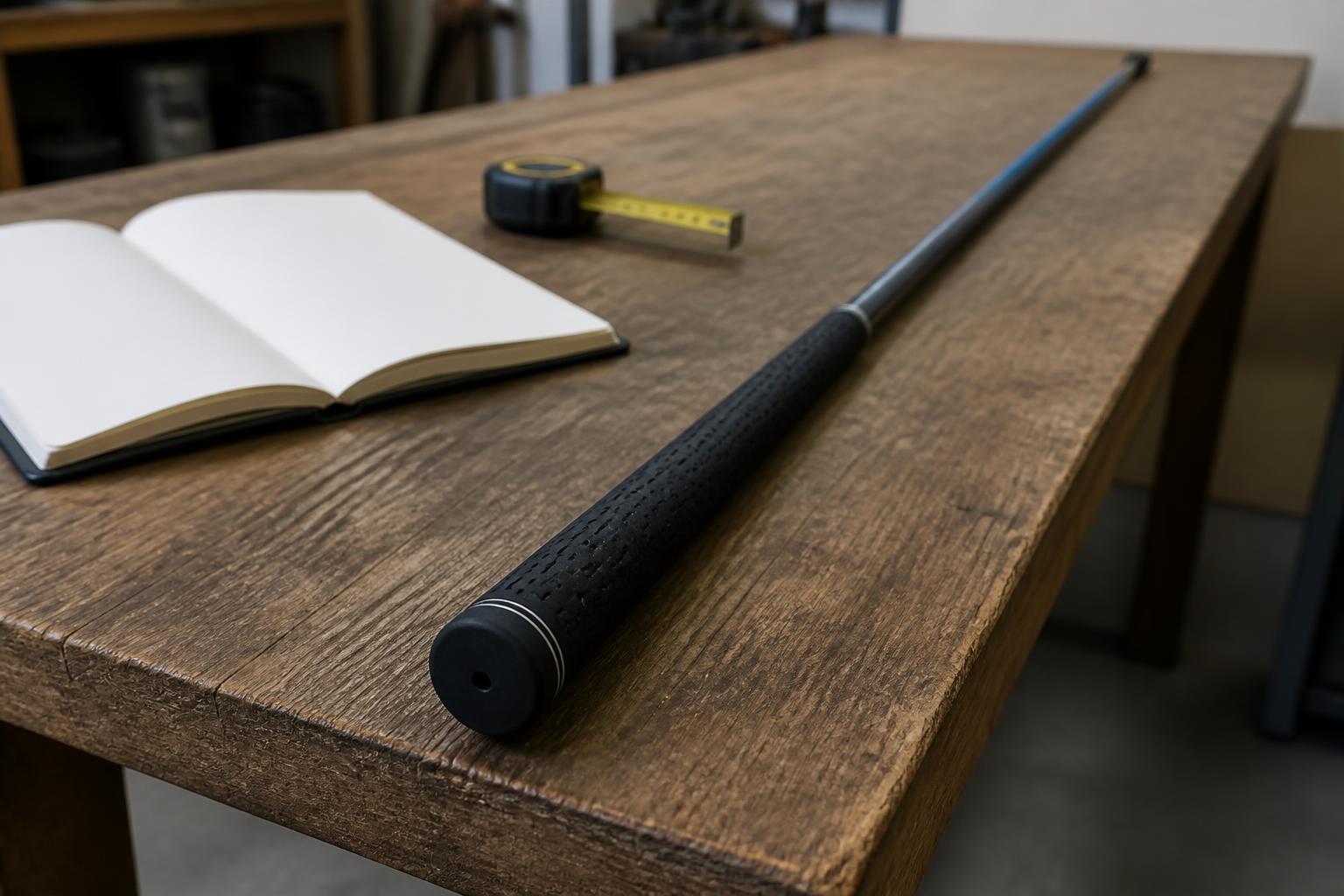
Three habits make remote builds land right the first time. Measure, do not remember: playing lengths, grip sizes, and loft settings drift from what you think they are. Share the failures, not just the stats: the shaft you hated two years ago is diagnostic gold. And commit to a verification session when the build arrives, ten swings on any monitor or an honest range session, so the loop gets closed and any fine-tuning, a small tip trim, a grip change, a swing weight tweak, happens with data instead of doubt.
It is fair to ask why this works for shafts when nobody recommends buying a putter by questionnaire. The answer is that shaft fitting is unusually data-driven. The variables that drive the recommendation, delivery speed, tempo character, transition force, current-shaft reference, miss direction, are all things that can be measured, recorded, and transmitted without losing much in translation. Contrast that with lie-angle work or putter fitting, where watching the player and the strike in person carries most of the information.
The other advantage is that a shaft recommendation is testable after the fact in a way that keeps everyone honest. The build arrives with a predicted outcome attached, easier launch, tighter start lines, a calmer transition feel, and ten swings on any monitor tell you whether the prediction landed. A fitter who works remotely for a living lives and dies by those verification sessions, which is precisely why the good ones ask so many questions up front. If the intake process you experience feels thorough to the point of fussy, that is the system working. The fittings to distrust are the ones that recommend a shaft from a single swing-speed number and a credit card.
For most golfers with stable swings and decent data, a careful remote fitting gets to the same spec a studio would. The in-person advantage is rapid A/B testing of many shafts; the remote advantage is access to a specialist regardless of where you live.
You can still be fit responsibly. Your current setup, honest flight description, typical carry distances, and video give a fitter a workable picture; the recommendation will simply be more conservative and lean on proven profiles.
Your current shaft’s full spec and your review of it, your typical miss, any launch numbers you can get, the head you are shafting, and the specific outcome you want changed. That package makes the first conversation productive instead of preliminary.
A finished club component built to the agreed spec: shaft cut to your length, adapter for your head installed, grip of your choice on, and the build details confirmed, so installation is a click-and-play or a simple final assembly rather than a project.
Distance is not the obstacle it used to be. If you can measure your gamer, describe your miss, and spare twenty minutes for a real conversation, you can be fit properly from anywhere. Start with the shaft selector, then reach Patrick through the contact page or at 1-800-380-7901, and let the data do the traveling.
Also Read: Improve Your Game with the Right Shaft Flex
Written by Patrick Greene|Golf shaft specialist with 15+ years in

Written by Patrick Greene|Golf shaft specialist with 15+ years in