
How Custom Golf Shafts Enhance Distance and Accuracy
Written by Patrick Greene|Golf shaft specialist with 15+ years in

Flex letters are coarse. Regular and stiff can sit far apart in how they load, and plenty of golfers deliver the club somewhere in between. Head-to-head testing tells them regular feels slightly loose and stiff feels like work, and they assume those are the only two choices. Builders have a third option that rarely gets explained outside the shop: shifting shafts up or down the set to nudge the effective flex without changing models.
The technique goes by two names, hard stepping and soft stepping, and it comes from how taper-tip iron sets are manufactured. Understanding it will not just add a tool to your fitting vocabulary. It explains why two sets of the same shaft in the same flex can play differently, and why the build sheet matters as much as the label on the shaft band.
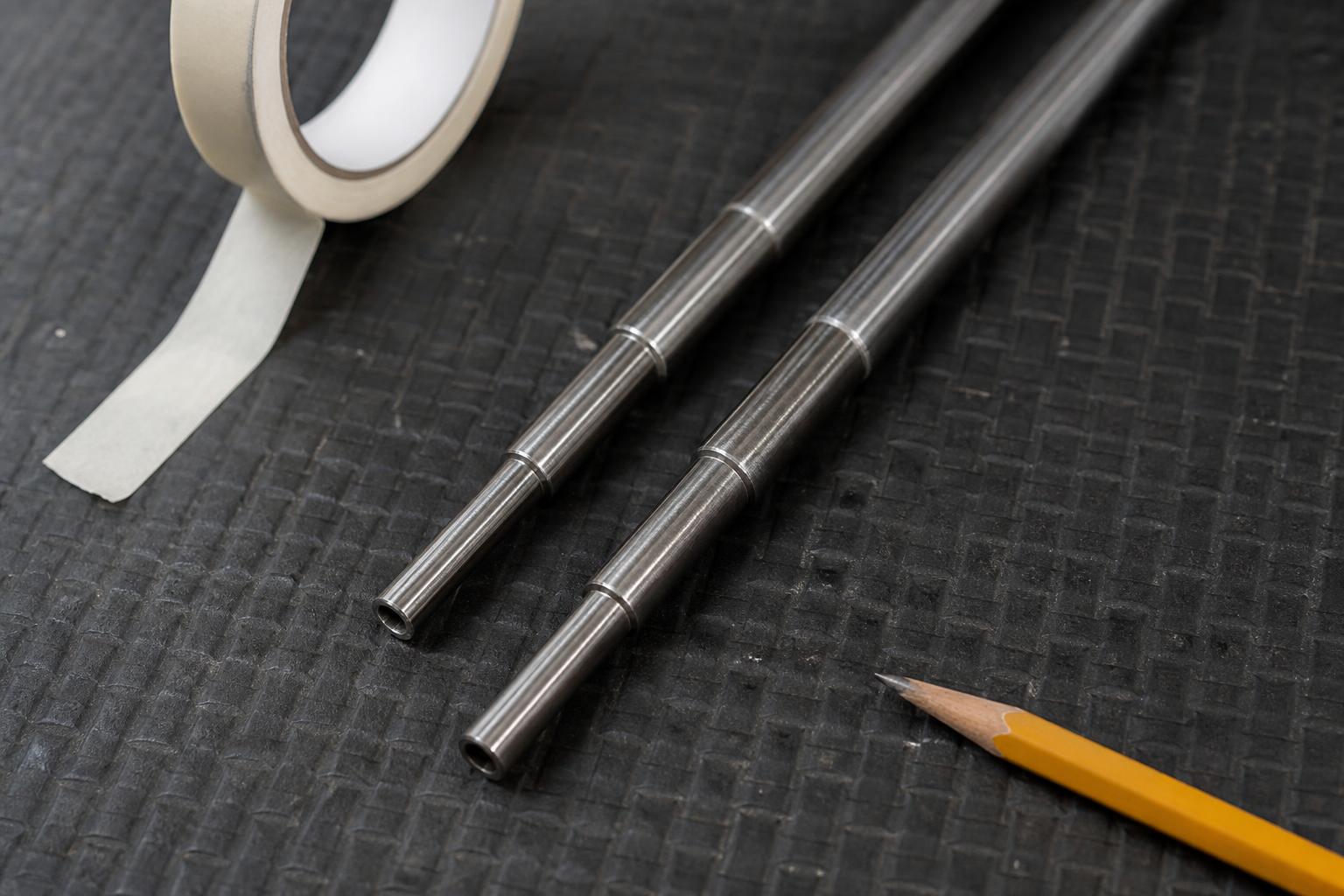
Taper-tip iron shafts are made in discrete lengths, one for each club in the set; steel-shaft makers such as True Temper build their taper-tip lines this way. The 7-iron shaft is not just a trimmed 6-iron shaft; each raw shaft is produced so that, once installed at its intended length, the set carries a consistent flex progression from long irons to wedges. That factory-defined progression is the foundation stepping plays against.
Soft stepping means installing each shaft one club higher than intended: the shaft made for the 5-iron goes into the 6-iron head, the 6-iron shaft into the 7-iron, and so on down the set. Because each club now carries a slightly longer, relatively softer-playing shaft than designed, the whole set plays a touch softer than its stamped flex. Hard stepping is the mirror image: each head receives the shaft intended for the next shorter club, and the set plays slightly firmer.
A useful mental model is that one step moves the set a fraction of a flex, not a full letter. Builders sometimes double-step for a larger shift, though that pushes further from the design intent and deserves more caution. The honest answer is that the size of the change depends on the shaft model and how its progression was engineered, which is why we treat stepping as a fitting decision to verify with ball flight, not a formula that guarantees a specific number.
The classic candidate sits between flexes. Stiff-shafted irons feel boardy and launch low for this player, but the regular version gives up some control. Soft stepping iron shafts in the stiff flex splits that difference: the player keeps the stiff model’s weight and profile while gaining slightly easier load and launch. Wedge builds are another common use, where a slightly softer wedge shaft can add feel without changing models.
Hard stepping suits the opposite profile: a golfer whose delivery has outgrown the current flex slightly but not enough to justify the full jump to the next letter. It can also serve players whose transition got more aggressive after a swing change, or who find the short irons in a set flighting higher than they would like while the rest of the set behaves.
There is a limit to what stepping should be asked to fix. If you need a full flex or more of change, or if the miss pattern points at weight or profile rather than stiffness, stepping is the wrong tool. It refines a set that is close. It does not rescue a set that was fitted wrong from the start.
Stepping does not change the shaft’s weight class, its material, or its fundamental bend character. A steep-feeling, low-launch model is still that model after a soft step. It also is not the same thing as tip trimming, which applies to parallel-tip shafts and adjusts flex by removing material from the tip section under the manufacturer’s trim chart. The two techniques solve related problems in different manufacturing systems, and a competent builder knows which one the shaft in hand calls for.
One more honest caveat: because each stepped shaft sits in a head it was not originally matched to, the builder has to manage lengths and swing weights deliberately so the finished set stays consistent. Done carelessly, stepping introduces small inconsistencies. Done properly, with each club cut and weighted to plan, you should not be able to tell anything unusual happened except that the flex finally feels right.
You do not need to prescribe the technique. Describe the symptom instead: which flex you tested, what each one did to your flight and strike, and where the current set feels wrong. If a step is the right answer, a good fitter will propose it, explain the direction, and note it on the build sheet so the set can be reproduced or reversed later. That documentation matters, because a stepped set re-shafted years later without the notes will not match.
This is a routine part of how our custom shaft builds come together. Patrick works through model, flex, weight, and progression before the first cut, and stepping is one of several levers available when the standard configuration lands close but not quite right. If you are still choosing the model itself, the shaft selector is the faster starting point.
Picture a golfer who has played the same stiff-flex steel irons for six years. Speed has drifted down a few miles per hour, the 5-iron and 6-iron now fly noticeably flat, and a demo day confirmed the regular version of the same shaft launches better but feels vague through the turn. Nothing else about the set is wrong: the weight suits him, the heads are current, the lengths and lies were fitted properly.
That golfer is not a re-shaft-everything case. He is a one-step case. Soft-stepping the existing model keeps the weight and bend character his hands have trusted for six seasons while easing the load requirement just enough to bring the long irons back up into a playable window. The alternative, dropping to regular, would have solved the launch problem while creating a control problem he had already identified on the demo mat. This is the pattern worth remembering: stepping shines when the complaint is small, specific, and directional, and the rest of the fitting is already right. When the complaints pile up in multiple categories at once, the honest fix is a fresh fitting, not a clever step.
It depends on how the shaft is manufactured. The technique comes from discrete-length taper-tip sets, which are traditionally steel. Parallel-tip designs, including many graphite iron shafts, adjust flex through tip trimming instead, so ask which system your chosen model uses.
No. One step moves the set only part of the way between letters, and the shaft keeps its own weight and bend character. A soft-stepped stiff typically sits between the two stock flexes rather than landing on either one.
A properly documented step is a legitimate build choice, but it does mean the set differs from stock. Keep the build sheet. Full disclosure to a future buyer, or a re-shaft to stock configuration, handles it cleanly.
Builders occasionally adjust individual clubs, most often wedges, but stepping scattered clubs inside a matched set can break the progression the set was designed around. Discuss the goal with your fitter before asking for a partial step.
If your irons feel caught between flexes, that in-between feeling is information, not a dead end. Tell us what you tested and what it did, and Patrick can decide whether a stepped build, a different weight, or a different model is the honest fix. Reach out through the contact page or call 1-800-380-7901.
Also Read: Trouble Reading Fujikura Shafts Specs? You're Not Alone
Written by Patrick Greene|Golf shaft specialist with 15+ years in

Written by Patrick Greene|Golf shaft specialist with 15+ years in