
How Custom Golf Shafts Enhance Distance and Accuracy
Written by Patrick Greene|Golf shaft specialist with 15+ years in

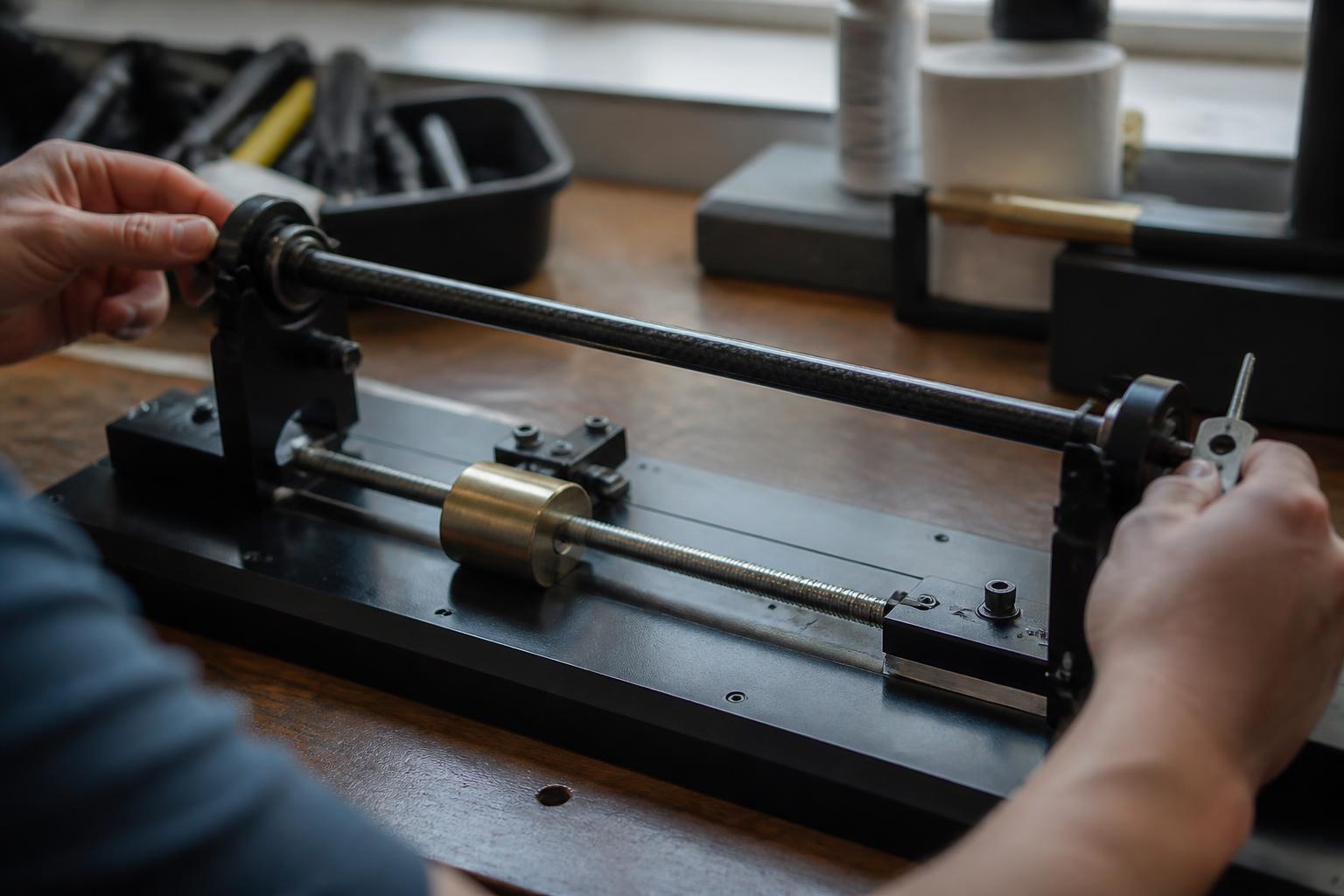
I get asked about golf shaft puring almost every week, usually right after someone reads a forum thread that promises a magic 20 yards. I’m Patrick Greene, and I’ve built and aligned a lot of shafts over the years, so I want to give you a straight answer instead of a sales pitch. The short version: spine alignment and PURE-ing are real, measurable, and occasionally very useful, but they are not the miracle upgrade some people make them out to be. Let me walk you through what actually happens and when it’s worth your money.
Every golf shaft, whether graphite or steel, has tiny inconsistencies in how the material is wrapped and cured. Those inconsistencies mean the shaft is not perfectly uniform in stiffness all the way around its circumference. In other words, if you bend the shaft one direction it resists slightly differently than if you bend it another. The stiffest and most stable plane is often called the “spine,” and the plane where the shaft wants to bend most consistently is sometimes called the neutral bending plane.
Spine alignment is the practice of finding those planes and orienting them in a deliberate, repeatable position relative to the target line when the shaft is installed in the head. PURE-ing, which stands for Plane of Uniform Repeatability, is a specific branded process and machine that spins the shaft to locate the most stable orientation and marks it for the builder. The goal of both approaches is the same: install the shaft so it flexes and returns the same way on every swing.
I lean on FLO in my own bench work because it shows you the behavior that actually matters at impact: does the tip come back to the same place, swing after swing? A shaft can have a mild spine and still FLO cleanly, which tells you the alignment question is more about repeatability than about chasing the single stiffest line.
For a first-party explanation of the alignment process and how it differs from FLO, review the SST PURE frequently asked questions.
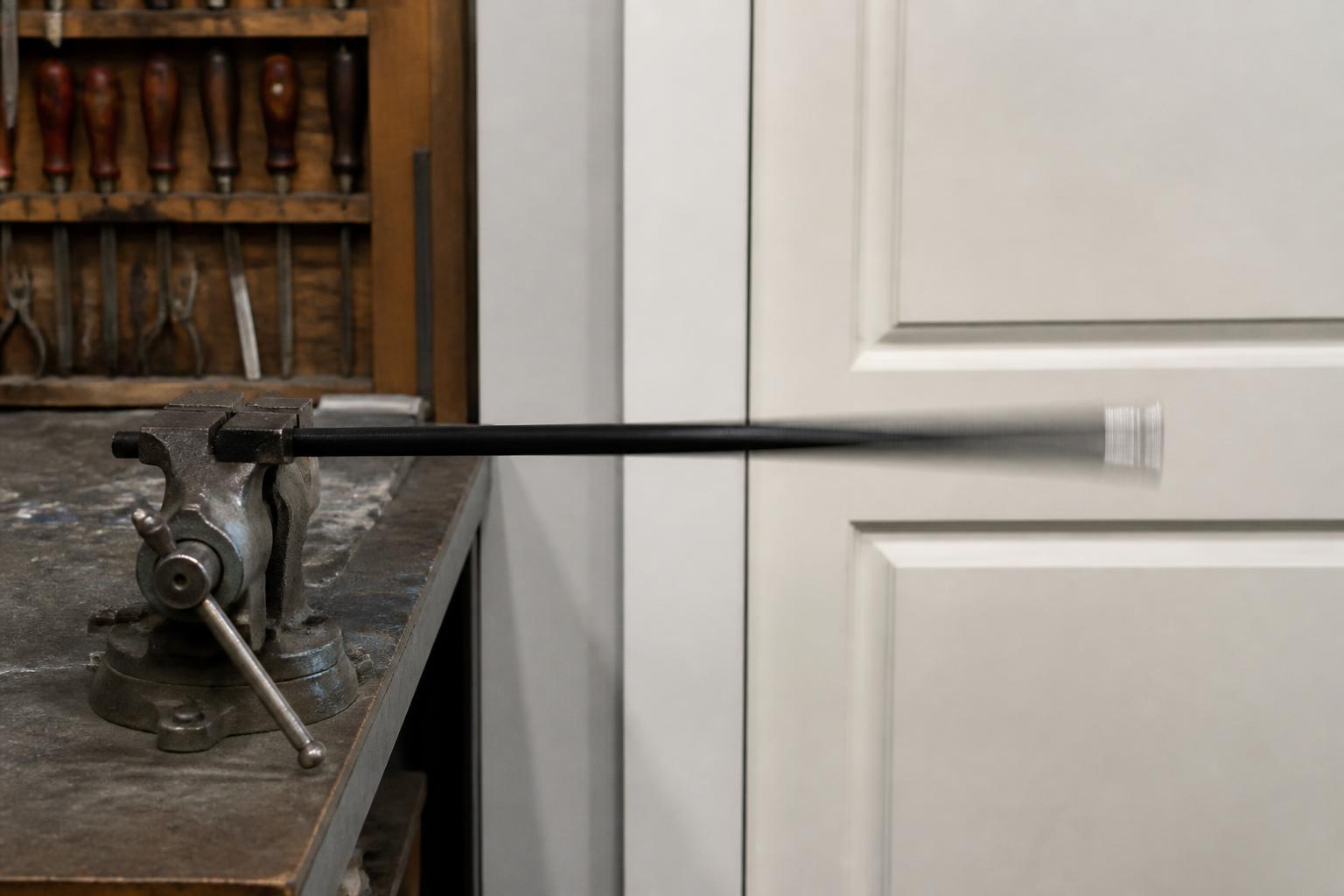
Here is where I’ll defend the process honestly. When a shaft has a pronounced spine and it’s installed in a random orientation, the tip can oscillate off-plane. That off-plane wobble can, in theory, nudge the clubface orientation and the shaft’s kick a touch differently on hard swings. Aligning the shaft removes that variable. For a golfer chasing tighter dispersion, that consistency can be the difference between a shot that leaks right and one that stays on your line.
The players who tend to benefit most are:
Puring also shines as a quality-control step. When I’m building custom clubs, aligning each shaft the same way means I’m removing one source of variation between clubs. That matters more to me as a builder than the promise of extra distance, because a consistent set is a set you can trust under pressure.
Now the part the marketing rarely mentions. The independent evidence that spine alignment produces a dramatic, measurable performance gain for the average golfer is thin. Robot and launch-monitor testing over the years has generally shown that modern shafts are far more consistent than they were decades ago. Manufacturing tolerances have tightened, so many current graphite and steel shafts have such a mild spine that aligning them changes very little that a human could feel or a scorecard would notice.
A few things I want you to keep in mind:
I’d rather tell you that up front than have you spend money expecting fireworks. Golf shaft puring is a refinement, not a rescue.
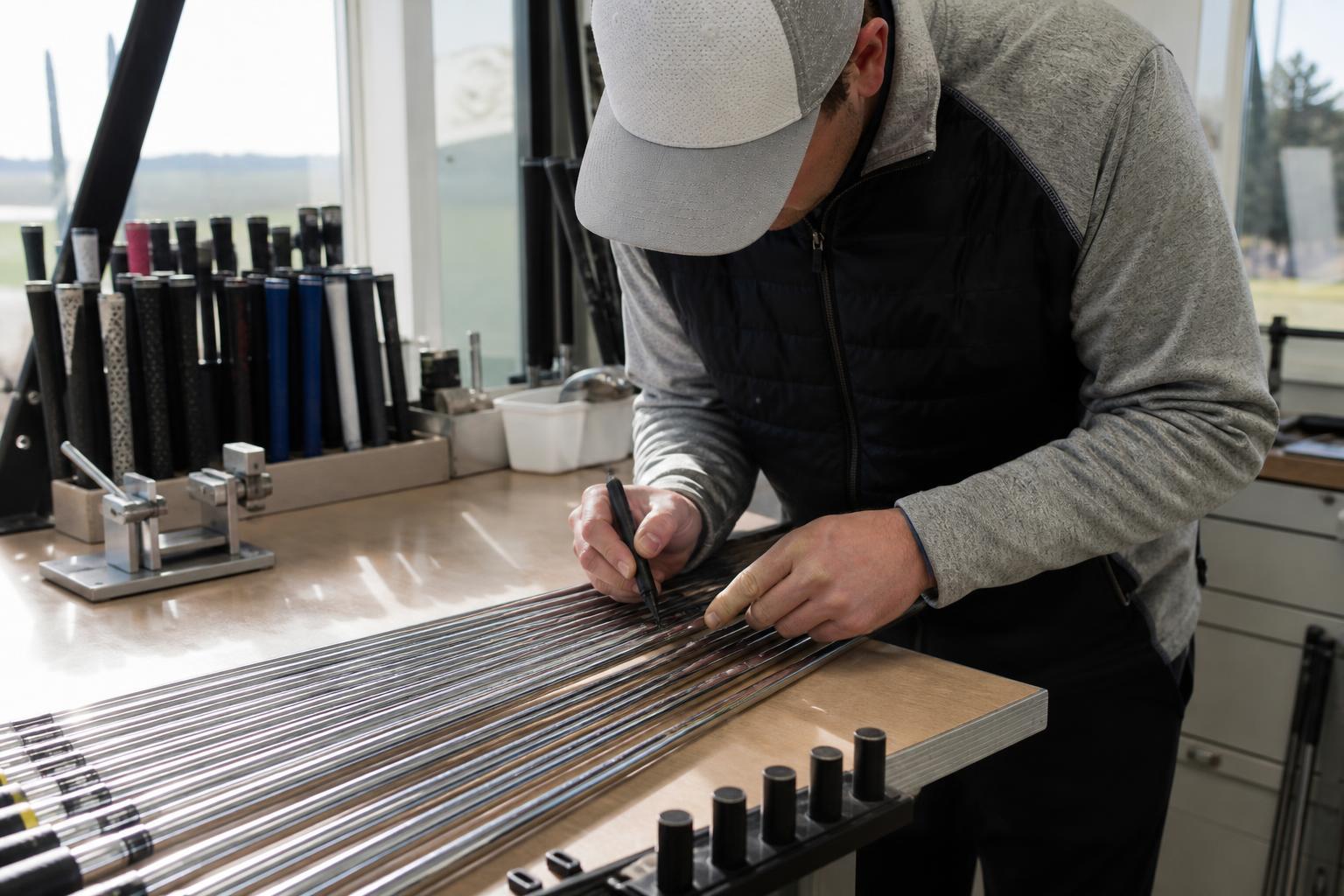
So how do I decide? I look at three things: the shaft, the player, and the purpose of the build. Here is roughly how I frame it at the bench.
My real advice is to spend your dollars in the right order. Get the correct shaft weight, flex, and profile dialed in first, because that fit drives ball speed, launch, and spin. Once you’re in the right shaft, alignment becomes the fine-tuning polish on top. If you want help finding that starting point, our shaft selector is built to narrow the field before you ever spend on extras, and every one of our custom shafts can be spined or FLO-checked on request when the build actually calls for it.
For transparency, here’s my process so you know what you’re paying for. I mount the shaft, run a FLO test on the tip, and rotate until the oscillation lays out in a flat, single plane. I mark that orientation, then install the head with the shaft indexed to it. On steel iron shafts I keep the whole set indexed the same way so the feel carries through the bag. It takes real time, and I only recommend it when the shaft and the player make it worthwhile. If a shaft FLOs cleanly right out of the box, I’ll tell you that too, and you keep your money.
No, not on its own. Puring and spine alignment change how consistently the shaft returns to the same position, not its flex, weight, or profile. Distance comes from getting the correct shaft specs and a good fit, not from rotational orientation.
Spine finding locates the stiffest plane of the shaft by rolling it under load. FLO, or Flat Line Oscillation, plucks the vibrating tip and orients the shaft so the tip oscillates in a single flat plane. FLO focuses on repeatable behavior at the tip, which is what matters most at impact.
For most mid-to-high handicap players, the gain is small because modern shafts are already tightly toleranced and swing variation dwarfs any alignment effect. It’s most worthwhile for faster, more consistent swingers, competitive players, and premium matched sets.
Yes, both steel and graphite shafts can be spined or FLO-checked. That said, a shaft with only a mild spine will show little change, so alignment pays off most on shafts that test with a pronounced stiff plane.
After. Nail down the right weight, flex, and profile through fitting first, since that drives your actual performance. Alignment is a finishing step layered on top of a shaft that’s already correct for your swing.
If you’re weighing whether golf shaft puring belongs in your next build, I’m happy to give you an honest read rather than an upsell. Start with our shaft selector to find the right foundation, then reach out to talk through a build. When alignment genuinely helps your setup I’ll do it right, and when it won’t move the needle I’ll tell you so, so every dollar you spend goes toward shots you’ll actually see on the course.
Also Read: Graphite Design Tour AD VF vs XC: Which Is Better for Control?
Written by Patrick Greene|Golf shaft specialist with 15+ years in

Written by Patrick Greene|Golf shaft specialist with 15+ years in

Free golf guide · 26 pages
How to Teach Your Wife Golf (And Live to Talk About It)
A funny, practical guide to better golf and fewer arguments: setup, swing, short game, putting and what not to say on the course.
Get the free guide